

Here is the content marketing paradox of 2026: the bar for quality has risen significantly – Google, AI Overviews, and readers all expect more original, more structured, more expertly written content than before – and simultaneously, the volume required to build topical authority has also increased.
Content marketing in 2026 is asking teams to do more without more people, and AI has become the practical answer to that constraint. Not by replacing the human thinking that makes content genuinely valuable, but by removing the production friction that previously consumed 60 to 70% of a content team’s time before any of the good thinking happened.
Content marketing in 2026 runs on a model where AI handles research aggregation, outline generation, first drafts, and distribution formatting – and humans supply the original insight, strategic direction, brand voice, and editorial judgment that distinguish performing content from generic output. The teams that have this division clearly understood are producing three to four times the content with the same headcount.
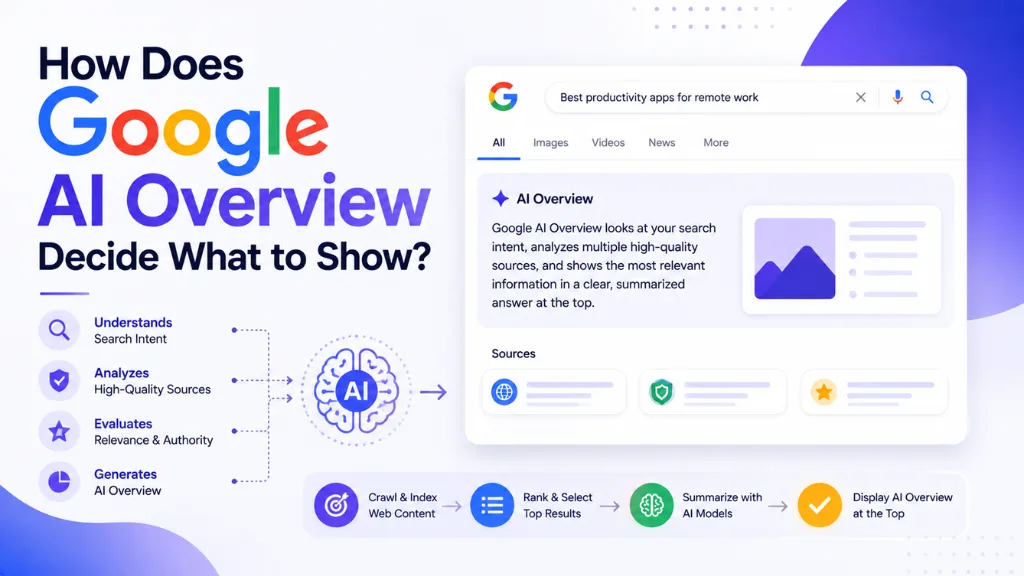
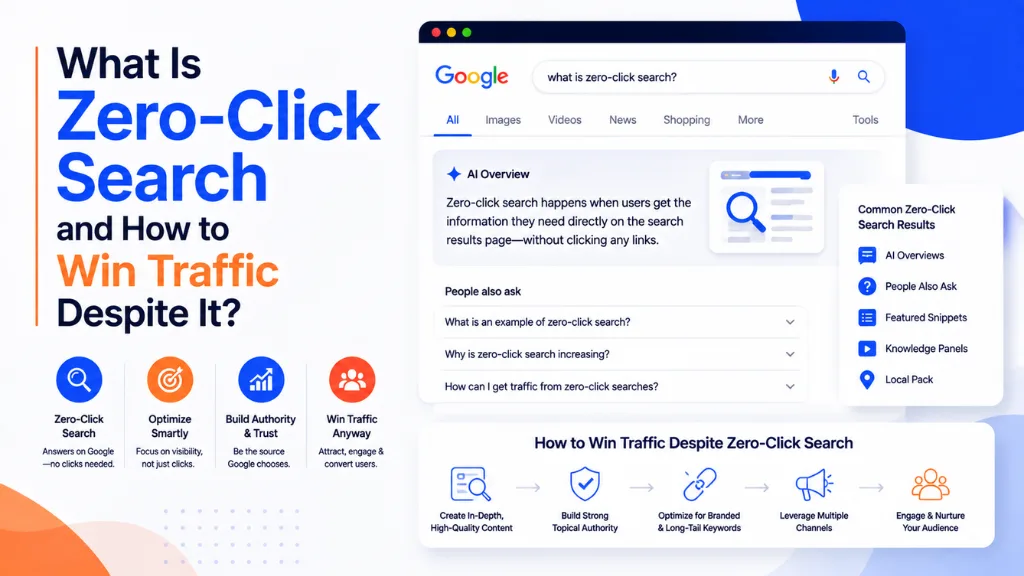
Content marketing in 2026 also has a new visibility surface to optimise for: AI Overviews, ChatGPT, and Perplexity now intercept a significant share of informational queries before any clicks happen. The content that gets cited on these platforms earns brand impressions at a scale that traditional rankings once required years to build.
At Search Savvy, we have restructured content production workflows around AI assistance across every stage – and the efficiency gains are real, consistent, and compound over time. This guide covers exactly how each stage works.
Why Is AI Important for Content Marketing in 2026?
Content marketing in 2026 involves more touchpoints, more platforms, and more content formats than any previous era of digital marketing. A single topic now requires a pillar post, three to five cluster articles, multiple LinkedIn formats, short-form video scripts, an email sequence, and FAQ schema blocks – often all from the same core idea and research investment.
Content marketing in 2026 without AI is still possible, but it is significantly slower – and slow means fewer pieces, less topical coverage, and weaker authority signals compared to competitors who have adopted AI-assisted workflows. According to HubSpot’s 2026 State of Marketing Report, 97% of content marketers plan to use AI to support their efforts in 2026. The question is no longer whether to use AI but how to use it in the stages where it delivers the most leverage.
- AI-assisted content workflows reduce production time by 50 to 70% per piece
- Teams using AI for content production report publishing 3x more content per month at equivalent or higher quality scores
- 73% of top-ranking pages now feature AI-assisted content according to Ahrefs’ 2026 large-scale ranking analysis
- Content marketing generates 3x the leads per dollar spent compared to outbound marketing – AI multiplies the ROI of this channel further by reducing per-piece cost
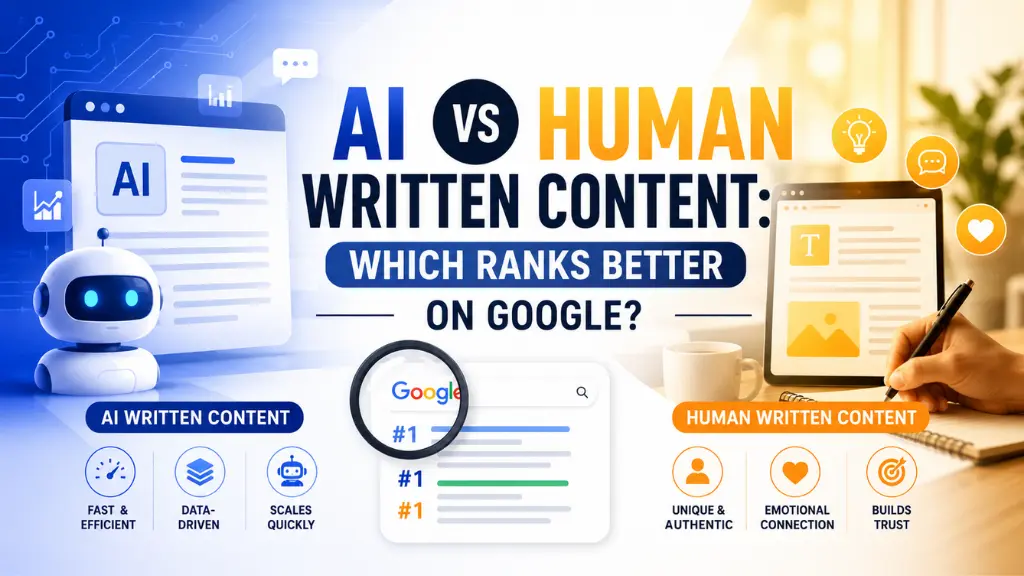
People Also Ask: Does using AI for content marketing hurt content quality? Short Answer: No, when used correctly. AI-assisted content with genuine human editorial oversight matches or outperforms purely human-written content in ranking performance. The quality risk comes from using AI without human editing – thin, unedited AI output consistently underperforms. The model that works in 2026 is AI-assisted research and drafting, human-led strategy and editorial refinement.
How Do You Use AI at the Research Stage of Content Marketing?
Content marketing in 2026 research is where AI saves the most time per hour invested, because research is simultaneously the most important stage and the one that consumed the most pre-production time in traditional workflows.
Content marketing in 2026 research with AI works in two modes:
Topic discovery: AI tools like ChatGPT and Perplexity can generate exhaustive topic cluster maps from a single seed topic – surfacing the subtopics, related questions, and content angles that a manual brainstorming session would take a full day to develop. Perplexity is particularly strong for research because it searches the web and provides citations alongside its responses.
Competitive gap analysis: Feed a list of competitor URLs into a research prompt and ask the AI to identify what each competitor’s top posts cover, what angle each takes, and which questions in the topic area are underserved. This surfaces content opportunities that would take hours to identify through manual reading and note-taking.
A practical AI research workflow for content marketing in 2026:
- Use Perplexity to generate a comprehensive overview of the topic with cited, current sources
- Use ChatGPT to build a topic cluster map showing the pillar topic and 15 to 20 potential cluster article angles
- Use AlsoAsked to surface the full PAA question tree for each cluster topic
- Compile the best sources, angles, and questions into a brief before any drafting begins
How Do You Use AI to Build Better Content Briefs?
Content marketing in 2026 brief creation is the stage that most content teams skip – and it is the stage AI makes fastest and most consistent. A good brief defines the exact audience, the specific search intent, the primary keyword, the heading structure, the key questions to answer, the tone, and the required content length before a single word of the article is written.
Content marketing in 2026 brief quality directly determines how closely the final article matches search intent – which is the primary ranking factor in Google’s evaluation framework. Writing without a brief produces content that covers a topic from the writer’s perspective rather than the searcher’s, which often misses the exact intent signal needed to rank.
A prompt template for AI brief generation:
“Create a detailed content brief for a blog post targeting [keyword]. The target audience is [audience description]. The search intent is [informational/ commercial/navigational]. The primary H2 sections should address: [list of key questions from PAA research]. The tone should be [professional/conversational] and the target length is [word count range based on competitor analysis]. Include a FAQ section and a closing CTA.”
This brief takes three minutes to generate with AI and would previously take 30 to 45 minutes of manual competitor analysis and intent research to produce.
How Do You Use AI to Draft Content for Content Marketing?
Content marketing in 2026 drafting with AI works best when the brief is already strong – because a detailed brief is exactly what guides an AI draft away from generic, unfocused output and toward a first pass that requires editing rather than rewriting.
Content marketing in 2026 drafting should use AI for:
- Opening paragraphs: AI generates multiple hook options faster than staring at a blank page – choose the strongest and refine it
- H2 section expansions: Write each major section with a section-specific prompt referencing the brief, then assemble them rather than prompting the entire post at once
- Transition sentences: Between sections, AI fills the connective tissue that slows human writers while maintaining flow
- FAQ sections: Based on PAA research, AI generates direct, structured answers that also function as schema markup candidates
Content marketing in 2026 drafting does not use AI for:
- Original data, first-hand case studies, or brand-specific examples
- Strategic recommendations that require expertise to be credible
- The final editorial voice – any section that carries the brand’s specific perspective needs human shaping
People Also Ask: How much time does AI save when drafting blog content? Short Answer: Research consistently shows AI-assisted drafting reduces total production time by 50 to 70% per piece. A 2,000-word article that previously took 6 to 8 hours from research to first draft now takes 2 to 3 hours with an AI-assisted workflow – with the time saved redirected toward editorial quality, original research, and higher-level strategy rather than removed from the process entirely.
How Do You Use AI for Content Optimisation and SEO?
Content marketing in 2026 optimisation is where AI adds a specific capability that previously required a dedicated SEO tool subscription: real-time scoring against top-ranking pages during the drafting process.
Content marketing in 2026 SEO optimisation with AI-native tools like Surfer SEO or Frase analyses the top-ranking pages for your target keyword and provides a content editor that scores your draft in real time against the semantic coverage, heading structure, and topic depth those pages demonstrate. This removes the guesswork from on-page SEO without requiring the writer to manually research and compare competing pages.
For teams without a dedicated SEO content tool, a prompt-based alternative:
“Review this draft against the following SEO checklist: Does the primary keyword appear naturally in the first 100 words, the H1, and at least two H2s? Are the major subtopics of [keyword] covered comprehensively? Is there a clear, direct answer in the opening paragraph for the search query? What key questions does the content leave unanswered compared to a comprehensive resource on [keyword]?”
Content marketing in 2026 also requires checking AI-generated drafts specifically for hallucinated statistics and citations – a step that takes 15 to 20 minutes and catches the fabricated figures that most commonly damage content credibility.
How Do You Use AI to Repurpose Content Across Formats?
Content marketing in 2026 repurposing is the highest ROI stage of the AI- assisted workflow, because repurposing extracts additional value from research already done rather than requiring new research for every format.
Content marketing in 2026 repurposing workflow from a single long-form blog post:
LinkedIn text post: Prompt: “Extract the single most counterintuitive insight from this article and write a 200-word LinkedIn post presenting it as a standalone observation that would prompt professional discussion. Place the link to the full article in the first comment rather than the post body.”
Instagram carousel: Prompt: “Convert the main steps or key points of this article into a 7-slide LinkedIn or Instagram carousel. Each slide should contain one point with a short headline and two supporting sentences. Write the caption for the carousel post as 150 words maximum.”
Email newsletter: Prompt: “Write a 200-word email newsletter section summarising this article for a digital marketing audience. Include three key takeaways as bullet points and a single clear CTA linking to the full post.”
Short-form video script: Prompt: “Write a 60-second video script based on the most surprising or counterintuitive finding from this article. Structure it as: hook (5 seconds), problem (10 seconds), insight (30 seconds), CTA (15 seconds).”
Content marketing in 2026 repurposing this way generates 15 to 20 social assets from one long-form piece – all from a total investment of 20 to 30 minutes of AI-assisted adaptation.
How Do You Use AI for Content Performance Analysis?
Content marketing in 2026 measurement with AI closes the loop between performance data and future content decisions – which is where most content teams have the least systematic process.
Content marketing in 2026 analysis tasks that AI handles well when given the right data:
- Feed Google Search Console data into ChatGPT and ask it to identify which pages have high impressions but low click-through rates – these are prime candidates for title tag and meta description optimisation
- Feed engagement data (time on page, bounce rate, scroll depth) and ask AI to identify patterns in what high-performing content has in common that low- performing content lacks
- Feed a list of your top and bottom-performing posts and ask AI to generate a hypothesis about the content attributes, topic types, or formats that correlate with each performance level
Content marketing in 2026 decisions made from AI-synthesised performance data are significantly more systematic than the intuition-based content calendar most teams otherwise produce.
What AI Tools Should Content Marketers Use in 2026?
Content marketing in 2026 benefits from a focused stack of three to four tools rather than attempting to use every platform that launches:
| Stage | Best Free Tool | Best Paid Tool |
| Research | Perplexity (free tier) | Semrush Topic Research |
| Briefing | ChatGPT (free) | Frase ($45/month) |
| Drafting | Claude (free) | Jasper ($49/month) |
| SEO optimisation | ChatGPT prompt-based | Surfer SEO ($89/month) |
| Repurposing | ChatGPT (free) | Jasper or Copy.ai |
| Scheduling | Buffer (free) | Hootsuite |
Content marketing in 2026 with a free-tier-only stack – Perplexity for research, ChatGPT or Claude for briefs and drafts, Buffer for scheduling – covers the full workflow for solo content creators and early-stage teams at no cost.
People Also Ask: What is the best AI tool for content marketing in 2026? Short Answer: For an all-in-one content workflow, Jasper covers briefing, drafting, and repurposing in one platform starting at $49/month. For the best free option, ChatGPT with GPT-5.3 access covers research, drafting, and repurposing prompts without any cost. For SEO-specific optimisation, Surfer SEO’s real-time content editor has no equivalent in the free tier and is worth the $89/month investment for teams publishing more than eight optimised posts per month.
How Should Indian Content Teams Use AI for Content Marketing in 2026?
Content marketing in 2026 with AI offers Indian teams a particular advantage: the ability to localise content for regional audiences at a speed that was previously impractical. A pillar post written in English can be adapted for Hindi, Tamil, or Kannada-speaking audiences using AI translation and localisation prompts far faster than commissioning separate translations for each.
Content marketing in 2026 for Indian markets also benefits from Gemini’s real- time web access, which allows research prompts to surface India-specific data – Indian market statistics, INR pricing benchmarks, and regional platform usage data – rather than defaulting to US-centric figures that frequently skew results for Indian audience contexts.
According to Search Savvy’s insights from implementing AI-assisted content workflows for Indian SMB and D2C brands, the highest-ROI single change is almost always adding the AI-powered briefing step before drafting – not because Indian content teams lack skill, but because systematic briefs that define search intent and heading structure before writing begins consistently produce content that ranks faster than briefs written ad hoc or skipped entirely.
Conclusion: AI Accelerates; Strategy Still Steers
Content marketing in 2026 with AI is not a shortcut to authority – it is an accelerator for teams that already have a clear content strategy, a defined audience, and the editorial discipline to produce genuinely useful content.
Search Savvy, we use AI at every stage of content production without letting it replace the strategic thinking and editorial judgment that determine whether a piece of content actually performs. The tool makes the process faster. The strategy makes it worth doing.
FAQ: AI and Content Marketing in 2026 – Your Questions Answered
Q1: Can AI completely replace a content marketing team in 2026? No. AI handles the repeatable, time-consuming production tasks – research aggregation, outline generation, first drafts, format adaptation – but strategy, original insight, brand voice, expert editing, and performance interpretation still require human judgment. The teams getting the most value from AI in 2026 are those using it to eliminate production friction, not to replace the thinking that makes content worth producing.
Q2: Will Google penalise content produced with AI assistance in 2026? No, not for AI use itself. Google evaluates content quality and helpfulness, not production method. 73% of top-ranking pages include some AI assistance according to Ahrefs’ research. What Google penalises is thin, low-value content published at scale without genuine editorial oversight – which is a quality problem, not an AI problem.
Q3: How do I maintain brand voice when using AI for content drafting? Create a brand voice guide document that defines your tone (professional vs. conversational), characteristic phrases, topics to avoid, and three to five example paragraphs that represent the ideal voice. Paste this guide at the top of every AI drafting prompt as a “writing style reference.” Over time, refine the guide based on which AI outputs require the least editing to match the brand – these reveal which voice instructions are most effective.
Q4: What is the biggest risk of using AI for content marketing? Hallucinated facts – statistics, citations, and named entities that AI invents confidently but incorrectly. Every specific data point in an AI draft must be verified against a primary source before publishing. A 15 to 20-minute fact- checking pass per article is the non-negotiable editorial step that prevents the most damaging AI-content risk from reaching readers.
Q5: How do I measure whether AI is actually improving my content output? Track three metrics before and after implementing AI assistance: articles published per month (volume), average time from brief to published post (speed), and organic traffic per article at 90 days post-publication (quality). If all three improve – or volume and speed improve while quality holds steady – the AI integration is working. If quality declines while speed improves, editorial investment in the final human review stage needs to increase.
Q6: How many AI tools does a content marketing team actually need? Three is a practical ceiling for most teams: one for research and briefing, one for drafting, and one for distribution and scheduling. Stacking more than three tools of the same type creates overlap, switching costs, and the administrative overhead of managing multiple subscriptions – without meaningfully improving output quality or speed.
Running a content marketing operation that is producing less than you need at a cost that’s too high – or wondering how to restructure your workflow around AI without sacrificing the quality your audience expects? Visit Search Savvy for a content strategy session that maps the right AI tools to your workflow and builds the editorial framework that keeps quality intact while tripling your output.