

Search volume is not a dial you can simply turn up for any keyword you choose. Nobody can make more people search “best running shoes” tomorrow than searched it yesterday – that number reflects real-world demand, not something a website can manufacture directly.
Increase keyword search volume is still a genuinely achievable goal, just not in the way many people initially imagine. There is no silver bullet for increasing branded searches specifically – at scale, branded search volume is impacted by everything you do to increase exposure and familiarity with your brand, according to Wire Innovation’s 2026 branded search guide. That distinction – between generic search volume you cannot control and branded search volume you genuinely can grow – is the entire foundation of this guide.
At Search Savvy, clients frequently ask us how to increase search volume for their target terms, and the honest answer requires separating what is actually possible from what is not. This guide breaks down exactly how search volume works in 2026, what you can realistically influence, and how to build a smarter keyword strategy around it.
Can You Actually Increase Keyword Search Volume for Generic Terms?
Increase keyword search volume is not something you can do directly for generic, non-branded terms – search volume reflects genuine, pre-existing demand across an entire population of searchers, not something any single website controls.
Monthly search volume is no longer a complete measure of opportunity, and the most effective programs in 2026 use it as an input to broader strategy rather than a target to be manipulated directly, according to AI Growth Agent’s 2026 keyword search volume guide. What you genuinely can influence is your visibility and share of that existing demand – through better content, stronger rankings, and broader distribution – not the underlying number of people typing a generic phrase into a search bar each month.
Increase keyword search volume ambitions are more realistic when redirected toward two genuinely achievable goals: capturing more of the existing demand for terms in your space, and actively growing demand for terms tied specifically to your brand. These are fundamentally different strategies requiring different tactics, and conflating them is where most keyword strategies go wrong.
People Also Ask: Can a business directly increase the search volume of a generic keyword? Short Answer: Not directly. Search volume for generic, non-branded terms reflects real population-wide demand that no single website controls. What businesses can influence is their share of that existing demand, and separately, the search volume specifically tied to their own brand name.
How Does Branded Search Volume Actually Grow?
Increase keyword search volume becomes genuinely achievable once the target shifts specifically to branded terms – searches that include your company name, product names, or close variations.
Brand awareness is a primary upstream driver of branded search volume growth – as more people become familiar with a brand, they become more likely to search for it directly, increasing branded search queries over time, according to KPI Library’s branded search volume analysis. This means branded search volume is essentially a lagging indicator of broader brand awareness efforts, not a metric you optimise in isolation.
Several specific channels reliably drive this growth. Word-of-mouth and referrals from peers or media increase curiosity and trust, resulting in more branded search queries, and mentions in non-clickable channels like podcasts or events also drive users to search for the brand online afterward, per the same source. Brand collaborations, partnerships, and seasonal promotions can similarly create genuine buzz that translates directly into search behaviour.
People Also Ask: What is a branded search keyword, exactly? Short Answer: Any keyword that contains your company’s name or a close variation of it – for example, “Search Savvy pricing” or “Search Savvy reviews.” These keywords typically carry high commercial intent, since the searcher already knows and trusts the brand before searching.
What Marketing Activities Actually Increase Keyword Search Volume for Brands?
Increase keyword search volume for your brand specifically through a combination of PR, social media, and campaign activity – each channel contributes a genuine, measurable piece of the overall effect.
Engaging in PR activities that get your brand mentioned in reputable online publications, blogs, and news sources can meaningfully boost branded search volume, and organising events or sponsoring industry webinars can attract media attention that increases brand exposure, according to Umbrex’s brand search volume analysis guide. Launching targeted campaigns around product launches or special events creates genuine spikes in interest that show up directly in branded search data.
A practical set of channels to prioritise:
- PR and media mentions – earned coverage in reputable publications drives genuine curiosity searches
- Social media consistency – regularly posting branded content and encouraging shares amplifies reach over time
- Influencer partnerships – creators who resonate with your target audience can drive meaningful branded curiosity searches
- Product launches and campaigns – time-limited pushes around new products or promotions create measurable spikes in branded search
- Paid search on branded terms – A/B testing branded keyword campaigns can maximise reach and reinforce organic branded search patterns
People Also Ask: Does running ads on my own brand name actually help increase search volume? Short Answer: Indirectly, yes. Paid campaigns on branded terms can reinforce visibility and reach, complementing organic branded search growth, though the underlying driver remains overall brand awareness rather than the ad spend itself.
Why Has AI Search Changed How Keyword Search Volume Works in 2026?
Increase keyword search volume strategy has to account for a structural shift in 2026, since a meaningful share of what used to be traditional search queries now happens through AI assistants instead.
AI assistants – including ChatGPT, Google Gemini, Perplexity, Claude, and Microsoft Copilot – now generate approximately 45 billion monthly sessions globally, a figure representing roughly 56% of traditional search engine volume, according to ALM Corp’s 2026 keyword search volume guide. ChatGPT alone processed 2.5 billion prompts per day as of July 2025, representing approximately 18% of Google’s daily search volume – meaning a genuinely significant share of query activity now happens entirely outside traditional search engines and their volume-tracking tools.
This shift means traditional keyword search volume tools no longer capture the full picture of actual demand. Keyword research that focuses only on ranking in traditional blue links now misses a large part of real demand – search volume still matters, but marketing leaders need to evaluate how often AI systems surface their brand in answers too, not only how many visits a keyword might send, according to AI Growth Agent’s 2026 analysis.
People Also Ask: Do traditional keyword search volume tools still capture accurate demand data in 2026? Short Answer: Increasingly incompletely. With AI assistants generating roughly 56% as much query volume as traditional search engines, keyword tools built around traditional search data miss a genuinely significant and growing share of real-world search behaviour.
How Should You Prioritise Keywords Given How Search Volume Has Changed?
Increase keyword search volume relevance to your business by shifting from a volume-first mindset to a value-first one – high-volume keywords are increasingly captured by AI search features before a user ever needs to visit your site at all.
High-volume keywords are increasingly captured by AI search features and tools before users need to visit your site, according to Semrush’s 2026 keyword research guide. This means the highest-volume terms in your space are not automatically the most valuable ones to chase – a lower-volume, higher-intent keyword that still drives a genuine click can outperform a high-volume term almost entirely absorbed by an AI Overview.
A practical prioritisation framework for 2026:
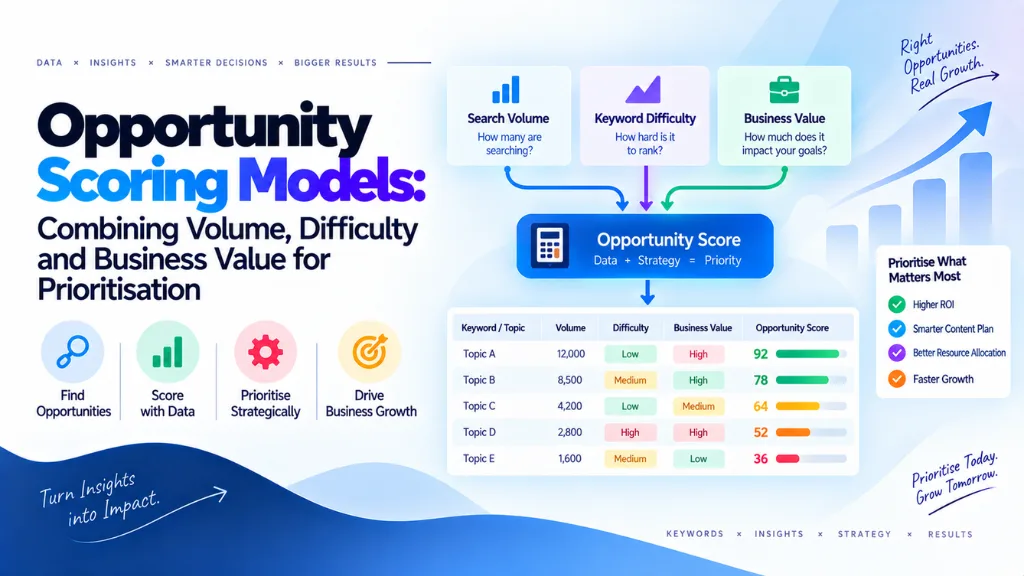
- Business value over raw volume – prioritise keywords tied to genuine purchase or conversion intent, not just search count
- Evergreen and seasonal balance – evergreen keywords provide a reliable traffic baseline; seasonal keywords deliver high-intent bursts when timed correctly, according to ALM Corp’s 2026 guide
- AI visibility potential – target keywords where your content can rank organically, appear in AI Overviews, and be cited by conversational AI platforms simultaneously
- Search demand lifecycle stage – recognise whether a keyword is emerging, surging, peaking, or declining before committing significant content investment, according to Ahrefs’ 2026 search demand lifecycle analysis
People Also Ask: Should businesses stop chasing high-volume keywords entirely in 2026? Short Answer: Not entirely, but volume alone should no longer be the primary deciding factor. Keywords worth targeting are ones where your content can realistically rank organically, surface in AI Overviews, and get cited by conversational AI platforms – not simply the terms with the highest raw search count.
How Do You Catch Emerging Search Demand Before Competitors Do?
Increase keyword search volume advantage over competitors by identifying genuinely emerging topics before they show up as high volume in keyword tools at all – waiting for a keyword to show strong volume data often means you are already too late.
Some breakout trends start unnoticed, and the best SEOs do not wait until a keyword is trending – they invest before the surge begins, according to Ahrefs’ 2026 search demand lifecycle guide. Topics in the earliest, “intro” stage have low search volume and require trusting intuition and real-world trends over keyword data, but their potential lies precisely in early adoption before competition floods in.
Practical signals worth monitoring for early-stage demand:
- Product launches and industry announcements in your specific space
- Investor funding activity signalling where genuine momentum is building
- Expert discussions and forums hinting at growing interest before search volume catches up
- Publishing foundational content early, establishing authority before a keyword’s volume surges and competition intensifies
People Also Ask: Is it worth creating content for a keyword before it has meaningful search volume? Short Answer: Often, yes, for topics showing genuine early-stage signals like product launches or expert discussion. Publishing foundational content before demand surges can establish authority ahead of competitors who wait until volume data confirms the trend.
How Should You Build a Keyword Strategy Around This in Practice?
Increase keyword search volume outcomes for your business by combining brand-building efforts with a smarter, value-first keyword targeting approach – treating the two as connected parts of one strategy rather than separate workstreams.
According to Search Savvy’s insights from managing keyword strategy across client industries, the businesses seeing the strongest results are consistently the ones tracking branded search growth as a genuine marketing KPI, not just an SEO afterthought buried in a monthly report.
A practical combined framework:
- Invest consistently in brand awareness – PR, social media, partnerships, and campaigns that drive branded search growth over time
- Track branded search volume as a KPI, connecting it to broader marketing and PR activity, not treating it as a purely organic SEO metric
- Shift keyword targeting toward business value, prioritising conversion-focused terms over raw volume alone
- Monitor AI citation frequency alongside traditional search volume data, since a significant share of query activity has moved to AI assistants
- Watch for early-stage demand signals in your industry, publishing foundational content before competitors catch on
FAQ: Increasing Keyword Search Volume
Q1: Can SEO tactics alone increase the search volume of a generic keyword? A: No. SEO can improve your visibility and ranking for existing search volume, but it cannot create additional population-wide demand for a generic term. Only broader marketing and awareness efforts genuinely grow the underlying demand.
Q2: How long does it take to see branded search volume grow from marketing efforts? A: It varies significantly by channel and effort level, but branded search volume is generally described as a lagging indicator – it typically takes several months of consistent brand awareness activity before a measurable increase shows up in search data.
Q3: Is branded search volume more valuable than generic keyword traffic? A: Generally, yes, in terms of conversion potential. Branded searches typically carry higher commercial intent, since the searcher already knows and trusts the brand, making them more likely to convert than an unfamiliar visitor arriving via a generic keyword.
Q4: Do AI Overviews and AI assistants reduce the value of increasing search volume? A: They change the calculation rather than eliminating the value. High-volume generic keywords are increasingly captured by AI Overviews before a click happens, making branded search growth and AI citation visibility more important complements to traditional volume-chasing strategies.
Q5: Should small businesses focus on branded or generic keyword strategies first? A: Most small businesses benefit from prioritising generic, intent-matched keywords first to build initial visibility, then investing more deliberately in brand-building activities once awareness reaches a level where branded search becomes a meaningful, trackable channel.
Q6: What is the single most reliable way to increase branded search volume? A: Consistent brand awareness activity over time – PR, social media presence, partnerships, and campaigns – since branded search volume is fundamentally driven by how familiar and top-of-mind your brand is with your target audience, not any single isolated tactic.
Want a keyword and brand visibility strategy built around 2026’s actual search landscape? Visit Search Savvy to speak with an SEO expert who can build a plan that works with, not against, how search really works today.