

A page can rank for a keyword and still be invisible to the systems that decide whether a brand gets cited in an AI-generated answer. The difference usually comes down to whether search engines and AI systems can identify who or what is actually behind the content – a distinct, verifiable entity – rather than just matching text. That’s what entity SEO is built to solve, and it’s become one of the more consequential shifts in how visibility works across both classic search and AI answer engines.
This article explains what an entity is in the SEO sense, how Google’s Knowledge Graph identifies and connects entities, the practical steps to establish and reinforce entity recognition for a brand, and how entity work feeds directly into AI Overview and chatbot citations.
What Is Entity SEO?
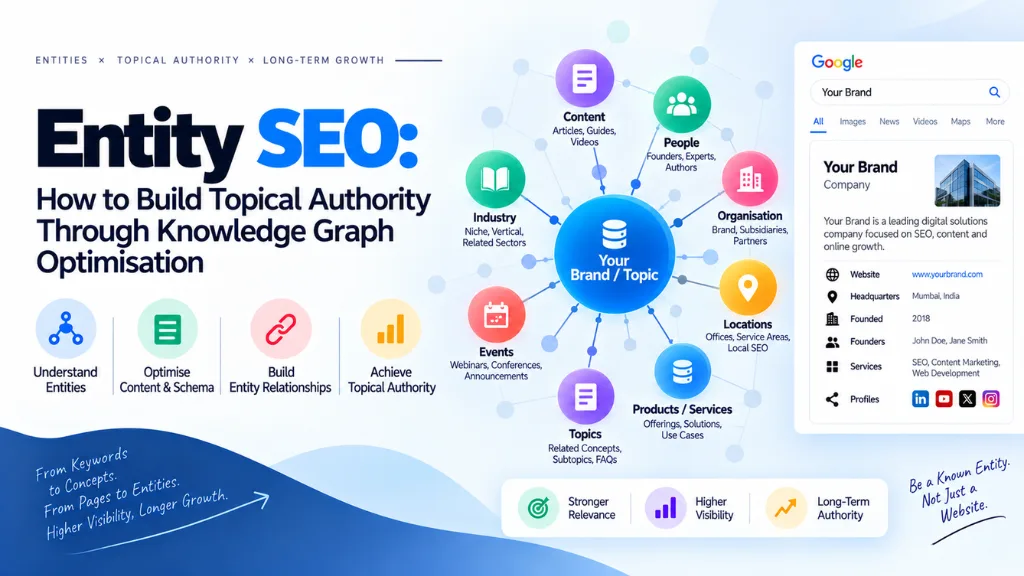
Entity SEO is the practice of structuring a brand’s content, data, and web presence so that search engines and AI systems can clearly identify, disambiguate, and connect it as a distinct entity – a specific person, organization, product, or concept – rather than relying on keyword matching alone. An entity, in this context, is any uniquely identifiable thing that can be distinguished from every other thing: a company, a person, a location, a product line, or a concept.
Google formalized this shift publicly in 2012, when then-SVP of engineering Amit Singhal announced the Knowledge Graph in a blog post titled “Introducing the Knowledge Graph: things, not strings.” The framing was deliberate: instead of treating a search query as a literal string of characters to match against page text, Google’s systems increasingly interpret queries as references to real-world things and the relationships between them. A search for an ambiguous name can be resolved to the correct person, place, or concept because the underlying systems recognize it as an entity with known attributes, not just a sequence of letters.
What Is the Difference Between Entity SEO and Traditional Keyword SEO?
Traditional keyword SEO optimizes content to match the specific words and phrases a searcher types. Entity SEO optimizes for how search engines and AI systems classify what – and who – a piece of content is actually about, independent of the exact phrasing used to describe it. The two aren’t competing approaches; entity SEO adds a semantic layer on top of keyword targeting, helping systems understand that a page about “cardiac stents” and a page about “heart stent procedures” both relate to the same underlying medical entity, even though the wording differs.
How Google’s Knowledge Graph Identifies Entities
The Knowledge Graph is Google’s structured database connecting real-world entities and the relationships between them, used to power features like Knowledge Panels, rich results, and – increasingly – the entity grounding behind AI Overviews and Gemini-powered answers. Google builds and validates this database by cross-referencing information from many sources rather than trusting any single website, drawing on structured data, authoritative reference sources like Wikipedia and Wikidata, and corroborating mentions across independent, trusted sites.
This cross-referencing is why entity establishment isn’t something a brand can complete in a single step. Google’s systems continuously reassess an entity’s identity as new information appears, weighing the consistency and authority of what’s being said about that entity across the web – which means entity SEO is an ongoing reinforcement process, not a one-time technical fix.
How Are AI Overviews and Chatbot Citations Connected to the Knowledge Graph?
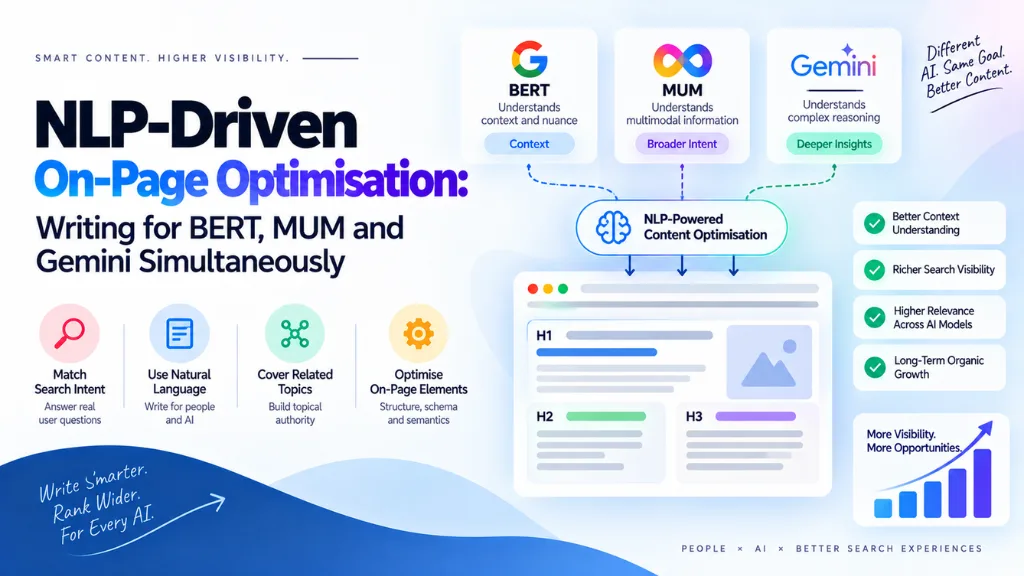
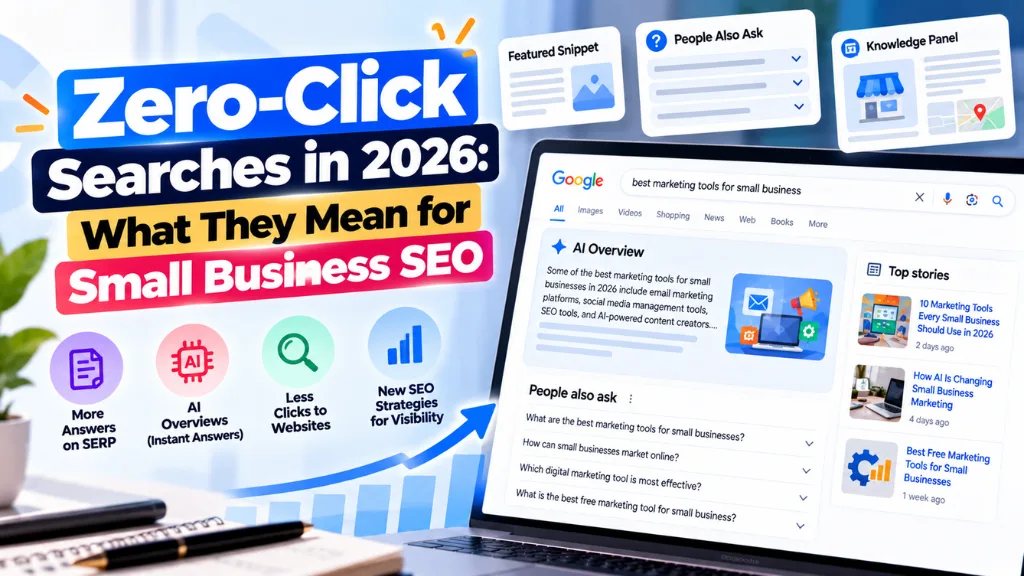
Google’s AI systems, including AI Overviews and Gemini, are trained on and grounded in the Knowledge Graph, which means an entity that Google can’t clearly identify and verify has a structural disadvantage in AI-generated answers, independent of how well-written the underlying content is. If a system can’t map a brand or concept to a known, disambiguated entity, it has less confidence to cite that source directly – an AI Overview typically compiles its answer by drawing on a small number of sources it can identify as reliable, and unresolved entities are less likely to be among them. This is part of why entity work increasingly gets planned alongside AI search optimization for AEO and GEO rather than treated as a separate technical task.
Building Entity Recognition: The Practical Layers
1. Structured Data and Schema Markup
Schema.org markup is the most direct way to tell search engines explicitly what an entity is and how it relates to other entities on a page. Organization schema, Person schema, and Product schema all let a site declare its identity in a machine-readable format rather than relying on search engines to infer it from unstructured text – Search Savvy’s own organization schema generator is a quick way to produce this markup correctly formatted for implementation. The sameAs property is particularly important here – it links a page’s schema to the entity’s corresponding Wikipedia article, Wikidata item, or verified social profiles, giving search engines an unambiguous cross-reference rather than asking them to guess that “the company on this page” and “the company in the Knowledge Graph” are the same thing.
2. Identity Consistency Across the Web
Google validates entities by checking for consistency across independent sources, so a brand name, description, and key facts that vary across a website, social profiles, directories, and press mentions actively work against entity establishment. The same organization name, the same description of what it does, and the same set of associated facts (founding date, location, leadership) repeated consistently across every platform where the entity appears makes disambiguation easier and faster for Google’s systems.
3. Corroborating Mentions From Authoritative Sources
An entity’s authority is reinforced when independent, trusted sources mention it in ways that corroborate its identity and expertise – not just link to it, but describe it in terms consistent with how the brand describes itself. This is closer to traditional digital PR and authoritative backlinking than technical schema work, but it serves an explicitly entity-focused purpose: every corroborating, consistent mention adds another data point Google can use to confirm the entity’s identity and relevance to its field.
4. Wikipedia and Wikidata Presence
Where eligible, a Wikipedia article and a corresponding Wikidata item are among the strongest entity signals available, since both are heavily weighted sources in how Google’s Knowledge Graph is built and maintained. Not every brand or individual meets Wikipedia’s notability threshold, and attempting to force an entry that doesn’t meet those standards typically backfires; where genuinely eligible, though, this remains one of the highest-leverage entity investments available.
5. Topical Content That Reinforces the Entity’s Expertise
Entity establishment isn’t only about identity data – it’s also about demonstrating what an entity is actually knowledgeable about. A body of comprehensive, interlinked content on a specific subject helps Google associate a brand entity with that topic specifically, which is the same underlying mechanism behind topical authority built through a well-structured content strategy and topical authority program. Entity SEO and topical authority aren’t separate disciplines – they reinforce the same signal from different directions: one establishes who you are, the other establishes what you know.
Entity SEO and Local Businesses
For businesses with a physical presence, consistent NAP data (name, address, phone number) across a Google Business Profile, directories, and the website itself functions as a localized version of the same identity-consistency principle that applies to brand entities generally – the same discipline behind local SEO work more broadly. Inconsistent business information across platforms creates the same disambiguation problem at a local level that inconsistent brand descriptions create globally – Google has to reconcile conflicting signals about the same entity, which slows and weakens recognition rather than strengthening it.
Common Mistakes in Entity SEO
- Treating schema markup as the entire strategy. Structured data declares an entity’s identity, but Google still cross-references that declaration against independent corroboration – schema alone doesn’t establish authority.
- Inconsistent naming and descriptions across platforms. A brand described differently on its website, social profiles, and directory listings creates exactly the disambiguation confusion entity SEO is meant to resolve.
- Chasing a Wikipedia page before meeting notability standards. Rejected or deleted Wikipedia attempts can create more confusion than having no entry at all.
- Ignoring topical content in favor of purely technical entity work. Identity signals and topical depth reinforce each other; strong schema on a site with thin, generic content won’t compensate for the missing expertise signal.
- Expecting immediate results. Entity recognition builds through repeated corroboration over time, not a single markup deployment or press mention.
- Overlooking local NAP consistency for multi-location businesses. Each location functions as its own local entity signal, and inconsistency at that level undermines recognition location by location.
Search Savvy generally treats entity work as connective tissue between technical SEO and content strategy, since technical SEO implementation (schema, structured data) and topical content depth need to be built together for entity signals to actually compound.
How to Start Building Entity Authority
- Audit current entity signals. Check for inconsistent naming, descriptions, and facts about the brand across the website, social profiles, directories, and any existing schema markup.
- Implement or correct Organization, Person, and relevant Product schema, including sameAs links to verified profiles, Wikipedia, and Wikidata where they exist.
- Standardize identity information everywhere the entity appears – website, social bios, directory listings, press materials – so every source describes the entity the same way.
- Build topical content depth around the specific subjects the entity should be recognized as an authority on, connecting that content clearly to the entity through structured data and internal linking.
- Pursue corroborating mentions from independent, authoritative sources in the relevant industry, rather than relying solely on owned content and schema.
- Monitor Knowledge Panel accuracy and Search Console data periodically, correcting any misattributed or outdated facts as they appear.
Frequently Asked Questions
What is an entity in SEO? An entity is any uniquely identifiable thing – a person, organization, product, place, or concept – that search engines and AI systems can distinguish from every other thing and connect to related facts and content across the web.
How is entity SEO different from schema markup? Schema markup is one tool used in entity SEO – a way to declare an entity’s identity in a machine-readable format. Entity SEO is the broader practice, which also includes identity consistency, corroborating mentions, and topical content depth.
Do I need a Wikipedia page for entity SEO to work? No. A Wikipedia page is a strong signal where a brand or individual genuinely meets notability standards, but entity recognition can still be built through consistent schema, corroborating mentions, and topical authority without one.
How long does it take to establish entity recognition with Google? There’s no fixed timeline. Entity recognition builds through repeated, consistent signals over time rather than a single implementation, and Google’s systems continuously reassess entities as new corroborating or conflicting information appears.
Does entity SEO help with visibility in AI Overviews and ChatGPT? Yes. Google’s AI systems are grounded in the Knowledge Graph, so a well-established, clearly disambiguated entity has a structural advantage in being cited by AI Overviews. Other AI systems similarly favor sources they can recognize as authoritative and consistently identified.
Is entity SEO relevant for small or local businesses, not just large brands? Yes. For local businesses, the same principles apply at a smaller scale – consistent NAP data, accurate Google Business Profile information, and topical content about the specific services offered all contribute to local entity recognition.
Bottom Line
Entity SEO isn’t a replacement for keyword optimization, technical SEO, or content strategy – it’s the layer that helps search engines and AI systems understand who is actually behind all of that work. Consistent identity signals, proper schema implementation, corroborating mentions from authoritative sources, and topical content depth all reinforce the same underlying goal: making sure a brand is recognized as a distinct, verifiable entity rather than just a collection of pages that happen to rank. As AI Overviews and chatbot answers increasingly draw on the Knowledge Graph to decide what to cite, that recognition is becoming less optional and more foundational to visibility across every search surface.