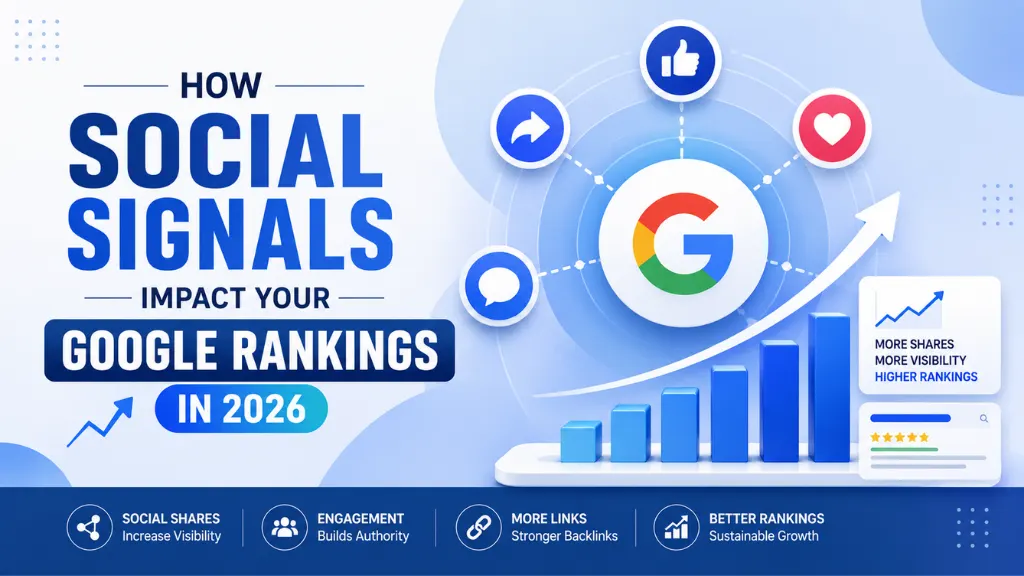

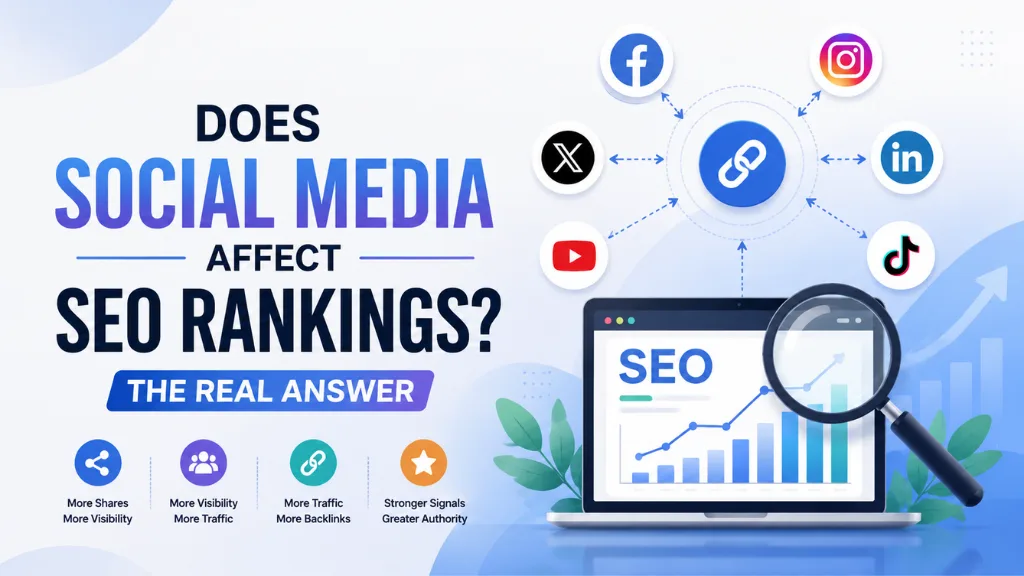

Here is a debate that has been running in digital marketing circles for over a decade, and in 2026 it still generates more heat than clarity: does posting on social media actually help your website rank higher on Google?
Social media affect SEO is a question with a precise answer and a much richer explanation, and most content on this topic delivers only one of the two. The precise answer is: no, social signals are not direct Google ranking factors. The richer explanation is: social media still drives four or five mechanisms that meaningfully influence the signals Google does use to rank pages.
Social media affect SEO confusion persists because correlation and causation are easy to conflate. Studies consistently show that pages with high social share counts rank higher than pages with low ones. That finding is real. The interpretation that shares cause rankings is where the analysis goes wrong. Both high social shares and high rankings are explained by the same underlying factor – the content is genuinely excellent. Good content earns shares. Good content earns backlinks. Backlinks influence rankings. The shares are a symptom of quality, not the cause of ranking.
Social media affect SEO in 2026 is also a bigger question than it was two years ago, because social platforms are now functioning as parallel search engines in their own right. A 2026 academic study found Google AI Overviews appear above traditional organic results for 51.5% of real-world queries – meaning the boundaries between social discovery, AI search, and traditional SEO are actively converging.
At Search Savvy, the answer to whether social media affects SEO is yes – but through specific, indirect channels that require deliberate effort to activate. This guide explains exactly which channels those are, with evidence from 2026.
What Has Google Actually Said About Social Media and SEO?
Social media affect SEO at the direct algorithmic level has been addressed explicitly by Google, multiple times, across more than a decade of statements.
Google’s Gary Illyes confirmed in 2016 that Google does not use social signals – likes, shares, comments, follower counts – as ranking factors. John Mueller has reaffirmed this position repeatedly since, including in recent Q&A sessions. Google’s Search Quality Rater Guidelines, updated in 2025, do not include social engagement metrics in the E-E-A-T evaluation framework.
The technical reasons behind this position are clear and have not changed:
- Googlebot cannot crawl most social media content. Facebook, Instagram, and LinkedIn block search engine crawlers from accessing most posts and profiles. Social engagement metrics from platforms Google cannot access cannot be used as ranking signals.
- Social metrics are easily manipulated. Like counts, share counts, and follower numbers can be inflated artificially, making them too unreliable to incorporate as signals in an algorithm designed to resist gaming.
- Correlation, not causation. Content that performs well on social media also tends to rank well in search – because both platforms reward high-quality, genuinely useful content. The social engagement does not cause the rankings; the content quality explains both outcomes simultaneously.
People Also Ask: Are social media shares a Google ranking factor? Short Answer: No. Google has confirmed repeatedly – most recently through John Mueller and in the Search Quality Rater Guidelines – that social signals including likes, shares, comments, and follower counts are not direct ranking factors. The correlation between high social share counts and high rankings is explained by content quality, not by social signals influencing the algorithm directly.
So How Does Social Media Affect SEO in 2026?
Social media affect SEO through a chain of indirect mechanisms. Each mechanism converts social activity into a signal that Google does use for ranking – without social engagement ever entering the algorithm directly. Understanding this chain is what separates a social strategy that supports SEO from one that runs entirely in parallel without contributing to search performance.
Mechanism 1: Accelerated Backlink Acquisition
Social media affect SEO most powerfully through its role in content distribution. When a piece of content is shared on social platforms, it reaches a larger audience than organic search alone can deliver – particularly in the days immediately after publication, before the piece has had time to rank. Some of the people in that social audience are writers, bloggers, journalists, and content creators who see the content, find it useful, and link to it from their own sites.
Those earned, editorial backlinks are a confirmed ranking factor. Social media does not create them directly – but it dramatically expands the pool of people who discover the content and have the ability to link to it. A post published and immediately shared across LinkedIn, Instagram, and a relevant subreddit reaches a link-eligible audience that organic search alone would have taken weeks or months to build.
The causality is: social distribution → content discovery → editorial link → ranking signal. Social is the first link in that chain.
Mechanism 2: Branded Search Volume Growth
Social media affect SEO through brand awareness in a way that compounds quietly over time. When a brand consistently creates content that resonates on social platforms, its name becomes familiar to audiences who encounter it repeatedly across different sessions and formats. Some of those people later search for the brand name directly on Google.
Branded search volume growth is a meaningful signal in Google’s ranking systems. It indicates that a brand is gaining real-world recognition and trust within its category – signals that correlate with higher rankings across both branded and non-branded queries. A brand with growing branded search volume is treated differently by Google’s quality systems than a brand with no search demand at all.
Mechanism 3: Faster Content Indexation
Social media affect SEO through the speed at which new content is discovered and indexed by Googlebot. When a new page is shared immediately after publication – on LinkedIn, Twitter/X, or a relevant Facebook group – it generates early external traffic that tells Googlebot a new page worth crawling exists. Google’s crawl schedule for a given domain is influenced by how frequently new content appears to generate discovery signals.
For new websites or pages without strong internal link authority, a social media share is often the fastest path to getting a new page indexed. Google’s own documentation recommends social sharing as a method to accelerate content discovery when waiting for natural indexation would take too long.
Mechanism 4: Referral Traffic Quality Signals
Social media affect SEO through the quality of the referral traffic it sends to a website. Google’s 2024 API document leak confirmed that user engagement signals – including click quality, dwell time, and return rate – factor into ranking systems through NavBoost and similar mechanisms. When social media sends genuinely interested, contextually relevant visitors to a page and those visitors spend meaningful time on it before returning satisfied, the engagement signal is positive.
By contrast, social media traffic that bounces immediately – visitors who click a sensational headline and leave within three seconds – can send a negative engagement signal that harms rankings. The quality of the social audience you attract matters, not just the volume of clicks.
People Also Ask: Does social media traffic help improve Google rankings? Short Answer: Indirectly, yes. High-quality social referral traffic that stays on a page and engages with its content contributes positive user engagement signals to Google’s ranking systems. Poor-quality social traffic that bounces immediately can contribute negative signals. Social media’s effect on rankings through traffic quality depends entirely on whether the audience it sends is genuinely interested in the content they find.
Mechanism 5: E-E-A-T and Entity Verification
Social media affect SEO through the E-E-A-T signals that a consistent, active social presence contributes to. In 2026, Google increasingly wants evidence that a business or content creator is active, legitimate, and trusted – and a coherent, professionally maintained social presence contributes to that picture.
Social media profiles on LinkedIn, YouTube, and Twitter/X that are linked to from a website, and that consistently publish content aligned with the site’s topic, contribute to the “entity” picture Google builds around a brand. A well-verified entity is treated as more trustworthy than an isolated website with no external presence – and social platforms are one of the primary places where that external presence is established.
Why Does Social Media Affect SEO More Than People Realise in 2026?
Social media affect SEO has become a more significant topic in 2026 because the platforms where social activity happens have themselves become search engines.
YouTube holds position as the world’s second-largest search engine, with over 2.5 billion monthly users. TikTok is the primary discovery platform for younger audiences searching for product reviews, tutorials, and local recommendations. LinkedIn content indexes directly in Google search results for professional queries. Pinterest drives image-based discovery traffic that Google indexes and surfaces in its own image search.
Social media affect SEO now operates bidirectionally. Content optimised for social discovery can rank in Google. Content ranking in Google can be found and shared across social. The two ecosystems are no longer isolated channels with separate strategies – they are a connected visibility system.
A 2026 academic study tracking 11,000 real-world queries found that AI Overviews appeared above organic results for 51.5% of queries analysed. The AI systems generating those Overviews evaluate brand recognition and cross-platform authority as part of their source selection criteria – meaning a brand active and recognised on social platforms is more likely to be cited in AI answers than an equivalent brand with no external social presence.
How Should You Use Social Media to Support SEO in 2026?
Social media affect SEO most effectively when used with deliberate, specific goals tied to the indirect mechanisms above – rather than generic posting with no connection to SEO strategy.
Share every new piece of content immediately: Within the first 24 hours of publication, share to LinkedIn, relevant communities, and any platforms where the target audience is active. This activates the indexation acceleration and link discovery mechanisms.
Build toward consistent branded search: Posting consistently on the platforms where your audience is most active builds the brand familiarity that eventually generates branded searches. This is a 6 to 12 month horizon strategy, not a weekly metric.
Prioritise engagement quality over volume: Send targeted audiences to contextually relevant content rather than maximising click volume. A LinkedIn post shared with a senior marketing professional who stays and reads for four minutes is worth more to SEO than ten Instagram clicks from broadly-targeted ads that bounce in seconds.
Optimise social profiles as part of your entity: Ensure your brand’s name, URL, and description are consistent across every social profile. Link back to the website. Create a complete, professional presence on platforms that rank directly in Google – particularly YouTube and LinkedIn.
Repurpose top-ranking content for social distribution: Content already performing well in organic search contains proven topic resonance. Repurposing it for social formats – LinkedIn carousels, short-form video, quote cards – extends the distribution of proven content rather than requiring entirely new creative for every channel.
How Does Social Media Affect SEO for Indian Brands in 2026?
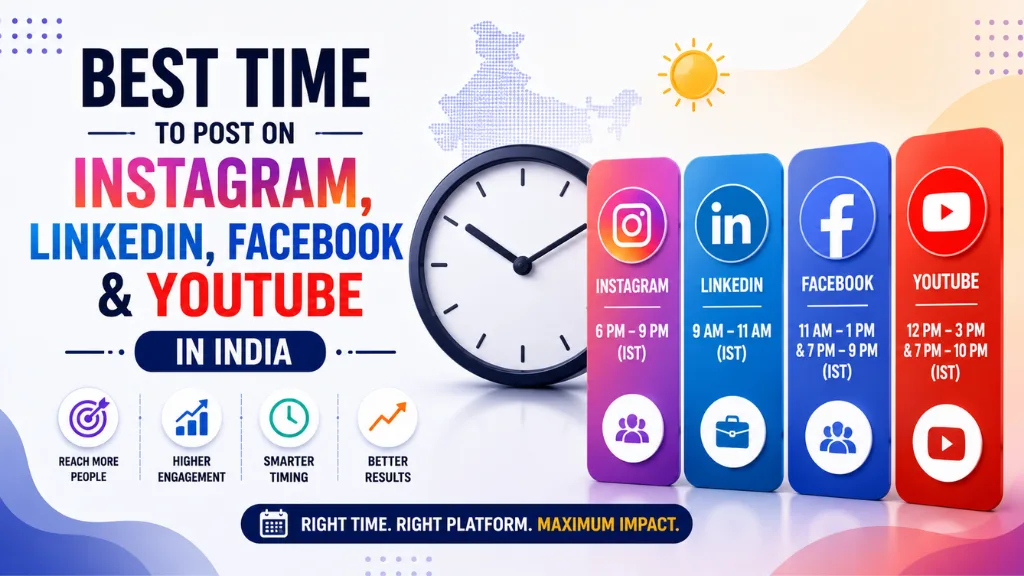
Social media affect SEO for Indian businesses through the specific platforms dominating the Indian market. Instagram Reels, YouTube Shorts, and LinkedIn are the three highest-reach channels for most Indian brands, and all three index in Google or contribute directly to entity signals.
Social media affect SEO most meaningfully for Indian local businesses through Google Business Profile consistency. A business with an active Instagram presence, consistent NAP (name, address, phone) information across platforms, and regular Google Business Profile posts presents a more complete and trustworthy entity to Google’s local ranking systems than a business with an isolated website and no social presence.
According to Search Savvy’s insights from managing integrated social and SEO strategies for Indian D2C and service brands, the clearest measurable social- to-SEO effect emerges within 7 to 14 days of consistently sharing new blog content on LinkedIn. Branded search queries for client sites increase measurably within 30 to 60 days of sustained, consistent social publishing – a timeline that aligns with the indirect brand awareness mechanism described above.
Conclusion: Indirect Does Not Mean Insignificant
Social media affect SEO through real, measurable indirect channels – not through the social signal myth that has been debunked for a decade. Likes do not rank pages. Shares do not rank pages. But the backlinks social distribution earns, the branded searches social awareness generates, the indexation speed social traffic accelerates, and the entity signals social presence contributes – all of these affect the signals Google uses to rank pages, every day, at scale.
Search Savvy treats social media as a distribution and authority layer within every integrated SEO strategy, because separating the two channels into different silos consistently leaves performance on the table that an integrated approach captures.
FAQ: Does Social Media Affect SEO Rankings – Your Questions Answered
Q1: Does Instagram affect Google SEO rankings? Not directly. Instagram blocks Googlebot from crawling most content. However, Instagram builds brand awareness that generates branded searches, which influences Google’s quality signals. Public professional Instagram accounts can be indexed, and consistent brand presence across Instagram contributes to entity recognition that affects how Google perceives a brand’s authority and legitimacy.
Q2: Does posting on LinkedIn help SEO? Yes, indirectly and more directly than most social platforms. LinkedIn content indexes directly in Google search results for professional and industry queries, meaning a well-optimised LinkedIn post can appear in Google search alongside traditional website pages. LinkedIn activity also builds brand authority and drives referral traffic with above-average engagement quality.
Q3: Do social media backlinks count for SEO? Most social media links are “nofollow” – they do not directly pass link equity to your website. The SEO value of social media for link building comes from content discovery: social distribution puts content in front of writers and publishers who then create editorial “dofollow” backlinks on their own sites. The social links themselves do not count; the editorial links they help generate do.
Q4: How long does it take for social media activity to affect SEO? The indirect mechanisms operate on different timescales. Indexation speed effects appear within days of social sharing. Backlink acquisition from social distribution typically builds over 4 to 8 weeks as links are published following content discovery. Branded search volume growth from sustained social activity becomes measurable over 30 to 90 days. Entity recognition improvements are a 6 to 12 month compounding effect.
Q5: Should I focus on SEO or social media for my brand? Both, in sequence. Social media and SEO are complementary layers of the same visibility strategy. Social media builds the brand awareness and distribution network that amplifies the value of SEO investment. SEO provides the durable, compounding organic traffic that social media alone cannot produce. A brand choosing one over the other gives up the compounding effect of both working together.
Q6: Does the 2024 Google API leak tell us anything about social media and SEO? Yes. The leaked Google API documentation confirmed that user engagement signals including click quality, dwell time, and return behaviour factor into ranking systems through mechanisms like NavBoost. This confirms that high-quality referral traffic from social media – visitors who engage genuinely with content – does contribute indirectly to ranking signals. It does not make social signals direct ranking factors, but it confirms that the quality of the traffic social media sends matters to how Google evaluates a page’s performance.
Not sure how your social media activity is currently affecting your SEO performance – or wondering whether your social strategy is actually converting into the ranking signals that matter? Visit Search Savvy for an integrated social and SEO audit that maps the specific mechanisms driving or missing from your visibility strategy.