Google Business Profile Attributes: Which Ones Actually Influence Local Ranking?

Google Business Profile attributes are not a documented standalone ranking factor. Google says local results are based mainly on relevance, distance, and prominence, and it describes attributes as details that can make your business appear when people search for places with those features. So the useful question is not “do attributes boost rankings?” but “for which searches do they make my profile eligible, and which ones are worth the effort?”
In this article19 sections
This guide separates what Google states, what practitioners observe, and what remains unproven. It covers accessibility and identity attributes, how attributes differ from categories, and a simple way to test the impact on your own profile.
What Are Google Business Profile Attributes?#
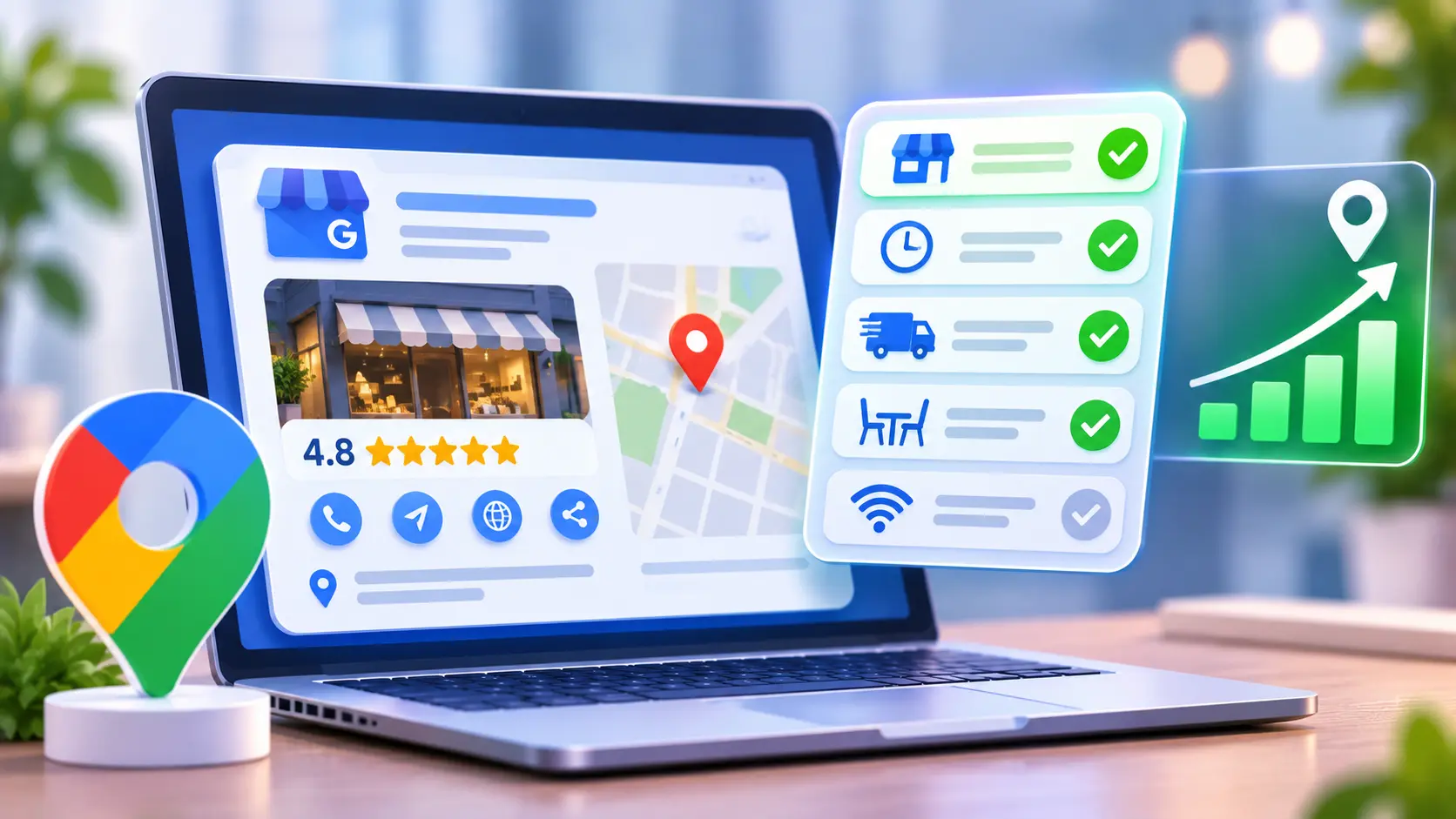
Google Business Profile attributes are selectable details that describe a business’s features, services, and identity, such as a wheelchair-accessible entrance, free Wi-Fi, outdoor seating, online appointments, or women-owned. They appear on Search and Maps listings, and the attributes you can choose depend on your business category.
That last point matters. Google’s own guidance notes that available attributes vary by category, so the wrong category gives you the wrong menu of options.
Do Google Business Profile Attributes Affect Local Ranking?#
Not as a general, documented ranking factor. Google states that adding certain attributes may make your business show up when people search for places with those attributes. That makes attributes a relevance signal for specific queries, such as “wheelchair accessible restaurant,” not a lever for broad rankings.
Local SEO specialists Whitespark take the same position: they say attributes do not affect rankings in general but can help in specific instances. Any claim that attributes lift you for every search is unsupported.
Category vs Attribute Ranking: Which Matters More?#
Category matters more, and it also controls which attributes you can use. In Whitespark’s 2026 survey of 47 local SEO experts across 187 factors, the primary category was reported as the top individual signal for Local Pack rankings. That is expert opinion, not a Google confirmation, but it is consistent across practitioner write-ups.
| Primary category | Attributes | |
| What it does | Tells Google what the business is | Describes features, services, identity |
| Ranking role | Strongest reported individual signal | Query-specific relevance |
| Dependency | Independent | Options depend on category |
| Risk if wrong | Poor match for core searches | Missing or irrelevant options |
Fix the category first. Attributes are the refinement layer, not a substitute.
Which Attributes Are Most Likely to Matter?#
Think in groups, and be clear about the strength of evidence for each.
| Attribute group | Examples | Where it helps | Evidence |
| Accessibility | Wheelchair-accessible entrance, seating, restroom, parking | Decision-making, qualified searches | Google lists accessibility attributes; ranking effect not documented |
| Identity | Women-owned, Black-owned, veteran-owned, LGBTQ+ owned | Searches naming that identity | Practitioner observation |
| Service options | Online appointments, delivery, dine-in | Intent-specific searches | Google says online attributes can improve discovery |
| Amenities | Wi-Fi, outdoor seating, pet-friendly | Feature-based searches | Google’s general attribute guidance |
Does the women-led business attribute help ranking?#
It can help you appear for searches that explicitly ask for women-owned or women-led businesses. Whitespark reports that identity attributes can affect ranking for searches related to the attribute, and Google’s identity attribute list includes women-owned alongside Black-owned, Latino-owned, Asian-owned, LGBTQ+ owned, disabled-owned, Indigenous-owned, veteran-owned, and small business.
Three cautions. Google has used both “women-led” and “women-owned” wording over time, so use whatever your dashboard shows. Availability can vary by country. And select it only if it is true, since Google asks for relevant, accurate attributes. For the small business option, Google’s help page sets a revenue threshold and excludes franchises, so check the criteria first.
Why accessibility attributes deserve priority#
No one has shown that accessibility attributes raise rankings, and this article will not claim it. They still earn a place at the top of your list because they answer a practical question before a visit. Someone deciding between two cafes may need to know whether the entrance, restroom, and seating are step-free. Accurate answers reduce failed visits and wasted trips. Verify each one physically before marking it.
Why Profile Completeness Matters More Than Any Single Attribute#
Attributes are one part of a complete profile. Google’s help page says customers are 2.7 times more likely to consider a business reputable when they find a complete profile, and 70% more likely to visit. Those are Google’s own figures, so treat them as directional, not as a guaranteed result.
A complete profile includes services, products, photos, a real description, hours, an opening date, and reviews, not just attribute checkboxes. Search Savvy’s complete Google Business Profile optimization guide walks through the full set, and the explainer on how to rank in the Google 3-pack shows where attributes fit among the bigger signals.
What We Still Do Not Know#
Be wary of confident numbers about attribute weighting. Google does not publish how much any single attribute counts, and expert surveys capture opinion and observation, not Google’s internal systems. Case studies are also hard to interpret, because profiles that add attributes usually fix other things at the same time.
What you can rely on is narrower but more useful: Google ties attributes to specific searches, ties the available options to your category, and asks for accuracy. Build your plan on those three points and treat everything beyond them as a hypothesis to test.
How to Choose and Set Your Attributes#
- Confirm your primary category. Do this before anything else, since it controls which attributes appear.
- Open your editor. Go to Edit profile, then More, then the attribute group you want to change.
- Set Yes or No only where you are certain. Leave unknowns blank.
- Audit accessibility and identity first. These are the most sensitive and the most useful.
- Check your public listing. Local SEO platforms note that some attributes shown to searchers come from customer input, not the owner.
- Record the change date. You will need it for testing.
- Re-check quarterly. Options vary by category and can change, and your premises or services may too.
For chains, standardize attributes by location type, then verify each site individually. Search Savvy’s guide to managing Google Business Profiles across multiple locations covers that governance.
How to Measure Attribute Selection Impact#
You cannot isolate an attribute’s effect perfectly, but you can build reasonable evidence.
- Change one group at a time. Adding accessibility attributes this month and identity attributes next month keeps results readable.
- Compare 28 days before and after. Look at calls, direction requests, and website clicks in your profile performance data.
- Test attribute-style searches manually. Search “women-owned [your category] near me” or “wheelchair accessible [your category]” from the area you serve, and note whether you appear.
- Account for noise. Seasonality, new reviews, and competitor changes all move the same numbers.
A realistic example: a restaurant adds outdoor seating and a wheelchair-accessible entrance, logs the date, and checks the next month’s direction requests. A rise is encouraging but not proof. Repeated across several locations, the pattern becomes more convincing. Restaurant owners can pair this with the tips in Search Savvy’s restaurant SEO guide on menu and review optimization.
Common Mistakes to Avoid#
- Claiming identity attributes that do not apply. It is deceptive and risks the profile.
- Choosing the wrong primary category. Every attribute decision depends on it.
- Ticking everything. Inaccurate features create bad visits and bad reviews.
- Expecting a ranking jump. Attributes work on specific queries.
- Changing many things at once. You will not know what worked.
- Never revisiting attributes. Renovations, new services, and new options all change what is true.
The Bottom Line#
Treat attributes as accurate, query-specific relevance signals, not ranking hacks. Get the category right, fill in every attribute that is true, give accessibility the most care, and test changes one group at a time. If you would like a specialist to review a profile or a multi-location setup, Search Savvy’s local SEO services are a sensible next step. Otherwise, start today by auditing your category and your accessibility attributes.
FAQ#
Can I add any attribute I want to my Google Business Profile?#
No. The attributes available depend on your business category, and some options are limited by country. Only add those that accurately describe your business.
Do accessibility attributes improve rankings?#
Google has not documented a ranking effect. They are still worth adding because they help people decide whether they can visit, and accuracy builds trust.
Is the women-led or women-owned attribute available everywhere?#
Availability can vary by country, and Google has changed its wording over time. Check which option appears in your dashboard before planning around it.
Can customers or Google change my attributes?#
Some attributes visible on listings come from customer input rather than the owner, according to local SEO platforms. Check your public listing regularly.
Should I choose attributes or categories first?#
Categories. The primary category is reported as the strongest individual local signal, and it also determines which attributes you can select.
How often should I review my attributes?#
Quarterly, and whenever your premises, services, or ownership details change.