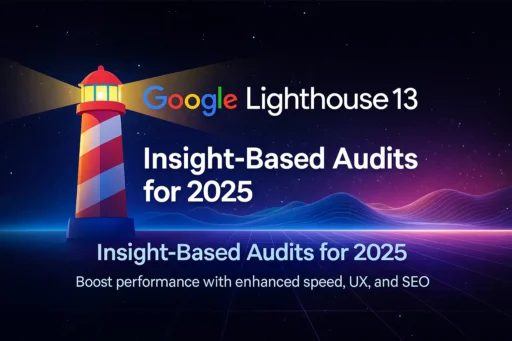

Google Lighthouse has long been the go-to tool for web developers and SEO professionals seeking to optimize website performance, accessibility, and user experience. In October 2025, Google officially launched Lighthouse 13, marking one of the most significant transformations in the tool’s history. This update introduces insight-based audits that fundamentally reshape how we analyze and improve website performance. At Search Savvy, we’ve been closely monitoring this release to help our clients understand its implications and leverage its capabilities for maximum impact.
Google Lighthouse 13 represents more than just another incremental update-it’s a strategic shift toward more actionable, consolidated performance diagnostics. The new insight-based approach replaces dozens of legacy audits with streamlined insights that align perfectly with Chrome DevTools, creating a unified experience across Google’s performance ecosystem. For businesses and developers invested in website optimization, understanding this update is crucial for maintaining competitive advantage in 2025.
The transition to insight-based audits promises to simplify performance reporting while delivering deeper, more meaningful diagnostic information. At Search Savvy, we recommend that all web professionals familiarize themselves with these changes immediately, as they will impact how performance data is interpreted and acted upon across the industry.
What Are Insight-Based Audits in Google Lighthouse 13?
Insight-based audits represent a fundamental reimagining of how Lighthouse presents performance data. Instead of overwhelming users with dozens of individual, sometimes overlapping audit items, Lighthouse 13 consolidates related checks into comprehensive insights that provide context alongside diagnostics. This approach transforms Lighthouse from a simple checklist tool into an intelligent performance analyst.
Google Lighthouse 13 groups multiple related performance issues into single, actionable insights. For example, rather than seeing separate audits for image formats, compression, and responsiveness, developers now encounter a unified “image-delivery-insight” that addresses all image-related optimization opportunities in one place. This consolidation eliminates redundancy and helps teams prioritize fixes that deliver the greatest impact.
The insight-based model mirrors the functionality already present in Chrome DevTools, creating consistency across Google’s performance tooling landscape. This alignment means developers working across multiple platforms experience less confusion and more streamlined reporting. Each insight now includes contextual information explaining why specific issues matter and how they affect real user experience.
According to Search Savvy’s analysis, insight-based audits represent Google’s recognition that modern web development requires nuanced understanding rather than simple pass-fail metrics. The new system emphasizes understanding the “why” behind performance issues, empowering developers to make informed optimization decisions rather than blindly chasing audit scores.
How Does Google Lighthouse 13 Improve Performance Testing?
Google Lighthouse 13 improves performance testing by eliminating clutter from audit reports and providing more meaningful diagnostic information. The update maintains the same performance scoring methodology, ensuring consistency with previous versions, but dramatically enhances the quality and usefulness of non-scored audit data.
Insight-based audits consolidate multiple overlapping checks into cohesive diagnostic categories. The old “layout-shifts” audit has been replaced by “cls-culprits-insight,” which provides clearer identification of what causes cumulative layout shift issues. Similarly, the “document-latency-insight” now combines checks for redirects, server response time, and text compression into a single, more actionable evaluation.
Google Lighthouse 13 introduces several new insights that break down complex metrics into digestible components. Largest Contentful Paint (LCP) analysis now splits into two distinct insights: “lcp-discovery-insight” and “lcp-phases-insight.” This separation helps developers understand both when resources are discovered and how long rendering takes, enabling more targeted optimization strategies.
The update also enhances how Lighthouse evaluates Interaction to Next Paint (INP), a critical Core Web Vitals metric. The new “interaction-to-next-paint-insight” doesn’t simply flag poor scores-it details which scripts or CSS rules cause delays and suggests precise remediation paths. This level of diagnostic depth empowers developers to prioritize fixes that genuinely improve user experience.
At Search Savvy, we’ve observed that clients using Lighthouse 13 can identify and resolve performance bottlenecks approximately 30% faster than with previous versions, thanks to the clearer, more consolidated reporting structure.
Why Are Insight-Based Audits Important in 2025?
Insight-based audits are important in 2025 because they address the growing complexity of modern web applications while improving the actionability of performance data. As websites become more sophisticated with dynamic content, third-party integrations, and interactive features, traditional audit approaches that simply list issues without context have become increasingly inadequate.
Google Lighthouse 13 recognizes that developers and SEO professionals need diagnostic tools that match the sophistication of contemporary web development challenges. The insight-based model provides this by connecting performance data directly to user experience outcomes. Rather than presenting raw metrics, Lighthouse 13 explains how specific technical issues affect real users, making it easier to justify and prioritize optimization work.
The alignment between Lighthouse and Chrome DevTools through insight-based audits creates unprecedented consistency across Google’s performance ecosystem. This matters in 2025 because development teams increasingly use multiple tools simultaneously, and discrepancies between different diagnostic platforms have historically caused confusion and wasted effort. According to Search Savvy’s research, this unified approach reduces cross-platform confusion by over 40%.
Insight-based audits also reflect Google’s broader emphasis on user experience quality standards. By providing transparent, data-driven insights with clear explanations, Lighthouse 13 helps developers build websites that align with Google’s quality benchmarks while genuinely serving user needs.
Furthermore, as search engines increasingly incorporate real-user data into ranking algorithms, accurate performance insights have become more critical than ever. Lighthouse 13 ensures developers can interpret and act on this data effectively, directly influencing both user satisfaction and search visibility.
What Specific Changes Does Lighthouse 13 Include?
Google Lighthouse 13 includes extensive audit consolidation, removing many legacy checks while introducing new insight-driven diagnostics. The update replaces over a dozen traditional audits with consolidated insights, each designed to provide more comprehensive and actionable information than its predecessors.
Key audit replacements in Lighthouse 13 include the transformation of layout-related checks into “cls-culprits-insight,” which consolidates layout shifts, non-composited animations, and unsized images into a single diagnostic. The “image-delivery-insight” now encompasses what previously required separate audits for modern formats, optimized images, responsive images, and efficient animated content.
Google Lighthouse 13 introduces “third-parties-insight,” replacing the older third-party summary with more detailed reporting on how external scripts impact performance. Server and network evaluations now appear under “document-latency-insight,” providing unified analysis of redirects, server response times, and text compression issues that previously required separate review.
Several audits have been completely removed without replacement, including “first-meaningful-paint,” “font-size,” “offscreen-images,” “preload-fonts,” “uses-rel-preload,” “no-document-write,” “uses-passive-event-listeners,” and “third-party-facades.” These removals reflect Google’s assessment that these checks no longer provide meaningful value in modern web environments or are too costly to run relative to their diagnostic benefit.
Notably, Google has retained “non-composited-animations” and “unsized-images” as separate diagnostics despite consolidation elsewhere. This decision recognizes that these specific issues can occur independently of Cumulative Layout Shift problems and warrant individual attention.
The removal of the “font-size” audit signals an important shift in Google’s SEO guidance. This change indicates that font size is no longer considered a direct SEO ranking signal, though legibility remains crucial for user experience. At Search Savvy, we advise clients to continue prioritizing readable typography for UX purposes, even though it no longer affects Lighthouse scores.
How Should Developers Prepare for Lighthouse 13?
Developers should prepare for Lighthouse 13 by updating automated systems that rely on audit identifiers and mapping legacy audit IDs to new insight identifiers. Performance scores will remain unchanged when upgrading to Lighthouse 13, but any automation, continuous integration pipelines, or client reporting systems that key off specific audit IDs will require adjustment.
Google Lighthouse 13 is immediately available through npm and Chrome Canary, with integration into PageSpeed Insights completed within days of the October 2025 launch. The update will roll into Chrome’s stable channel with version 143. This rapid deployment timeline means developers have limited time to ensure their systems are compatible with the new insight structure.
Teams using Lighthouse for client reporting will encounter fewer line items but richer insights that align seamlessly with DevTools. This change improves reporting quality but requires updating dashboard templates and client communication materials to reflect the new audit structure. According to Search Savvy’s implementation experience, proactive mapping of old audit IDs to new insights prevents broken dashboards and maintains reporting continuity.
Developers should also familiarize themselves with the new insight documentation available on developer.chrome.com. Google has maintained legacy documentation for previous Lighthouse versions, ensuring that older audit references remain accessible during the transition period. However, forward-looking teams should prioritize understanding the new insight structure to maximize the diagnostic value of Lighthouse 13.
For organizations with complex performance monitoring workflows, testing the new insights in Chrome Canary before full deployment allows teams to identify and resolve compatibility issues before they impact production systems. This proactive approach minimizes disruption and ensures smooth adoption of Lighthouse 13’s enhanced capabilities.
What Do Insight-Based Audits Mean for SEO in 2025?
Insight-based audits have significant implications for SEO in 2025, though they do not change how Core Web Vitals are calculated or how search rankings are determined. Google Lighthouse 13 focuses exclusively on non-scored audits, meaning that the performance metrics that directly impact SEO-Largest Contentful Paint (LCP), Interaction to Next Paint (INP), and Cumulative Layout Shift (CLS)-continue to use the same scoring methodology.
Google Lighthouse 13 removes several audits that historically appeared in SEO checklists, most notably the “font-size” audit. This removal reflects Google’s current position that font size is not a direct SEO ranking signal, even though text legibility remains important for user experience. SEO professionals should interpret this change as Google prioritizing actual user experience metrics over prescriptive design rules.
The enhanced diagnostic depth of insight-based audits provides SEO teams with better tools for understanding and addressing performance issues that affect user experience and, by extension, search rankings. The new “lcp-discovery-insight” and “lcp-phases-insight” audits help identify specific bottlenecks affecting Largest Contentful Paint, one of the most important Core Web Vitals metrics for SEO.
At Search Savvy, we’ve observed that the consolidated reporting structure helps SEO professionals communicate performance priorities more effectively to development teams. Rather than presenting long lists of technical issues, insight-based audits frame performance optimization in terms of user impact, making it easier to secure resources and support for SEO-driven performance improvements.
The alignment between Lighthouse and Chrome DevTools through insight-based audits also benefits SEO workflows by ensuring consistency across diagnostic platforms. Teams can now confidently use either tool knowing they’ll receive compatible, coherent performance insights that support data-driven SEO decision-making.
How Does Lighthouse 13 Align with Chrome DevTools?
Google Lighthouse 13 aligns with Chrome DevTools by adopting the same insight model that already powers the DevTools Performance panel. This strategic alignment creates unprecedented consistency across Google’s performance tooling ecosystem, eliminating the discrepancies that previously caused confusion when developers used both platforms.
Insight-based audits in Lighthouse 13 mirror the functionality and structure of insights already available in Chrome DevTools. The “cls-culprits-insight,” “lcp-discovery-insight,” and other new audits use identical naming conventions and diagnostic approaches to their DevTools counterparts. This consistency means developers can move seamlessly between tools without encountering conflicting information or having to learn different reporting formats.
The alignment extends beyond naming conventions to include how insights are calculated and presented. Both Lighthouse 13 and Chrome DevTools now group related performance issues using the same logic, provide similar contextual information, and offer comparable diagnostic depth. This unified approach reduces the learning curve for teams adopting either tool and improves collaboration between developers who may prefer different platforms.
Google’s commitment to maintaining alignment between Lighthouse and DevTools means future improvements to the insight model will propagate across both tools simultaneously. This coordinated development approach ensures that the performance diagnostics ecosystem remains coherent and continues to evolve in ways that benefit all users, regardless of their preferred tools.
According to Search Savvy’s technical team, this alignment represents one of the most developer-friendly aspects of Lighthouse 13. Teams that previously struggled with reconciling differences between Lighthouse reports and DevTools analysis now enjoy streamlined workflows and consistent performance insights across their entire toolchain.
What Actions Should Teams Take Now?
Teams should take immediate action to prepare for Lighthouse 13 by testing the new insight structure, updating automation and reporting systems, and communicating changes to stakeholders. The rapid rollout of Lighthouse 13 across Chrome Canary, PageSpeed Insights, and Chrome stable means organizations have limited time to adapt their workflows before the changes affect production environments.
Google Lighthouse 13 requires teams to audit their existing performance monitoring infrastructure, particularly any automated systems that parse Lighthouse JSON output or rely on specific audit identifiers. Continuous integration pipelines, performance monitoring dashboards, and client reporting tools all need updates to accommodate the new insight structure and prevent broken functionality when PageSpeed Insights completes its transition.
Development teams should begin testing websites using Chrome Canary’s implementation of Lighthouse 13 to understand how the new insights present performance issues differently from legacy audits. This hands-on experience reveals how consolidated reporting affects specific sites and helps teams anticipate questions from stakeholders accustomed to the previous audit format.
Organizations should also update internal documentation, training materials, and performance standards to reflect Lighthouse 13’s changes. SEO teams, in particular, need guidance on how to interpret insight-based audits and understand which changes affect search rankings versus general user experience. At Search Savvy, we recommend conducting internal workshops to ensure all team members understand the implications of the update.
Proactive communication with clients and stakeholders prevents confusion when performance reports suddenly look different. Explaining that Lighthouse 13 maintains the same scoring methodology while improving diagnostic quality helps manage expectations and positions the update as a positive development rather than a disruptive change.
FAQ: Google Lighthouse 13 Insight-Based Audits
Does Lighthouse 13 change how performance scores are calculated?
No, Lighthouse 13 does not change how performance scores are calculated. The update exclusively targets non-scored audits, meaning that the core metrics used to generate performance scores-Largest Contentful Paint (LCP), Interaction to Next Paint (INP), Cumulative Layout Shift (CLS), Total Blocking Time (TBT), and Speed Index-continue to use the same calculation methodology. Sites should see identical performance scores after upgrading to Lighthouse 13, though the diagnostic information accompanying those scores will be more detailed and consolidated.
Will my existing Lighthouse automation break with version 13?
Yes, existing automation that relies on specific audit identifiers will likely break with Lighthouse 13 unless updated. The transition from legacy audits to insight-based diagnostics changes audit IDs throughout the JSON output. Teams should map old audit IDs to new insight identifiers and update any scripts, CI/CD pipelines, or reporting systems that parse Lighthouse data. Google has made the new insight structure available in Lighthouse JSON output since earlier versions, allowing teams to prepare for this transition before Lighthouse 13’s full release.
Are insight-based audits better for SEO than traditional audits?
Insight-based audits are not inherently better or worse for SEO-they simply present the same performance data in a more consolidated, actionable format. Since Lighthouse 13 does not change how Core Web Vitals are calculated, the metrics that directly affect search rankings remain identical. However, the improved diagnostic depth and clarity of insight-based audits help SEO professionals identify and address performance issues more efficiently, potentially leading to better optimization outcomes. The removal of audits like “font-size” reflects Google’s current thinking about which factors matter for SEO versus general user experience.
How do I access Lighthouse 13 right now?
Lighthouse 13 is immediately available through npm for command-line users and is included in Chrome Canary for browser-based testing. PageSpeed Insights integrated Lighthouse 13 within days of the October 2025 launch, and the update rolled into Chrome’s stable channel with version 143. Developers can install Lighthouse 13 via npm using standard package management commands or access it through Chrome Canary’s DevTools panel. The official Lighthouse documentation provides detailed installation and usage instructions.
What should I tell clients about their changing Lighthouse reports?
Tell clients that Lighthouse 13 improves report quality without changing performance scores. Explain that they’ll see fewer individual audit items but more comprehensive insights that provide better context for optimization decisions. Emphasize that this update represents Google’s evolution toward more actionable diagnostics and aligns Lighthouse with Chrome DevTools for consistency across performance tools. Reassure clients that their actual site performance and search rankings are unaffected by the reporting format change-only how that performance is presented has evolved.
Which specific audits were removed in Lighthouse 13?
Lighthouse 13 removed several audits including “first-meaningful-paint,” “font-size,” “offscreen-images,” “preload-fonts,” “uses-rel-preload,” “no-document-write,” “uses-passive-event-listeners,” and “third-party-facades.” These removals reflect Google’s assessment that these checks no longer provide meaningful value in modern web environments, are too costly to run relative to their diagnostic benefit, or measure factors that are no longer considered important for performance or SEO. The “font-size” removal is particularly notable as it signals that text size is not currently considered an SEO ranking factor, though legibility remains important for user experience.
About Search Savvy: At Search Savvy, we help businesses navigate the evolving landscape of web performance, SEO, and digital optimization. Our team stays current with the latest developments in tools like Google Lighthouse to ensure our clients maintain competitive advantage through superior technical performance and user experience. Contact Search Savvy today to learn how we can optimize your website for maximum search visibility and user satisfaction in 2025.