

Google rankings dropped overnight, and panic sets in. You check your analytics dashboard, and the numbers confirm your worst fears-your carefully cultivated search positions have plummeted. Whether you’ve fallen from page one to page five or watched your top keywords vanish entirely, a dramatic ranking drop can feel devastating. At Search Savvy, we’ve guided countless businesses through these challenges, and the good news is that most ranking drops are recoverable with the right strategy and swift action.
Understanding why your rankings fell is the crucial first step toward recovery. In 2025, Google’s algorithm has become more sophisticated than ever, with artificial intelligence, user experience signals, and content quality taking center stage. According to recent data from First Page Sage, searcher engagement now accounts for 12% of Google’s ranking algorithm as of Q1 2025, while freshness has vaulted to become the sixth biggest factor at 6%. These shifts mean that what worked last year might not work today.
The digital landscape has evolved dramatically, with Google making thousands of algorithm adjustments annually. Some changes are minor and barely noticeable, while major core updates can significantly reshape search engine results pages (SERPs). At Search Savvy, we monitor these updates continuously to help our clients stay ahead of algorithmic shifts and maintain their hard-earned visibility.
How Does Google’s Algorithm Decide Rankings in 2025?
Google rankings dropped for many sites in 2025 because the search giant fundamentally changed how it evaluates content quality and relevance. The algorithm now prioritizes several key factors that website owners must understand to maintain visibility. These ranking signals have evolved significantly from previous years, with some traditional factors losing importance while newer ones gain prominence.
Experience, Expertise, Authoritativeness, and Trustworthiness (E-E-A-T) has become the cornerstone of Google’s quality assessment. Research shows that 74% of top-ranking pages in September 2025 include clear credentials or references to hands-on knowledge. This means your content must demonstrate genuine expertise from real subject matter experts, not just generic information rehashed from other sources.
Searcher engagement held steady as the fifth most important factor in Q1 2025, increasing from 11% to 12% of the algorithm. This factor measures how well your content satisfies user intent-both express and implied. Pages that keep users engaged, provide comprehensive answers, and encourage longer dwell times are rewarded with better rankings.
Content freshness made a dramatic leap in importance, jumping from less than 1% to 6% of the algorithm. Data shows that website pages updated at least once per year gain an average of 4.6 positions in SERPs compared to pages that haven’t been refreshed. This shift reflects Google’s commitment to providing users with current, relevant information.
Mobile-first indexing and Core Web Vitals continue to play critical roles. Loading speed, mobile responsiveness, and overall user experience are no longer optional-they’re direct ranking factors. Sites with page load times under two seconds receive preferential treatment, while slow-loading pages face penalties regardless of content quality.
Backlinks still matter but have declined in importance from 15% in 2024 to 13% in Q1 2025. Quality trumps quantity more than ever, with Google’s algorithms becoming increasingly sophisticated at identifying natural versus manipulative link patterns.
Why Did My Google Rankings Drop Suddenly?
Google rankings dropped dramatically for your site, but identifying the specific cause requires systematic investigation. The most common culprits fall into several distinct categories, each requiring different recovery approaches.
Algorithm updates top the list of ranking disruptors. Google rolled out major core updates in March, June, August, and December 2024, followed by additional updates in 2025. The June 2025 core algorithm update recalibrated how Google evaluates site quality overall, with news, health, finance, and shopping sectors experiencing especially high volatility. If your drop coincided with an update announcement on the Google Search Status Dashboard, you’ve likely been impacted by algorithmic changes.
Technical issues can cause sudden ranking losses. Common problems include robots.txt errors blocking Googlebot access, incorrect canonical tags creating duplicate content confusion, broken internal links disrupting site architecture, and XML sitemap errors preventing proper indexing. A single technical mistake can cascade into site-wide visibility problems.
Content quality concerns increasingly trigger ranking drops. Google’s Helpful Content System, refined throughout 2024 and 2025, aggressively demotes pages that seem created primarily for search engines rather than users. AI-generated content without substantial human editing, thin content lacking depth or original insights, and pages failing to demonstrate genuine expertise all face penalties.
Lost backlinks can severely impact rankings by reducing your site’s authority score. When quality sites remove links pointing to your content, Google interprets this as a signal that your page no longer deserves high rankings for competitive keywords.
Manual penalties represent the most serious ranking threats. If Google’s human reviewers identify policy violations-such as unnatural links, user-generated spam, hacked content, or deliberate deception-they may impose manual actions that devastate visibility. Check the “Manual Actions” report in Google Search Console immediately if you’ve experienced a sudden, severe drop.
Negative SEO attacks remain a real threat in 2025. Competitors or malicious actors may build spammy backlinks to your site, scrape your content and publish it elsewhere to create duplicate content issues, or hack your site to inject spam. While Google has improved at recognizing these attacks, they can still cause temporary ranking damage.
What Are the Most Common Technical Reasons Google Rankings Dropped?
Google rankings dropped due to technical issues more often than many site owners realize. At Search Savvy, we’ve found that technical SEO problems are among the easiest to diagnose and fix, yet they’re frequently overlooked until significant damage occurs.
Page speed problems have become critical ranking factors. Google’s September 2025 algorithm updates placed even more weight on loading performance, with Core Web Vitals now carrying enhanced importance. Specifically:
- Largest Contentful Paint (LCP) should occur within 2.5 seconds
- First Input Delay (FID) / Interaction to Next Paint (INP) must remain under 100 milliseconds
- Cumulative Layout Shift (CLS) should stay below 0.1
Use Google PageSpeed Insights to identify specific performance bottlenecks. Common culprits include uncompressed images, render-blocking JavaScript, lack of browser caching, and poorly optimized CSS.
Mobile usability problems can destroy rankings since Google’s index is mobile-first. Issues include non-responsive designs that don’t adapt to smaller screens, clickable elements placed too close together, text too small to read without zooming, and content wider than the viewport. The “Mobile Usability” report in Google Search Console identifies these problems with specific recommendations for fixes.
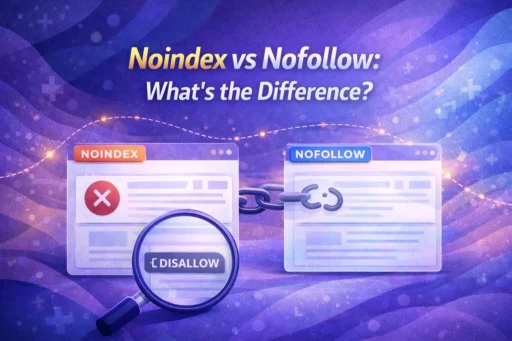
Indexing issues prevent pages from appearing in search results altogether. Problems include robots.txt files accidentally blocking important pages, noindex tags preventing indexation, server errors returning 5xx status codes, and slow server response times causing crawl budget waste. Regular monitoring through Google Search Console’s Coverage report helps catch these issues early.
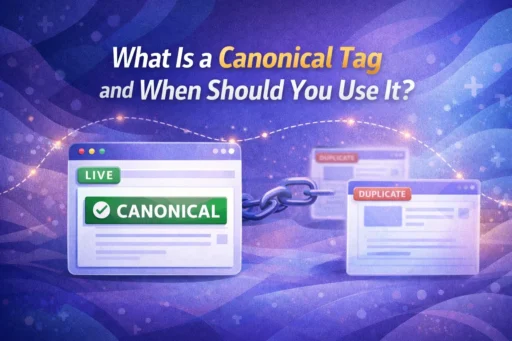
Duplicate content confuses Google about which version to rank. This occurs through URL parameter variations creating multiple page versions, HTTPS and HTTP versions coexisting without proper redirects, www and non-www versions both accessible, and scraped content appearing on other sites. Implement canonical tags correctly and use 301 redirects to consolidate duplicate URLs.
Structured data errors prevent rich results and reduce click-through rates. While schema markup alone doesn’t directly boost rankings, it helps Google understand your content better and can dramatically improve visibility through enhanced SERP features. Use the Rich Results Test to validate your markup.
How Can I Tell If My Google Rankings Dropped Due to an Algorithm Update?
Google rankings dropped, but determining whether an algorithm update caused your decline requires careful analysis. Algorithm updates affect millions of sites simultaneously, creating patterns that distinguish them from site-specific issues.
Check the timing of your ranking drop against Google’s official announcements. Visit the Google Search Central Blog and Search Engine Journal’s Algorithm Update History to see if major updates coincided with your visibility loss. The most impactful updates in 2024-2025 included:
- March 2024 Core Update (targeting unhelpful content)
- August 2024 Core Update (promoting quality, demoting low-value SEO content)
- June 2025 Core Update (emphasizing topical authority and E-E-A-T)
Analyze volatility patterns across your industry. Tools like SEMrush Sensor, Mozcast, and Wincher track SERP fluctuation levels. If your competitors experienced similar drops during the same timeframe, an algorithm update is likely responsible. Industry-wide volatility suggests systemic changes rather than site-specific penalties.
Review your traffic sources in Google Analytics. Algorithm updates typically cause gradual decline over days or weeks as Google recalculates rankings. Sudden overnight drops often indicate technical problems, manual penalties, or indexing issues rather than algorithmic adjustments.
Examine which pages lost rankings. Algorithm updates often target specific content types. For example, the Helpful Content System focuses on pages created primarily for search engines, product review updates affect review content, and spam updates target manipulative tactics. If losses concentrate in one content category, an algorithm targeting that area likely caused the drop.
Compare pre- and post-update performance in Google Search Console. Look at the date ranges before and after suspected update rollouts. Analyze queries and pages showing the most significant declines. Sites matching the update’s target profile will show concentrated losses in affected areas.
According to Search Savvy’s analysis of 2025 algorithm impacts, recovery typically requires aligning content with Google’s current quality standards, which increasingly emphasize genuine expertise, user-focused content, and technical excellence. Recovery timelines vary-some sites bounce back within weeks, while others require months of sustained improvement efforts.
Why Is Content Quality More Important Than Ever in 2025?
Google rankings dropped for countless sites in 2025 because content quality standards have reached unprecedented heights. The proliferation of AI-generated content has paradoxically made genuinely valuable, expert-created content more precious than ever.
The AI content flood has degraded average content quality across the web. As businesses adopted generative AI to mass-produce articles, Google responded with increasingly sophisticated filters to identify shallow, derivative content. The March 2024 Core Update reduced unhelpful content by 40%, and subsequent updates have continued this trend. Content created primarily to capture search traffic without providing substantial value faces swift demotion.
E-E-A-T requirements have intensified. The extra “E” for Experience was added to Google’s quality guidelines specifically because too much content was being written by people without genuine expertise or firsthand knowledge. In 2025, pages ranking in top positions typically include:
- Clear author credentials and qualifications
- Firsthand accounts or direct experience with the subject
- Original research, data, or insights unavailable elsewhere
- Citations to authoritative, verifiable sources
- Transparent disclosure of any conflicts of interest
Search intent alignment determines whether content succeeds or fails. Google’s natural language processing has become remarkably sophisticated at understanding not just what users type, but what they truly need. Pages must address both express intent (the literal query) and implied intent (the underlying goal). For example, someone searching “best project management software” likely wants comparison charts, pricing information, and implementation considerations-not just a list of names.
Content depth and comprehensiveness separate top-ranking pages from also-rans. The average first-page result on Google contains approximately 1,400 words, but length alone doesn’t guarantee success. Content must provide thorough coverage of topics, addressing related questions users might have, anticipating follow-up queries, and providing actionable insights.
Content freshness signals relevance and reliability. With freshness now accounting for 6% of Google’s algorithm, regularly updated content substantially outranks stale pages. Sites updating content at least quarterly see the greatest gains. Add publication dates, update timestamps, and refresh statistics, examples, and recommendations regularly.
At Search Savvy, we emphasize that quality isn’t subjective-it’s measurable through user engagement metrics. Pages with high-quality content generate longer session durations, lower bounce rates, higher pages per session, and more return visitors. These behavioral signals tell Google your content genuinely satisfies user needs.
What Should I Do First When My Google Rankings Drop?
Google rankings dropped, and immediate action can prevent further losses while beginning the recovery process. Follow this systematic approach to diagnose and address the issue effectively.
Step 1: Confirm the drop is real. Check multiple data sources to verify ranking losses. Google Search Console provides official impression and position data directly from Google. Third-party tools like SEMrush, Ahrefs, or SE Ranking offer historical tracking and competitive insights. Note that in September 2025, many tracking tools reported false drops due to Google disabling the “num=100” parameter, which affected data collection. Always verify with first-party analytics-if actual traffic hasn’t declined, reported ranking drops may be measurement artifacts.
Step 2: Identify the timing and scope. Determine exactly when rankings dropped and which pages were affected. Was the decline sudden (overnight) or gradual (over weeks)? Did specific pages lose rankings, or was the impact site-wide? Document affected keywords and their previous positions. This context helps identify whether you’re dealing with algorithm updates, technical issues, or competitive displacement.
Step 3: Check for manual penalties. Open Google Search Console and navigate to the “Manual Actions” section under “Security & Manual Actions.” If Google’s human reviewers identified policy violations, they’ll explain the specific problem here. Manual actions require submitting a reconsideration request after fixing the underlying issues. Common reasons include unnatural links, user-generated spam, thin content with little added value, and cloaking or sneaky redirects.
Step 4: Review recent site changes. Did you update your CMS, change your site structure, modify URLs, implement new plugins, or publish content shortly before rankings dropped? Many ranking losses trace directly to unintended consequences of well-meaning improvements. Common culprits include robots.txt changes blocking Googlebot, template updates removing schema markup, permalink structure changes creating redirect chains, and migration errors causing duplicate content.
Step 5: Run technical audits. Use comprehensive tools to identify technical problems:
- Google Search Console for coverage issues, mobile usability, and Core Web Vitals
- Screaming Frog or Sitebulb for crawl analysis and technical SEO issues
- PageSpeed Insights for performance bottlenecks
- Mobile-Friendly Test for responsive design problems
According to Search Savvy’s recovery protocols, addressing technical issues often delivers the fastest results because fixes typically take effect within days as Google recrawls your site.
How Do I Recover From a Google Algorithm Update?
Google rankings dropped after an algorithm update, but recovery is absolutely possible with strategic adjustments aligned with Google’s current priorities. The key is understanding what the specific update targeted and adapting accordingly.
Understand the update’s focus. Each core update emphasizes different quality signals. Review Google’s official announcements and study updates from Search Engine Journal to understand what changed. Recent updates have focused on:
- Helpful Content: Creating content for people, not search engines
- Product Reviews: Authentic, experience-based evaluations
- Core Updates: Overall quality and relevance across all content
- Spam Updates: Manipulative tactics and low-quality techniques
Audit affected content thoroughly. Analyze pages that lost rankings through the lens of the update’s targeting criteria. Ask critical questions: Does this content demonstrate genuine expertise? Would a human find this valuable? Does it provide information unavailable elsewhere? Is it clearly written by someone with firsthand experience? Be brutally honest-content that exists primarily to rank for keywords deserves demotion.
Implement comprehensive improvements. Recovery requires substantial enhancement, not minor tweaks:
- Add genuine expertise: Include author bios with credentials, interviews with subject matter experts, original research or data, case studies from real implementations
- Enhance E-E-A-T signals: Cite authoritative sources with proper attribution, add publication and update dates, include fact-checking references, implement author schema markup
- Improve user experience: Reduce page load times, optimize for mobile devices, eliminate intrusive interstitials, improve navigation and internal linking
- Update outdated content: Refresh statistics and examples, add recent developments, remove deprecated information, expand sections that need more depth
Build topical authority. Google increasingly rewards sites demonstrating comprehensive expertise in specific subject areas rather than shallow coverage of many topics. Create content clusters linking related pages, develop pillar content providing comprehensive overviews, interlink related content with descriptive anchor text, and establish yourself as a go-to resource for your niche.
Monitor recovery progress patiently. Algorithm update recovery takes time-typically 2-3 months minimum. Track key metrics weekly: organic traffic trends, average position in Search Console, impressions and click-through rates, and top-performing pages. Sites with stronger SEO foundations and consistent improvement efforts recover faster than those making sporadic changes.
At Search Savvy, we’ve observed that sites demonstrating genuine commitment to quality over optimization tactics not only recover but often surpass their previous positions as Google’s algorithms become more sophisticated at identifying truly valuable content.
What Role Do Backlinks Play When Google Rankings Drop?
Google rankings dropped, and your backlink profile may be responsible. While backlinks have declined from 15% to 13% of Google’s algorithm in 2025, they remain a critical ranking factor. Changes to your link profile-whether losses or toxic additions-can significantly impact visibility.
Lost backlinks reduce site authority. When quality sites remove links pointing to your content, Google interprets this as a signal that your page no longer deserves trust or recognition. Pages ranking in top positions typically maintain 95% more backlinks than lower-ranking competitors. Monitor your backlink profile using tools like Ahrefs, SEMrush, or Moz to identify when links disappear.
Causes of link loss include:
- Sites taking content offline or restructuring
- Partnerships or relationships ending
- Competitors replacing your link with theirs
- Sites moving to nofollow or removing links entirely
- Domains expiring or changing ownership
Reclaiming lost backlinks should be a priority. Reach out to webmasters explaining why their audience benefits from linking to your content. If the link removal was unintentional (site redesign, content migration), they may happily reinstate it. For deliberate removals, focus on earning new, high-quality links from authoritative sources in your industry.
Toxic backlinks can trigger penalties. Spammy, low-quality links pointing to your site-whether from negative SEO attacks or previous black-hat tactics-can harm rankings. Signs of toxic backlinks include links from obviously spammy domains, excessive exact-match anchor text, links from irrelevant or adult sites, and sudden spikes in backlink quantity. Use Google Search Console to monitor linking domains and disavow clearly manipulative links through the Disavow Tool.
Link diversity matters more than volume. Google values natural link profiles with varied source types: editorial links from relevant content, brand mentions and citations, directory listings in reputable sources, and links from diverse domain authorities. Sites over-focused on link building to the exclusion of other ranking factors often suffer when Google updates its algorithms.
Building quality backlinks remains valuable in 2025:
- Create genuinely link-worthy content (original research, comprehensive guides, useful tools)
- Develop relationships with industry influencers and journalists
- Guest post on authoritative sites in your niche
- Participate in relevant online communities authentically
- Leverage PR opportunities for brand mentions
According to Search Savvy’s link building analysis, the most sustainable approach combines creating exceptional content that naturally attracts links with strategic outreach to appropriate audiences who’ll find your content valuable.
How Important Is Mobile Optimization When Rankings Drop?
Google rankings dropped, and inadequate mobile optimization might be the culprit you’ve overlooked. With over 60% of searches now conducted on mobile devices and Google’s mobile-first indexing in full effect, your mobile experience directly determines rankings-even for desktop searches.
Mobile-first indexing means Google predominantly uses your mobile site for ranking and indexing. If your mobile version differs significantly from desktop, lacks important content, or delivers poor user experience, your rankings suffer across all devices. This represents a fundamental shift from earlier years when desktop performance drove rankings.
Common mobile usability problems that trigger ranking drops include:
- Slow loading on mobile networks: Pages must load in under 3 seconds on 4G connections
- Text too small to read: Font sizes should be at least 16px for body text
- Tap targets too close: Buttons and links need adequate spacing (at least 48px)
- Content wider than screen: Horizontal scrolling frustrates users and signals poor optimization
- Intrusive interstitials: Pop-ups covering main content trigger penalties
- Incompatible plugins: Flash and other unsupported technologies break mobile experiences
Core Web Vitals on mobile receive heightened scrutiny. Google measures Largest Contentful Paint (LCP), First Input Delay (FID)/Interaction to Next Paint (INP), and Cumulative Layout Shift (CLS) primarily on mobile. Sites failing to meet thresholds on mobile devices face ranking disadvantages even if desktop performance excels.
Test your mobile experience regularly using:
- Google’s Mobile-Friendly Test: Identifies basic compatibility issues
- PageSpeed Insights Mobile: Provides performance scores and improvement recommendations
- Search Console Mobile Usability Report: Lists specific problems Google encountered
- Real device testing: Nothing replaces manually checking on actual smartphones and tablets
Optimize mobile performance systematically:
- Implement responsive design that adapts layouts to screen sizes
- Compress and properly size images for mobile viewing
- Minimize JavaScript and CSS to reduce load times
- Use lazy loading for below-the-fold content
- Enable browser caching to speed return visits
- Consider AMP (Accelerated Mobile Pages) for content-heavy sites
At Search Savvy, we’ve seen dramatic ranking recoveries simply by addressing mobile optimization issues. One client regained 85% of lost traffic within three weeks after fixing mobile usability problems that had been silently damaging rankings for months.
What Should I Know About AI Overviews and Zero-Click Searches in 2025?
Google rankings dropped, but your positions haven’t changed-what’s happening? Welcome to the new reality of AI Overviews and zero-click searches. In 2025, ranking #1 no longer guarantees traffic like it once did, fundamentally changing how we measure SEO success.
AI Overviews (formerly SGE) now appear on an increasing percentage of searches, providing AI-generated summaries that answer queries directly on the search results page. Users get their answers without clicking through to websites. Early data from Coalition Technologies shows sites experiencing impression retention but significant click-through rate (CTR) drops-they’re still ranking, but users aren’t visiting.
Zero-click behavior has become the norm for informational queries. Google’s featured snippets, Knowledge Panels, AI Overviews, and direct answer boxes satisfy user needs without requiring site visits. This shift means traditional metrics like rankings and impressions matter less than actual traffic and conversions.
Adapt your content strategy for this new landscape:
Optimize for AI-driven features: Structure content for easy parsing with FAQs in question-answer format, concise definitions at the beginning, tables for comparative data, and bullet points for step-by-step instructions. Google’s AI preferentially pulls from well-structured content.
Create “beyond the answer” content: Develop content AI can’t easily replicate-unique case studies with proprietary data, in-depth personal experiences and perspectives, interactive tools and calculators, strong analytical frameworks, and exclusive interviews or research. Give users compelling reasons to click through even when basic answers appear in AI Overviews.
Focus on commercial intent keywords: While informational queries increasingly result in zero-click searches, commercial and transactional queries still drive significant traffic. Target keywords indicating purchase intent, comparison research, solution evaluation, and implementation guidance.
Build brand recognition: When users see your brand consistently mentioned in AI Overviews and featured snippets, it builds awareness even without clicks. This recognition drives direct traffic, branded searches, and offline conversions. Implement schema markup with Organization and Brand information to enhance visibility.
Diversify traffic sources: Reduce dependency on Google organic search alone. Invest in email marketing to build owned audiences, social media presence for direct engagement, YouTube content for video search visibility, and strategic partnerships for referral traffic.
Track visibility in AI features: Use tools developing AI Overview tracking capabilities. Monitor whether your content appears in summaries, gets cited as sources, or influences AI-generated responses. This “generative engine visibility” represents the new frontier of SEO measurement.
According to Search Savvy’s 2025 visibility analysis, successful sites are shifting focus from pure rankings to comprehensive digital presence across multiple touchpoints. The companies that thrive are those creating genuinely valuable content that drives brand awareness, regardless of whether users click from search results or arrive through other channels.
Frequently Asked Questions (FAQ)
Why do Google rankings fluctuate daily?
Google rankings fluctuate daily due to continuous algorithm testing, competitor activity, personalized search results, and natural volatility. Minor fluctuations of 1-2 positions are normal and don’t indicate problems. Google’s machine learning systems constantly test pages in different positions to determine optimal rankings. Significant drops beyond the top 20 positions or sustained declines over several weeks require investigation.
How long does it take to recover from a Google ranking drop?
Recovery time depends on the cause of your ranking drop. Technical fixes often restore rankings within days as Google recrawls your site. Algorithm update recovery typically requires 2-3 months of sustained improvements. Manual penalty recovery may take 3-6 months after addressing violations and submitting reconsideration requests. Sites with strong domain authority and consistent quality improvements recover faster than those making sporadic changes.
Can competitors cause my Google rankings to drop?
Yes, competitors can impact your rankings through superior SEO execution, better content quality, stronger backlink profiles, and improved user experience. In rare cases, negative SEO attacks-such as building spammy backlinks to your site or scraping your content-can cause ranking problems. However, Google has become increasingly sophisticated at identifying and ignoring negative SEO attempts. Focus on strengthening your own SEO rather than worrying excessively about competitor actions.
Should I update old content or create new content after rankings drop?
Both strategies work, but updating existing content often delivers faster results. Pages with established authority, existing backlinks, and indexing history recover more quickly when improved than entirely new pages. Focus on updating your highest-traffic pages first, adding current information, expanding thin sections, improving E-E-A-T signals, and optimizing for current search intent. Create new content to fill gaps in your topical coverage and target keywords you’re not currently ranking for.
What’s the difference between a Google penalty and an algorithm update?
A Google penalty is a manual action imposed by human reviewers for specific policy violations, listed in your Search Console “Manual Actions” report. Penalties require fixing issues and submitting reconsideration requests for removal. Algorithm updates are automated changes to Google’s ranking systems that affect millions of sites simultaneously without human intervention. Recovery from algorithm impacts requires improving content quality and technical performance, not reconsideration requests.
How do I know if my site has been hacked or has security issues affecting rankings?
Check Google Search Console’s “Security Issues” section for malware or hacking warnings. Signs of security compromises include unexpected content or links appearing on your site, unusual ranking patterns for pharmaceutical or adult keywords you don’t target, warnings in search results saying “This site may be hacked,” sudden spikes in pages indexed, and unauthorized administrator accounts. Address security issues immediately as they can trigger both manual penalties and algorithmic demotions.
Conclusion
Google rankings dropped, but recovery is within reach when you understand the causes and implement systematic solutions. The 2025 search landscape demands higher quality standards, better user experiences, and genuine expertise more than ever before. Algorithm updates, technical issues, mobile optimization gaps, and content quality concerns can all trigger ranking declines-but each has proven recovery strategies.
At Search Savvy, we’ve guided hundreds of websites through ranking recoveries by focusing on fundamentals: creating genuinely valuable content for users, maintaining technical excellence, building natural authority through quality backlinks, and adapting to Google’s evolving priorities. The sites that thrive in 2025 are those treating SEO not as manipulation but as the practice of making exceptional content discoverable to people who need it.
Your ranking drop might feel catastrophic today, but it’s also an opportunity to strengthen your digital foundation for long-term success. Start with the diagnostic steps outlined here, address the root causes systematically, and commit to sustained excellence rather than quick fixes. The path back to visibility requires patience and consistent effort, but the destination-sustainable rankings built on genuine value-is worth every step.
Remember that Google’s ultimate goal aligns with yours: connecting users with the best possible answers to their questions. When you focus relentlessly on creating content that genuinely helps your audience, technical excellence that delivers smooth experiences, and building authentic authority in your field, rankings naturally follow. The algorithm may be complex, but the principle is simple: be genuinely helpful, and Google will reward you with visibility.
Search Savvy stands ready to help you navigate whatever challenges your rankings face. Whether you need comprehensive audits, recovery strategies, or ongoing optimization, our expertise in Google’s latest algorithms ensures your site not only recovers but emerges stronger than before. Your audience is searching-let’s make sure they find you.