

SEO conversion rate is one of the most critical metrics for measuring the true success of your organic search strategy. At Search Savvy, we’ve seen countless businesses drive impressive traffic numbers only to discover that visitors aren’t taking meaningful action. Understanding and optimizing your SEO conversion rate bridges the gap between visibility and profitability, transforming casual browsers into paying customers or qualified leads.
This comprehensive guide explores everything you need to know about SEO conversion rates in 2025, from basic definitions to advanced optimization strategies. Whether you’re an experienced marketer or just beginning your digital journey, mastering this metric will help you maximize the return on your SEO investment.
What is an SEO Conversion Rate?
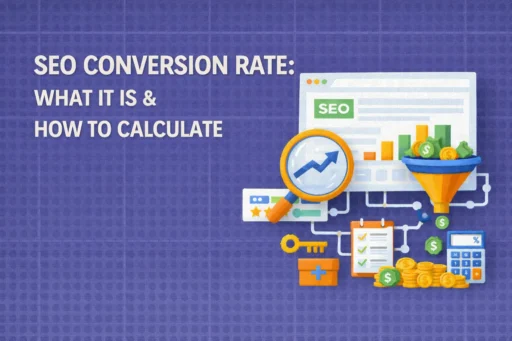
SEO conversion rate measures the percentage of organic search visitors who complete a desired action on your website. Unlike general website traffic, this metric specifically tracks visitors who arrive through search engines like Google, Bing, or Yahoo and subsequently perform an action you’ve defined as valuable to your business.
A conversion can take many forms depending on your business objectives. For e-commerce sites, conversions typically mean completed purchases. Service-based businesses might track form submissions or phone calls. Content publishers often measure newsletter sign-ups or resource downloads. According to Search Savvy’s analysis, the average conversion rate for SEO is 2.4%, though this varies significantly by industry and page type.
The beauty of SEO conversion rate lies in its specificity. While vanity metrics like total pageviews or time on site provide surface-level insights, conversion rate directly correlates with revenue generation and business growth. This metric tells you whether your organic search strategy attracts the right audience and whether your website effectively persuades them to act.
How Does SEO Conversion Rate Work?
SEO conversion rate functions as a performance indicator that connects search visibility with business outcomes. When someone searches for a relevant keyword, discovers your website in the search results, clicks through to your page, and completes a desired action, that journey represents a successful conversion from organic search.
The mechanism begins with keyword targeting and content optimization. Your SEO strategy should attract visitors with specific search intent that aligns with your offerings. Once these qualified visitors land on your site, the user experience, content quality, and conversion optimization elements determine whether they’ll take action.
According to recent data, leads that come as a result of search engine optimization have a 14.6% average close rate, compared to traditional strategies like print ads and direct mail which have an average conversion rate of 1.7%. This dramatic difference highlights why understanding and optimizing SEO conversion rate delivers such powerful results.
The conversion process involves multiple touchpoints. A visitor might read a blog post, explore product pages, compare pricing, and finally make a purchase. Each interaction represents an opportunity to guide them toward conversion, making it essential to optimize the entire user journey rather than focusing on isolated pages.
Why is SEO Conversion Rate Important in 2025?
SEO conversion rate has become increasingly important as digital competition intensifies and customer acquisition costs rise. In 2025’s economic landscape, businesses can’t afford to waste traffic on unqualified visitors or poorly optimized conversion funnels.
First, conversion rate directly impacts your return on investment. SEO delivers an average 825% ROI across all verticals, but only when that traffic converts into tangible business outcomes. Higher conversion rates mean extracting more value from existing traffic without increasing marketing spend.
Second, understanding your conversion rate helps justify SEO investments to stakeholders. When you can demonstrate that organic search converts visitors at specific, measurable rates, building the business case for continued SEO investment becomes straightforward. At Search Savvy, we recommend tracking conversion rate alongside traffic metrics to paint a complete picture of SEO performance.
Third, conversion rate optimization reveals critical insights about your audience. Low conversion rates might indicate targeting problems, usability issues, or misalignment between search intent and page content. These insights guide strategic improvements across your entire digital presence.
Finally, positive ROI of SEO campaigns is achieved in about 6 to 12 months, with peak results typically appearing in the second or third year. Monitoring conversion rates throughout this timeline helps you track progress, identify opportunities, and make data-driven adjustments that accelerate results.
How Do You Calculate SEO Conversion Rate?
Calculating SEO conversion rate involves a straightforward formula that provides actionable insights. The basic calculation divides the number of organic conversions by total organic visitors, then multiplies by 100 to express the result as a percentage.
The Formula:
SEO Conversion Rate = (Number of Organic Conversions ÷ Total Organic Visitors) × 100
Here’s a practical example: Suppose your website receives 10,000 organic visitors in a month. Of these visitors, 300 complete your desired action—whether purchasing a product, filling out a contact form, or downloading a resource. Your calculation would be: (300 ÷ 10,000) × 100 = 3% conversion rate.
This 3% figure means that for every 100 organic visitors, three complete the desired action. Understanding this ratio helps you forecast revenue, set realistic goals, and measure the impact of optimization efforts.
Tools for Tracking SEO Conversion Rate
Several platforms enable accurate conversion tracking. Google Analytics remains the industry standard, offering robust tools for monitoring organic conversions. To access this data, navigate to Acquisition > All Traffic > Channels, then select “Organic Search” as your traffic source. The Goal Conversion Rate column displays your performance.
For more sophisticated tracking, consider these approaches:
- Set up Goals in Google Analytics: Define specific actions as goals, such as form submissions, purchases, or time spent on site
- Enable E-commerce Tracking: For online stores, implement enhanced e-commerce tracking to monitor transaction values and product performance
- Use UTM Parameters: Track specific campaigns or content pieces to understand which SEO initiatives drive the highest conversion rates
- Implement Event Tracking: Monitor micro-conversions like video plays, downloads, or button clicks that indicate engagement
Search Savvy recommends establishing conversion tracking before launching major SEO initiatives. This baseline measurement enables accurate before-and-after comparisons and helps attribute revenue to specific optimizations.
What Factors Affect SEO Conversion Rate?
SEO conversion rate doesn’t exist in isolation—numerous factors influence whether organic visitors complete desired actions. Understanding these variables helps you identify optimization opportunities and troubleshoot underperforming campaigns.
User Intent Alignment: The most critical factor is matching content to search intent. Visitors searching for “best running shoes for beginners” have different needs than those searching “buy Nike Pegasus 40 size 10.” Your content and offers must align with the specific intent behind each keyword you target.
Page Load Speed: 53% of mobile users abandon sites that take longer than 3 seconds to load. Every second of delay potentially costs conversions. Optimizing images, leveraging browser caching, and minimizing code bloat directly impact conversion performance.
Mobile Experience: With mobile searches dominating in 2025, responsive design is non-negotiable. Pages that don’t display correctly on smartphones or require excessive zooming and scrolling drive visitors away before they can convert.
Trust Signals: Security badges, customer reviews, testimonials, and clear privacy policies build credibility. First-time visitors need reassurance before sharing information or making purchases. Prominent trust indicators can significantly lift conversion rates.
Call-to-Action Clarity: Vague or hidden CTAs confuse visitors and suppress conversions. Your desired action should be obvious, compelling, and easy to complete. Testing different CTA copy, placement, and design often yields dramatic improvements.
Content Quality: Thin, poorly written, or outdated content fails to persuade. Comprehensive, well-researched content that addresses visitor questions and concerns naturally guides them toward conversion.
How Do Different Industries Compare?
SEO conversion rates vary dramatically across industries due to differences in buying cycles, average transaction values, and customer behavior patterns. Benchmarking your performance against industry standards provides context for evaluating success.
Legal services see the highest conversion rate at 7.5%, while B2B SaaS companies average 2.1%, and local businesses like HVAC average 3.3%. These variations reflect the nature of each industry’s customer journey and decision-making process.
High-consideration purchases typically show lower conversion rates because visitors require multiple touchpoints before committing. For example, someone researching enterprise software might visit your site numerous times over weeks or months before converting. Conversely, local service searches often indicate immediate need, driving higher conversion rates.
Industry Benchmarks (2025):
- Legal Services: 7.5%
- HVAC/Local Services: 3.3%
- Average Across Industries: 2.4%
- B2B SaaS: 2.1%
- E-commerce: 2-3%
Understanding your industry’s benchmarks helps set realistic expectations and identify whether your performance indicates opportunity for improvement or suggests deeper strategic issues.
What is the Difference Between SEO and PPC Conversion Rates?
SEO conversion rates consistently outperform PPC (pay-per-click) advertising across most industries, though the mechanisms differ substantially. SEO nearly always converts at a higher rate than PPC, with organic search visitors demonstrating stronger purchase intent and higher trust in businesses ranking naturally.
Several factors explain this conversion advantage. First, organic rankings signal authority and legitimacy to searchers. Users understand that businesses earning top positions through SEO have invested in quality content and earned their visibility, while PPC ads are available to any business willing to pay.
Second, organic search typically attracts visitors further along the buying journey. Someone clicking an organic result has often researched their problem, compared options, and is closer to making a decision than someone clicking a PPC ad during preliminary research.
Third, the credibility gap affects conversion psychology. Studies show that users trust organic results more than advertisements, and this trust translates directly into higher conversion willingness. When visitors believe a business has earned its position rather than bought it, they’re more receptive to conversion offers.
However, PPC offers advantages in speed and control. While SEO requires months to deliver results, PPC campaigns can drive traffic immediately. At Search Savvy, we often recommend integrated strategies that leverage PPC for quick wins while building long-term SEO equity for superior conversion performance.
How Can You Improve Your SEO Conversion Rate?
Improving SEO conversion rate requires systematic testing and optimization across multiple dimensions. Start by analyzing your conversion funnel to identify where visitors drop off, then prioritize improvements based on potential impact.
Optimize for Search Intent: Review your top organic landing pages and ensure content matches visitor expectations. If users searching “compare project management tools” land on a product page pushing immediate purchase, misalignment suppresses conversions. Consider creating content that addresses their specific research stage.
Enhance Page Speed: Implement comprehensive performance optimization. Compress images, enable caching, minify CSS and JavaScript, and consider upgrading hosting infrastructure. Load times between 0 and 4 seconds yield the highest conversions.
Improve Mobile UX: Test your site on multiple devices and screen sizes. Ensure buttons are large enough for easy tapping, forms are simple to complete on small screens, and important content appears above the fold without excessive scrolling.
Strengthen CTAs: Test different CTA copy, colors, sizes, and placements. Sometimes changing “Submit” to “Get My Free Quote” or moving a button higher on the page produces significant conversion lifts.
Build Trust: Add customer testimonials, case studies, security badges, and clear contact information. Display recent reviews prominently and include authentic photos of your team or products.
Simplify Conversion Process: Reduce form fields to essential information only. Consider offering guest checkout for e-commerce sites. Every additional step in the conversion process increases abandonment risk.
Create Urgency: Limited-time offers, low-stock notifications, or countdown timers can motivate hesitant visitors to act immediately rather than leaving to “think about it.”
A/B Test Systematically: Never assume you know what works best. Test headlines, images, form lengths, and page layouts. Let data guide decisions rather than opinions.
What Role Does Content Play in SEO Conversion Rate?
Content quality directly influences conversion performance by building trust, answering objections, and guiding visitors toward action. Well-crafted content addresses visitor questions, demonstrates expertise, and creates emotional connections that facilitate conversion.
Different content types serve distinct conversion purposes. Top-of-funnel blog posts attract broad audiences and begin relationship building. Middle-of-funnel comparison guides help visitors evaluate options. Bottom-of-funnel product pages or service descriptions close deals by addressing specific needs and concerns.
The key is matching content depth and style to search intent. Someone searching “what is email marketing” needs educational content defining concepts and explaining benefits. Someone searching “Mailchimp vs Constant Contact pricing” needs detailed feature comparisons and cost breakdowns. Mismatched content creates friction that suppresses conversions.
Content also builds the credibility necessary for conversion. Comprehensive, well-researched articles position your business as an authority. When visitors perceive expertise, they’re more willing to trust you with their information or money.
Visual content enhances conversion effectiveness. Product photos from multiple angles, demo videos, infographics explaining complex concepts, and customer success stories all support the persuasion process. Consider that many visitors won’t read every word but will engage with visual elements.
Finally, content should anticipate and address objections. If visitors commonly worry about refund policies, pricing transparency, or implementation difficulty, your content should proactively resolve these concerns before they become conversion barriers.
How Do You Track and Analyze Conversion Rate Performance?
Effective conversion rate tracking requires establishing clear measurement frameworks, selecting appropriate tools, and committing to regular analysis. Without systematic monitoring, optimization efforts lack direction and impact measurement becomes impossible.
Start by defining what constitutes a conversion for your business. Primary conversions typically represent major business outcomes like purchases or qualified lead submissions. Secondary conversions might include newsletter sign-ups, resource downloads, or account creations that indicate engagement and future conversion potential.
Implement conversion tracking in Google Analytics by creating Goals for each conversion type. Navigate to Admin > Goals, then configure conversions based on destination URLs (thank you pages), duration (time on site), pages per session, or events (button clicks, form submissions).
For e-commerce businesses, enable Enhanced E-commerce tracking to monitor transaction values, product performance, and shopping behavior. This detailed data reveals which products drive revenue and which create friction in the purchase process.
Create custom dashboards displaying key conversion metrics. Include organic traffic volume, conversion rate by landing page, conversion value, and trending performance over time. Regular dashboard review helps identify patterns and anomalies requiring investigation.
Segment your analysis by device type, geographic location, and new versus returning visitors. These segments often reveal surprising conversion rate differences. Perhaps mobile visitors convert at half the rate of desktop users, indicating mobile optimization opportunities.
Set up automated reports delivering conversion performance data weekly or monthly. Consistent monitoring helps you spot trends early and respond quickly to changes, whether positive opportunities or concerning declines.
How Can Search Savvy Help Optimize Your Conversion Rate?
At Search Savvy, we specialize in connecting SEO visibility with business results through comprehensive conversion rate optimization. Our approach combines technical expertise, strategic content development, and data-driven testing to transform organic traffic into revenue.
We begin every engagement with thorough conversion audit, analyzing your current funnel performance, identifying drop-off points, and benchmarking against industry standards. This diagnostic process reveals the highest-impact optimization opportunities.
Our team then implements prioritized improvements across technical, content, and design dimensions. We optimize page speed, enhance mobile experiences, refine messaging, strengthen CTAs, and streamline conversion processes. Every change is carefully tested to measure impact.
Content development represents a core Search Savvy strength. We create comprehensive, intent-aligned content that attracts organic traffic and guides visitors toward conversion. Our writers combine SEO expertise with persuasive copywriting, producing content that ranks well and converts effectively.
We also provide ongoing monitoring and optimization. Conversion rate improvement is iterative, not one-time. Our team continuously tests new approaches, analyzes performance data, and implements refinements that compound results over time.
Whether you’re struggling with low conversion rates, seeking to maximize ROI from existing traffic, or building a new SEO strategy from scratch, Search Savvy delivers the expertise and execution needed to achieve your goals.
FAQ: Common Questions About SEO Conversion Rate
What is a good SEO conversion rate?
A good SEO conversion rate depends on your industry, but the average SEO conversion rate across all page types is 2.4%. E-commerce sites typically aim for 2-3%, while service-based businesses might target 3-5%. Industry leaders in legal services can achieve 7.5% or higher. The key is benchmarking against your specific industry and continuously improving your baseline performance.
How long does it take to improve SEO conversion rates?
Improving SEO conversion rates through optimization typically shows results within 2-8 weeks for quick wins like CTA improvements or page speed optimization. More substantial improvements involving content overhauls or site redesigns may require 3-6 months to deliver full impact. Positive ROI of SEO campaigns is achieved in about 6 to 12 months, with compounding benefits emerging over longer timeframes.
What’s the difference between conversion rate and click-through rate?
Click-through rate (CTR) measures the percentage of people who click your search listing after seeing it in results. Conversion rate measures the percentage of visitors who complete a desired action after landing on your site. Both metrics matter, but conversion rate directly correlates with revenue generation. You might have high CTR but low conversion rate if your content doesn’t match search intent or your conversion process contains friction.
Should I focus on increasing traffic or improving conversion rate?
The most effective strategy optimizes both simultaneously, but if resources require choosing, improving conversion rate typically delivers faster ROI than traffic growth. Doubling your conversion rate from 2% to 4% has the same revenue impact as doubling traffic, but often requires less time and investment. Additionally, conversion optimizations improve results from all traffic sources, not just organic search.
How do I identify what’s causing low conversion rates?
Start by analyzing user behavior through heatmaps, session recordings, and analytics data to identify where visitors drop off. Review your conversion funnel for friction points like confusing navigation, unclear CTAs, or lengthy forms. Compare mobile and desktop performance to spot device-specific issues. Conduct user testing to understand visitor perceptions and pain points. Finally, benchmark against competitors to identify gaps in trust signals, content quality, or user experience.
Can SEO conversion rate optimization help with voice search?
Absolutely. Voice search queries often indicate high intent and immediate need, potentially delivering higher conversion rates than traditional text searches. Optimizing for conversational keywords, creating FAQ-style content, and ensuring mobile-friendly experiences positions you to capture and convert voice search traffic effectively. As voice search continues growing in 2025, conversion optimization becomes even more critical for maximizing this opportunity.