

Ecommerce success in 2025 isn’t just about having great products-it’s about earning trust. With global ecommerce sales projected to exceed $6.4 trillion and over three billion online shoppers worldwide, the digital marketplace has never been more competitive. Yet a troubling trust gap persists: while 90% of executives believe customers highly trust them, only 30% of customers actually do.
At Search Savvy, we’ve observed that building digital trust has become the differentiator between thriving online stores and those struggling to convert visitors into customers. Trust isn’t a luxury-it’s the foundation of every successful ecommerce transaction. When 81% of customers refuse to engage with brands they don’t trust, and 89% will end relationships over trust violations, the stakes couldn’t be higher.
This comprehensive guide explores the essential website elements online stores must implement to build lasting customer trust in 2025 and beyond.
Why Is Trust Important in Ecommerce in 2025?
Trust shapes every aspect of the online shopping experience. Recent research reveals that global trust in digital services has declined compared to previous years, with not a single sector reaching above 50% approval when consumers were asked about trusting companies with their personal data. This erosion of confidence creates both challenges and opportunities for ecommerce businesses willing to prioritize trust-building.
Website elements online stores display directly impact purchasing decisions. Studies show that 67% of shoppers check return policies before making purchases, while 74% of consumers say a reliable website or app increases their trust in an online business. More importantly, 87% of customers are willing to pay more for brands they trust, demonstrating that trust directly translates to revenue growth.
Ecommerce brands that establish digital trust leadership see at least 10% annual revenue growth. The inverse is equally powerful: 67% of customers have stopped shopping mid-purchase because something aroused their suspicion. At Search Savvy, we emphasize that trust isn’t built through a single element-it’s cultivated through a comprehensive strategy addressing security, transparency, and user experience.
How Does SSL Certificate and Security Badging Work for Ecommerce Trust?
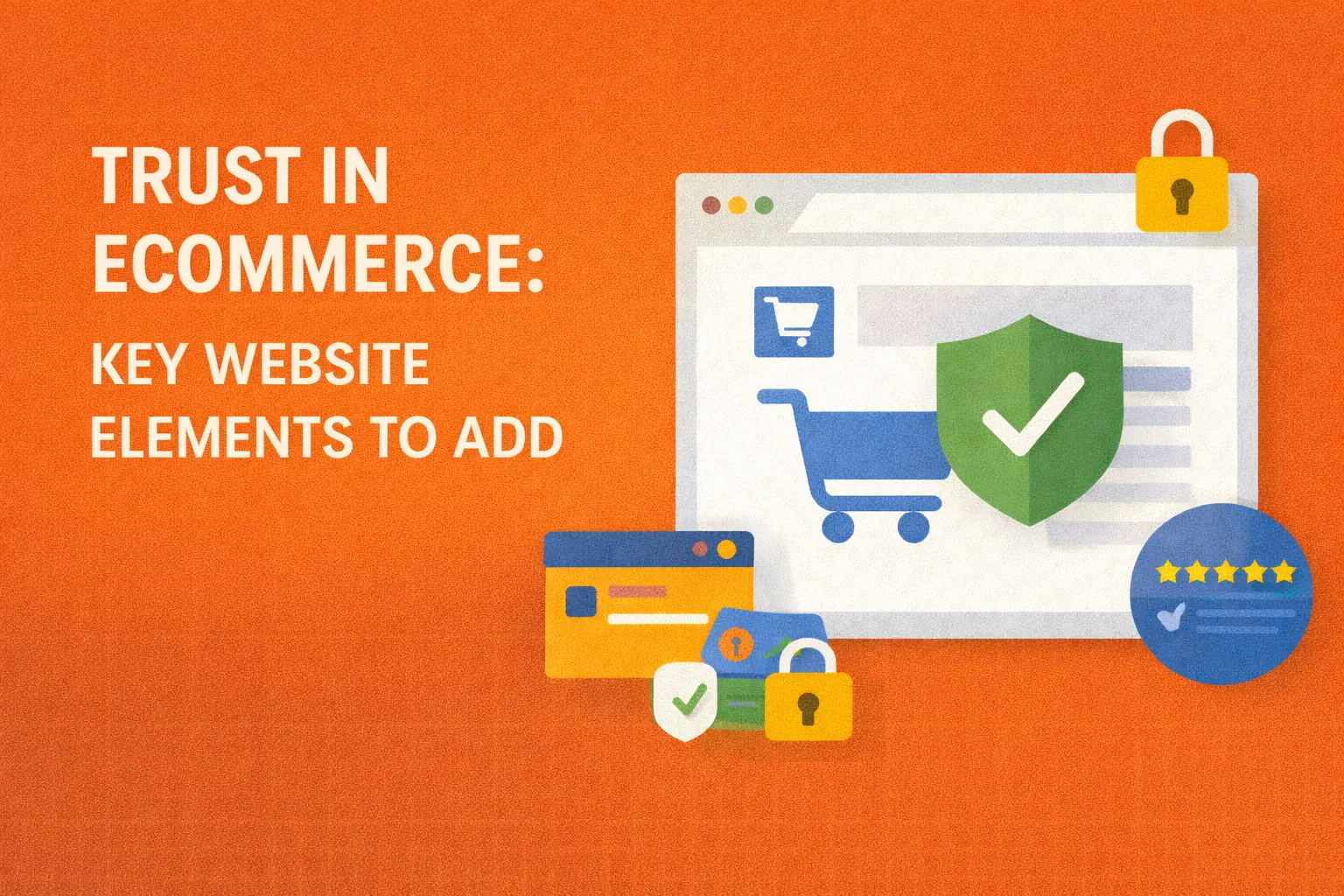
Ecommerce security badges remain fundamental website elements online stores must implement. An SSL certificate encrypts data transferred between browsers and servers, protecting sensitive customer information from interception. This basic security measure has become table stakes-websites without SSL certificates trigger “Not Secure” warnings that can damage credibility before customers even see products.
Security badges serve as visual proof of protection. The most recognized badges include McAfee (79% recognition), Verisign (76%), and PayPal (72%). Higher brand recognition correlates directly with increased customer confidence. However, recognition matters more than quantity-displaying unfamiliar badges can actually hurt more than help.
Website elements online stores should strategically place include SSL certificates prominently on checkout pages, product pages near “Add to Cart” buttons, and in website footers. Research indicates that adding security trust seals can increase conversion rates by up to 48%, while one case study documented a 137% conversion increase after displaying trust badges.
According to Search Savvy’s analysis, security badges work by addressing a primal customer fear: identity theft and data breaches. With 19% of consumers informed their personal data was compromised in the past year, and 18% not trusting stores with credit card information, visible security signals provide crucial reassurance at critical decision points.
What Are the Most Effective Trust Badges for Online Stores?
Ecommerce trust badges extend beyond basic security to encompass multiple trust dimensions. The most effective categories include:
Payment Method Badges: Displaying accepted payment options like Visa, Mastercard, American Express, PayPal, Apple Pay, and Google Pay serves dual purposes. These badges communicate payment flexibility while leveraging brand recognition from established financial institutions.
Money-Back Guarantee Badges: These signals reduce perceived purchase risk. Customers feel safer knowing they can receive refunds if products don’t meet expectations.
Third-Party Endorsement Badges: Certifications from Better Business Bureau, Trustpilot, or industry-specific organizations add external validation. These badges demonstrate that reputable third parties vouch for your business.
Quality Certification Badges: Product-specific certifications (like Certified Vegan, Organic Certification, or Fair Trade) enhance trustworthiness. Research shows quality trademarks increase trust perceptions by 8%, even when shoppers haven’t heard of specific certifications.
Website elements online stores should avoid include excessive badge displays. Overuse of promotional banners and popups doubles the number of customers who don’t trust websites. The key is strategic placement-position badges where doubt occurs (checkout pages, product pages) rather than cluttering every section.
At Search Savvy, we recommend prioritizing badges you can actually verify. Never display certifications you haven’t earned-customers increasingly verify claims, and false badges destroy credibility permanently.
How Do Customer Reviews and Testimonials Build Ecommerce Trust?
Customer reviews and testimonials rank among the most powerful website elements online stores can leverage. An overwhelming 93% of consumers read reviews before purchasing, while 72% trust businesses more after reading positive reviews. The impact is substantial: displaying reviews can boost sales by 270%.
Reviews work through social proof-the psychological principle that people follow others’ actions when uncertain. When shoppers see that previous customers had positive experiences, perceived risk decreases dramatically. This is particularly critical for B2B buyers, with 92.4% reading online reviews before making purchasing decisions.
Website elements online stores must optimize for reviews include:
Volume Matters: Thirty-nine percent of consumers say review quantity significantly impacts confidence. Products with five or more reviews are 270% more likely to sell. Don’t just collect positive reviews-accumulate enough volume to demonstrate widespread validation.
Visual Reviews: Sixty-two percent of consumers are more likely to purchase after seeing customer photos and videos. User-generated content receives 85% more views than branded content, and video testimonials can increase conversion rates by 80%.
Review Placement: Strategic positioning matters enormously. Display reviews on homepages, product pages near CTAs, and in dedicated testimonials sections. Making reviews easily accessible throughout the shopping journey reinforces trust at every touchpoint.
Response to Reviews: Engaging with both positive and negative feedback demonstrates commitment to customer satisfaction. This transparency shows you value input and work to improve experiences.
According to Search Savvy insights, authentic reviews trump perfection. While 95% of consumers read reviews before purchasing, 96% also carefully read negative reviews to spot potential issues. A mix of ratings appears more genuine than exclusively five-star reviews-62% of consumers express concerns about AI-generated fake reviews, making authenticity paramount.
Why Are Transparent Return Policies Essential for Ecommerce Trust in 2025?
Transparent return policies have evolved from convenience features to essential trust signals. Seventy-seven percent of European consumers base initial ecommerce shopping decisions on return policies, while 67% of shoppers check policies before purchasing. More dramatically, 79% of customers won’t purchase from stores charging return shipping fees.
Website elements online stores must address include clear return timeframes (63% of customers expect at least 30-day windows), straightforward procedures, and upfront cost communication. Hidden fees or vague language create friction that increases cart abandonment-unclear return policies directly cause shoppers to leave without purchasing.
The quality of return experiences profoundly impacts loyalty. Research shows 62% of shoppers will buy more from merchants after positive return experiences, while 84% of UK consumers won’t buy from brands again after poor return experiences. This makes return policies both customer acquisition and retention tools.
Ecommerce returns are significant-the average return rate reached 24.5% in 2025, costing retailers nearly $900 billion in 2024. However, customer-centric policies that clearly communicate conditions, timeframes, and refund methods build trust that ultimately reduces fraudulent returns while encouraging legitimate purchases.
At Search Savvy, we emphasize transparency as the cornerstone of effective return policies. Display policies prominently in footers, near “Add to Cart” buttons, and on checkout pages. Use graphics and icons to make dense information digestible. Communicate whether customers receive refunds, exchanges, or store credit, and specify any shipping costs or restocking fees upfront.
Modern return policies also signal brand confidence. When you offer hassle-free returns, you communicate faith in product quality-a powerful trust signal that reduces purchase hesitation.
How Does Website Design and User Experience Impact Trust?
Website design serves as your digital storefront, and first impressions form in less than 0.05 seconds. Ecommerce website elements online stores must optimize include responsive design, clean layouts, intuitive navigation, and modern aesthetics. Seventy-four percent of consumers say reliable websites increase trust, while 87% would rather wait for functional sites than access slow, buggy experiences immediately.
Modern Design Standards: Clean, uncluttered layouts allow products to shine. Modern typography, cohesive color palettes, and high-quality imagery signal professionalism. Studies show modern website design combined with quality seals improve trustworthiness perceptions by 30%.
Mobile Optimization: Mobile commerce accounts for 46% of all online sales ($3.2 trillion globally). Websites must function flawlessly across devices. Mobile-friendly designs that adjust to different screen sizes ensure easy browsing and build confidence that the business is technologically capable.
Page Speed: Website speed critically impacts trust and conversions. Slow-loading sites signal technical problems, triggering abandonment. In 2025, performance optimization is non-negotiable-speed builds confidence while delays destroy it.
Clear Navigation: Customers should find products within three clicks. Intuitive menus, prominent search bars, and logical category structures reduce frustration. When navigation is confusing, shoppers question whether the transaction process will be equally problematic.
Professional Product Presentation: Detailed product descriptions, high-resolution images from multiple angles, sizing guides, and specification charts help customers make informed decisions. This transparency reduces return rates while building purchase confidence.
Website elements online stores often overlook include contact information visibility. Displaying physical addresses, phone numbers, and email addresses prominently signals legitimacy-it shows real people operate the business who can be reached if issues arise.
According to Search Savvy research, trust signals should be integrated throughout user journeys, not confined to specific pages. From landing to checkout, every interaction either builds or erodes confidence.
What Role Does Transparent Pricing Play in Building Ecommerce Trust?
Transparent pricing has emerged as a critical website element online stores must master. Shoppers increasingly demand clarity about costs, delivery fees, taxes, and additional charges before reaching checkout. Hidden costs rank among top reasons for cart abandonment-surprise fees at checkout destroy trust instantly.
Effective pricing transparency includes:
All-Inclusive Pricing Display: Show total costs including taxes and shipping early in the shopping process. Customers appreciate knowing exactly what they’ll pay before investing time in checkout.
Clear Shipping Cost Communication: If shipping isn’t free, communicate costs clearly on product pages. Many successful stores display shipping costs or free shipping thresholds near “Add to Cart” buttons.
No Hidden Fees: Additional charges for processing, handling, or “convenience” feel deceptive. If costs exist beyond product and shipping, explain them upfront with clear justification.
Price Match or Best Price Guarantees: These policies signal confidence in competitive pricing while reducing customer concern about overpaying.
Ecommerce businesses leveraging transparent pricing build loyalty and trust that translates to higher customer lifetime values. When customers feel they’re getting fair, honest pricing, they’re more willing to return for future purchases. At Search Savvy, we’ve observed that pricing transparency, combined with quality products and service, creates powerful competitive differentiation.
How Can Contact Information and Customer Support Build Trust?
Website elements online stores frequently undervalue include comprehensive contact information and accessible customer support. Physical addresses provide proof of legitimate business operations-they demonstrate you’re not operating from “some devil’s armchair” (as one source colorfully stated) but from a real location with accountability.
Effective trust-building contact elements include:
Multiple Contact Methods: Provide email addresses, phone numbers, and physical addresses. The more ways customers can reach you, the more legitimate your business appears.
Live Chat Support: Real-time assistance reduces purchase hesitation by immediately addressing questions or concerns. Visible chat options signal commitment to customer service.
Comprehensive FAQ Sections: Proactively addressing common questions demonstrates customer-centricity while reducing support burden.
Contact Page Accessibility: Make contact information easy to find-prominent header or footer links ensure customers can always access support channels.
Response Time Commitments: Clearly stating when customers can expect responses (e.g., “We reply within 24 hours”) sets expectations and demonstrates organization.
Customer support quality directly impacts trust. When shoppers know they can reach real people who will resolve issues, purchase risk feels manageable. This accessibility particularly matters for high-ticket items where customers need reassurance before committing significant funds.
At Search Savvy, we recommend viewing contact information not as legal requirement but as trust-building opportunity. Every interaction point reinforces that real, accountable people stand behind your products and promises.
What About Privacy Policies and Data Protection for Building Trust?
Data privacy has become paramount for ecommerce trust. With 64% of consumers indicating confidence would significantly increase if brands adopted advanced security technologies, and 63% believing too much data protection responsibility falls on consumers, privacy policies and practices are critical website elements online stores must optimize.
Comprehensive Privacy Policies: Clear, accessible policies explaining data collection, usage, and protection build confidence. These shouldn’t be buried in legal jargon-write in plain language that customers actually understand.
GDPR and Compliance Signals: For international audiences, demonstrating compliance with data protection regulations like GDPR shows serious commitment to privacy rights.
Transparent Data Usage: Explain specifically how customer data improves their experience. Shoppers are more comfortable when they understand the value exchange.
Security Technology Communication: Highlighting use of encryption, secure servers, and other protective technologies reassures customers their information stays safe.
Research shows 84% of consumers believe keeping data safe and providing transparency around data usage are the top ways brands can regain trust after it’s lost. This means privacy isn’t just about compliance-it’s about competitive advantage.
Ecommerce brands prioritizing data protection distinguish themselves in a landscape where trust is eroding. Website elements online stores should include clear privacy links in footers, brief privacy assurances near data collection points (newsletter signups, account creation), and explicit security statements on checkout pages.
According to Search Savvy analysis, privacy communication works best when visual (badges, icons) and verbal (clear statements) elements combine. The goal is making customers feel their data is in trustworthy hands without requiring them to read lengthy legal documents.
Conclusion
Building trust in ecommerce requires comprehensive attention to website elements online stores often overlook or implement haphazardly. From SSL certificates and security badges to customer reviews, transparent return policies, and privacy protections, each element contributes to the overall trust equation.
The data is clear: trust directly impacts bottom lines. Companies prioritizing trust see higher conversion rates, increased customer lifetime values, reduced cart abandonment, and stronger competitive positioning. With 87% of customers willing to pay more for trusted brands and 89% ready to end relationships over trust violations, the business case for trust-building is unequivocal.
At Search Savvy, we believe 2025 represents a pivotal moment for ecommerce businesses. As digital trust continues declining across sectors, companies that genuinely prioritize customer safety, transparency, and experience will capture outsized market share. The website elements outlined in this guide provide a roadmap for building that trust systematically.
Remember: trust isn’t built overnight, but it can be destroyed instantly. Every design decision, policy choice, and customer interaction either strengthens or weakens the trust foundation. By implementing these proven website elements and maintaining authentic commitment to customer wellbeing, your online store can thrive in an increasingly competitive and trust-conscious marketplace.
Start with your highest-impact gaps-whether that’s adding security badges to checkout pages, soliciting and displaying customer reviews, or rewriting your return policy for clarity. Each improvement compounds, gradually transforming skeptical visitors into confident, loyal customers.
The future of ecommerce belongs to businesses that earn trust by deserving it.
Frequently Asked Questions (FAQ)
Q: What website elements have the biggest impact on ecommerce trust in 2025?
A: The most impactful elements include SSL certificates and security badges (increasing conversions up to 48%), customer reviews and testimonials (boosting sales by 270%), transparent return policies (influencing 77% of initial purchase decisions), modern responsive website design (trusted by 74% of consumers), and visible contact information. These elements work synergistically-no single element suffices, but collectively they build comprehensive trust that converts visitors into customers.
Q: How many trust badges should an ecommerce website display?
A: Quality trumps quantity with trust badges. Display only badges you’ve legitimately earned from recognized authorities-McAfee, Verisign, PayPal, and BBB have highest recognition rates. Strategically place 3-5 relevant badges at decision points (checkout pages, near “Add to Cart” buttons, in footers) rather than overwhelming visitors with excessive displays. Research shows overuse of promotional elements, including badges, can double customer distrust.
Q: Why do customer reviews matter so much for online store trust?
A: Customer reviews leverage social proof-the psychological principle that people follow others’ actions when uncertain. Ninety-three percent of consumers read reviews before purchasing, and 72% trust businesses more after seeing positive reviews. Reviews reduce perceived risk by demonstrating real people have successfully purchased and been satisfied. Volume matters too: 39% of shoppers say the number of reviews significantly impacts their confidence, with products having 5+ reviews being 270% more likely to sell.
Q: How transparent should ecommerce return policies be?
A: Maximum transparency is essential. Clearly communicate timeframes (most customers expect at least 30 days), eligible items, refund methods (money back vs. store credit), who pays return shipping, any restocking fees, and the return process steps. Display summaries prominently on product pages and link to full policies in footers. Remember: 79% of customers won’t buy from stores charging return fees, and 67% check policies before purchasing. Transparency builds trust while reducing customer service inquiries about return conditions.
Q: Do small ecommerce businesses need the same trust elements as large retailers?
A: Absolutely. Small businesses often face greater trust challenges than established brands-customers may have never heard of you, increasing purchase hesitation. Implement all core trust elements: SSL certificates (non-negotiable), customer reviews (actively solicit from early customers), clear return policies, visible contact information, and professional website design. These elements level the playing field by demonstrating legitimacy and commitment to customer satisfaction regardless of business size.
Q: How can ecommerce stores build trust without extensive customer review history?
A: New stores should actively solicit reviews from initial customers through post-purchase emails, offer incentives (discounts on future purchases) for honest feedback, leverage social proof from other channels (social media testimonials, influencer partnerships), display alternative trust signals (money-back guarantees, extensive product information, founder story), and emphasize security badges and transparent policies. As Search Savvy recommends, authenticity matters more than volume-a few genuine reviews outperform many that feel manufactured.