
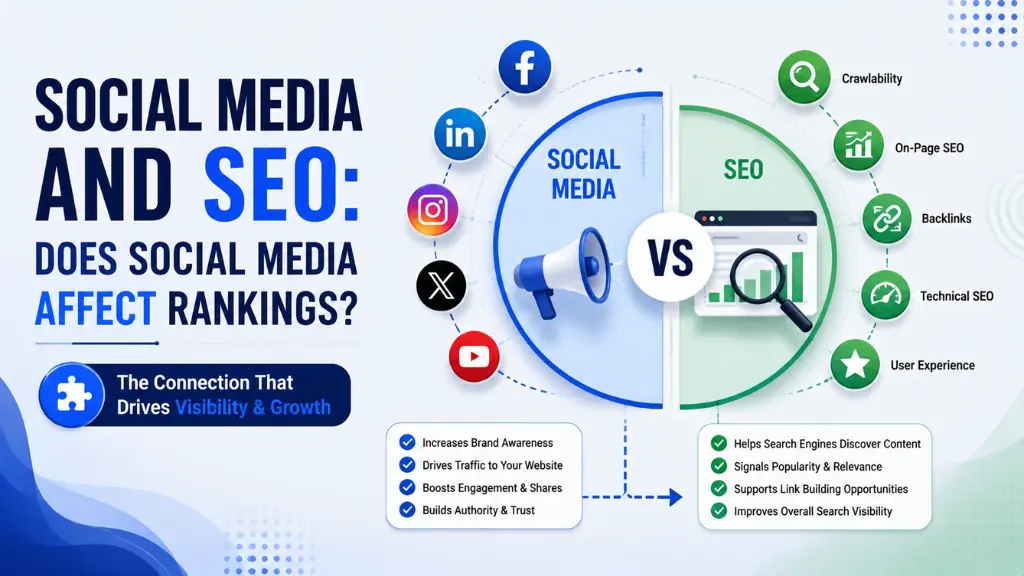

Here is the debate that has circled SEO conferences and marketing forums for over a decade: if a blog post goes viral on Instagram or gets hundreds of LinkedIn shares, does Google actually notice?
Social Media and SEO sit in a relationship most marketers misunderstand in one of two ways. The first group believes social shares and likes directly boost rankings, treating every viral post as a guaranteed shortcut to page one. The second group dismisses social media entirely because “it isn’t a ranking factor,” and misses the very real, very measurable ways a strong social presence quietly drives SEO results.
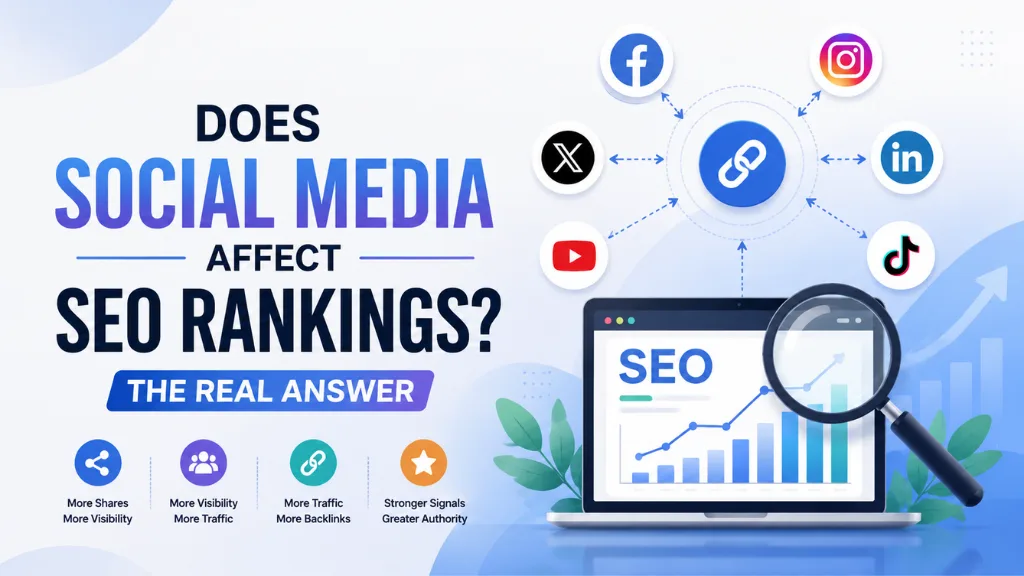
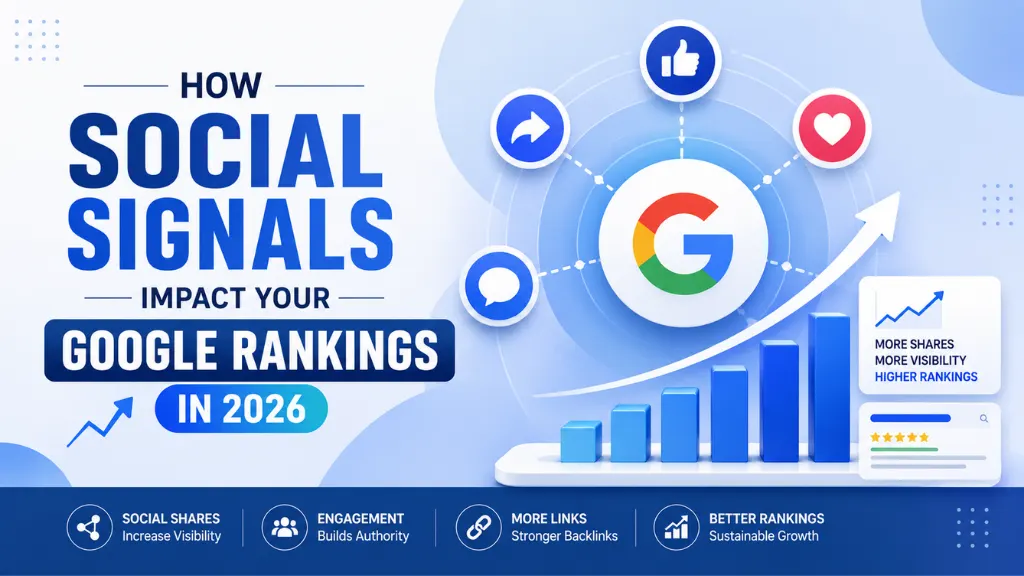
Social Media and SEO are not the same discipline, and social signals – likes, shares, follower counts – are not part of Google’s direct ranking algorithm. Google has confirmed this repeatedly through representatives including John Mueller and Gary Illyes. But that official position tells only half of the story, and the other half is where the real opportunity lies.
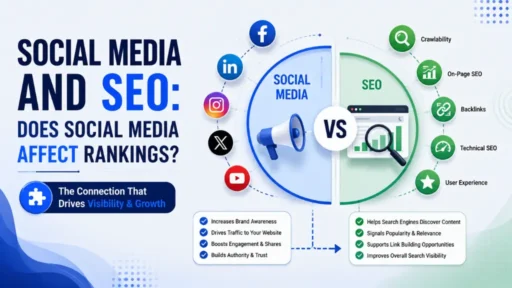
Social Media and SEO interact through a set of powerful indirect mechanisms – backlink generation, branded search growth, indexation speed, and referral traffic quality – that are just as real as any on-page factor, even if they take a different path to influence rankings.
At Search Savvy, we treat Social Media and SEO as a connected system, not two separate workstreams, because the brands winning in search consistently also maintain a strong, coherent social presence that feeds organic authority over time. This guide breaks down exactly how the relationship works, what the current evidence says, and how to use social media strategically to support search performance in 2026.
Does Social Media Directly Affect Google Rankings?
Social Media and SEO are not directly connected in Google’s ranking algorithm. Social signals – the likes, shares, retweets, and follower counts generated on platforms like Instagram, Facebook, and X – are not confirmed ranking factors in Google Search.
Social Media and SEO separation exists for clear technical and quality reasons. Google’s crawlers cannot access most social media content; the majority of Facebook and Instagram posts are blocked behind privacy settings and platform restrictions that prevent Googlebot from reading them. Social engagement numbers are also easily manipulated, making them unreliable as quality signals for an algorithm designed to resist gaming.
People Also Ask: Do Facebook likes and Instagram shares help Google rankings? Short Answer: No, not directly. Google has confirmed that social signals like likes, shares, and follower counts are not part of its ranking algorithm. Social media activity can indirectly influence rankings through mechanisms like backlink generation, branded search volume, and referral traffic quality, but the engagement numbers themselves are not read by Googlebot.
How Does Social Media and SEO Actually Work Together?
Social Media and SEO connect through a chain of indirect effects, each of which influences genuine, confirmed ranking signals rather than social metrics themselves. Understanding this chain is what separates a social strategy built to support SEO from one that runs entirely in parallel.
How Does Social Media Generate Backlinks for SEO?
Social Media and SEO connect most powerfully through backlink generation. When content is shared widely on social platforms, it gets discovered by bloggers, journalists, and content creators who may not have found it otherwise, and some of those people link to it from their own websites. Those earned, editorial backlinks are a confirmed ranking factor, and social sharing is one of the most reliable distribution mechanisms for generating them organically.
A Cognitive SEO analysis of over 23 million social shares found a strong correlation between widely shared content and higher Google rankings. Critically, the relationship runs through content quality – genuinely excellent content gets shared widely and earns backlinks – rather than the share count itself causing the ranking lift.
How Does Social Media Increase Branded Search Volume?
Social Media and SEO intersect significantly through branded search. When a brand builds consistent recognition across Instagram, LinkedIn, YouTube, and X, users who encounter it on social platforms are far more likely to search for the brand name directly on Google.
Branded search volume growth is a strong behavioural signal to Google that a brand is gaining relevance, recognition, and trust within its category. A study tracking social presence and search behaviour found that brands consistently active across multiple platforms generated measurably higher branded search queries over time, and those queries contributed positively to overall organic visibility.
How Does Social Media Speed Up Content Indexation?
Social Media and SEO benefit from a discovery effect too. When a new blog post or page is shared on social media immediately after publishing, it generates early traffic and engagement that signals to Google that fresh content exists. Google explicitly recommends promoting content on social media as a way to accelerate discovery and indexation, particularly for sites that do not yet have strong crawl frequency.
Why Is Social Media and SEO Integration Important in 2026?
Social Media and SEO have become more connected in 2026 for two specific reasons that did not exist at the same scale even two years ago.
The first is the rise of social platforms as search engines in their own right. YouTube holds the position of the world’s second-largest search engine with over 2.5 billion monthly users. TikTok, with over 1.6 billion users, has become a primary discovery channel for younger audiences searching for product reviews, tutorials, and local recommendations. Pinterest drives significant image-based organic traffic. LinkedIn content ranks directly in Google search results for B2B and professional queries. Optimising content on these platforms is now a parallel SEO strategy, not an optional extra.
The second reason is AI. The 2024 Google API documentation leak revealed that user engagement metrics are becoming increasingly important in Google’s algorithmic criteria. Google’s AI Overviews and AI Mode are heavily influenced by user experience and engagement signals across digital channels, including social. A stronger, more coherent social presence correlates with improved eligibility for AI-driven features, since AI systems evaluate brand recognition and topical consistency across surfaces.
- YouTube is the second-largest search engine globally, with 2.5 billion monthly users
- TikTok has over 1.6 billion users and functions as a primary discovery engine for Gen Z audiences
- LinkedIn content indexes directly in Google search results for professional queries
- Public Instagram professional accounts are now indexable by Google, expanding cross-surface visibility
- AI Overviews and AI Mode increasingly factor in cross-channel engagement signals
People Also Ask: Does YouTube SEO count as part of a broader SEO strategy? Short Answer: Yes. YouTube is both the world’s second-largest search engine and a platform whose video content ranks directly in Google search results. Optimising YouTube titles, descriptions, tags, and transcripts with relevant keywords is a distinct but complementary SEO discipline that significantly extends a brand’s overall search visibility.
What Are the Indirect SEO Benefits of a Strong Social Presence?
Social Media and SEO connect across six measurable indirect mechanisms that translate social activity into genuine ranking improvements over time.
| Indirect Mechanism | How It Supports SEO |
| Backlink generation | Wider content discovery leads to more editorial links from writers and publishers |
| Branded search growth | Social brand recognition drives direct Google searches for your name |
| Content indexation speed | Social traffic signals Googlebot to crawl and discover new pages faster |
| Referral traffic quality | Social visitors who stay on-page longer send positive engagement signals |
| E-E-A-T reinforcement | Consistent thought leadership across platforms strengthens perceived expertise |
| AI Overview eligibility | Cross-channel brand signals improve eligibility for AI-generated answer features |
Social Media and SEO benefits compound over time rather than appearing immediately. Brands that consistently publish useful, shareable content and build genuine social audiences find that every new blog post enters a distribution system that accelerates its discovery, earns backlinks faster, and triggers branded searches – none of which happen at the same scale for brands with a minimal social presence.
People Also Ask: How does social media affect E-E-A-T for SEO purposes? Short Answer: Social media builds the visible brand presence and consistent thought leadership that Google’s quality evaluators use to assess a brand’s real-world expertise and authority. A brand widely cited, discussed, and engaged with on professional platforms like LinkedIn signals the kind of genuine credibility that underpins strong E-E-A-T scores.
How Should You Optimise Social Profiles for SEO?
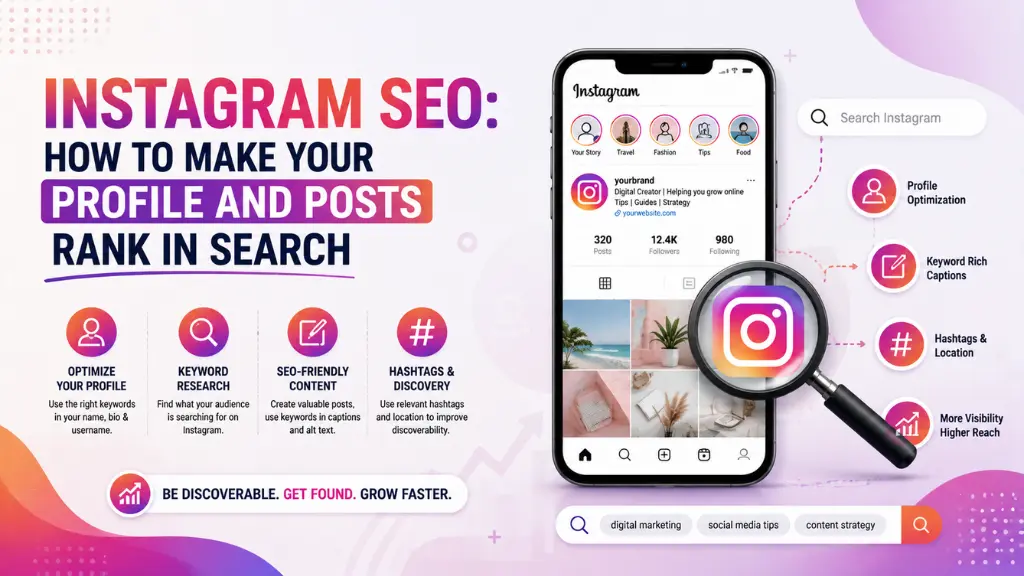
Social Media and SEO benefit when social profiles themselves are treated as SEO assets rather than standalone brand pages. Your social profiles frequently appear in Google search results when users search for your brand name, making them an extension of your controlled search presence.
Social Media and SEO profile optimisation follows a few simple principles. Use consistent brand names and keywords across every platform. Include your website URL clearly in every bio or about section. Write platform descriptions that use the language your audience actually searches. This consistency strengthens both the branded search results your company controls and the entity recognition signals that AI systems use to understand who you are.
How Should Indian Businesses Approach Social Media and SEO?
Social Media and SEO integration looks slightly different for Indian businesses, given that the platforms driving the most organic discovery in India are not always the same as in Western markets. YouTube is the dominant video discovery engine across every tier of Indian cities. Instagram Reels drive strong reach for product and lifestyle brands. LinkedIn is growing rapidly for B2B and professional service providers in metros.
Social Media and SEO should also account for WhatsApp’s unique role in the Indian market. While WhatsApp shares are not crawlable and do not contribute to backlinks directly, content that spreads on WhatsApp drives significant direct and referral traffic, generating the kind of branded searches and on-site engagement that do feed indirectly into ranking signals.
According to Search Savvy’s insights from managing integrated social and SEO strategies for Indian SMB and D2C clients, the highest-impact single habit is consistently sharing every new blog post to LinkedIn and YouTube within 24 hours of publication – this drives early indexed traffic that accelerates Google’s crawl frequency for those pages significantly.
Conclusion: Not a Direct Factor, But Far From Irrelevant
Social Media and SEO do not share a direct wire. Likes, shares, and follower counts do not appear in Google’s ranking formula, and pretending otherwise leads to wasted effort chasing vanity metrics that move no needle.
But Social Media and SEO are genuinely connected through content distribution, backlink generation, branded search growth, and AI visibility signals – all of which make a strong social presence one of the most reliable amplifiers of organic search performance available to any brand.
Search Savvy builds every content strategy around this integration, treating social media as the distribution layer that makes SEO investments compound faster. Start with consistent, genuinely useful social content, and the SEO benefits follow naturally.
FAQ: Social Media and SEO – Your Questions Answered
Q1: Are social media shares a confirmed Google ranking factor? No. Google has confirmed repeatedly that social signals – likes, shares, comments, and follower counts – are not direct ranking factors. The SEO value of social media comes through indirect mechanisms like backlink generation, branded search growth, and referral traffic quality.
Q2: Can a viral social media post improve my Google rankings? Not directly, but indirectly yes. A viral post dramatically expands the audience exposed to your content, increasing the likelihood that bloggers and publishers link to it. Those earned backlinks are a confirmed ranking factor, which is how viral social success can eventually translate into ranking improvements.
Q3: Does optimising my LinkedIn profile help my SEO? Yes. LinkedIn content and profiles are indexed by Google and can rank in search results for branded, professional, and industry-topic queries. A well-optimised LinkedIn presence strengthens your branded search footprint and contributes to the E-E-A-T signals associated with visible professional expertise.
Q4: Should I share every blog post on social media immediately after publishing? Yes. Google recommends promoting content on social media as a way to accelerate discovery and indexation. Early social traffic signals to Googlebot that fresh content exists, helping new pages get crawled and indexed faster than they would organically.
Q5: Does YouTube count as part of an SEO strategy? Yes. YouTube is the world’s second-largest search engine, and YouTube videos rank directly in Google search results. Optimising YouTube content with keywords, transcripts, and descriptions is a distinct SEO discipline that extends overall search visibility beyond traditional web pages.
Q6: How long does it take for social media activity to influence SEO results? Indirect SEO benefits from social media build over three to six months as branded search volume grows, backlinks accumulate from social-driven content discovery, and referral traffic patterns become consistent enough to register as meaningful engagement signals in Google’s systems.
Not sure how your social media activity is currently supporting or missing your SEO goals? Visit Search Savvy for an integrated audit that shows exactly how your social presence and search visibility connect – and where the biggest untapped opportunities are.