


Keyword research remains the cornerstone of every successful SEO strategy in 2026. Understanding what your target audience searches for online enables you to create content that meets their needs, drives organic traffic, and positions your business as an authority in your industry. At Search Savvy, we’ve seen firsthand how strategic keyword research transforms websites from invisible to indispensable in search results.
The landscape of search has evolved dramatically with AI-powered tools, voice search optimization, and changing user behaviors. But one fundamental truth remains: keyword research for SEO is the process of identifying the words and phrases your potential customers use when looking for your products, services, or information. According to Search Savvy’s insights, businesses that invest time in comprehensive keyword research see significantly higher returns on their content marketing efforts compared to those who skip this critical step.
This comprehensive guide will walk you through everything you need to know about keyword research-from understanding the basics to implementing advanced strategies that work in 2026’s AI-driven search environment. Whether you’re just starting out or looking to refine your existing approach, Search Savvy has compiled the most current data and proven techniques to help you dominate search engine results.
What Is Keyword Research for SEO?
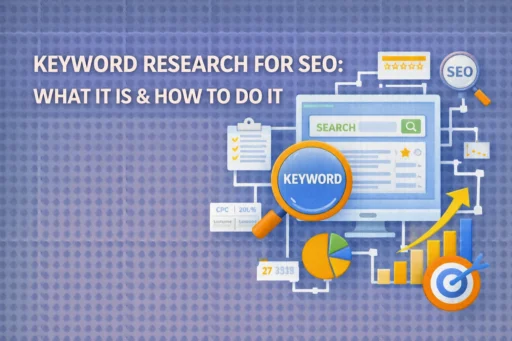
Keyword research for SEO is the systematic process of discovering, analyzing, and selecting the search terms your target audience uses when looking for information, products, or services online. This foundational SEO practice involves identifying which phrases have the highest potential to drive qualified traffic to your website while considering factors like search volume, competition level, and user intent.
At its core, keyword research helps you understand the language your customers speak. When you align your content with these search queries, search engines like Google recognize your pages as relevant answers to user questions, improving your chances of ranking higher in search results. The ultimate goal is to create a strategic list of keywords that balance visibility with relevance, ensuring you attract visitors who are genuinely interested in what you offer.
In 2026, keyword research has evolved beyond simply targeting high-volume terms. Modern strategies focus on search intent, topical authority, and creating content clusters that demonstrate expertise across related subjects. This holistic approach signals to search engines that your website is a comprehensive resource worth ranking for multiple queries within your niche.
Why Is Keyword Research Important in 2026?
Keyword research is more crucial than ever in 2026 because it serves as the bridge between your business and your audience’s needs. Without understanding what people are searching for, you’re essentially creating content in the dark, hoping it resonates with someone, somewhere. Strategic keyword research eliminates this guesswork and provides data-driven direction for your content strategy.
The importance of keyword research extends beyond just improving rankings. It helps you discover market trends, understand customer pain points, and identify gaps in your competitors’ content strategies. When you know which questions your audience asks most frequently, you can create targeted content that addresses those specific needs, positioning your brand as the go-to authority in your field.
Furthermore, with the rise of AI overviews and answer engines like ChatGPT Search and Perplexity gaining market share alongside traditional Google searches, keyword research helps ensure your content appears across multiple search platforms. By optimizing for user intent rather than just exact keyword matches, you increase your visibility in this evolving search landscape where AI-generated answers are becoming increasingly prominent.
How Does Keyword Research Work?
Keyword research works by combining audience insights with data analysis to identify the most valuable search terms for your business. The process begins with understanding your ideal customer-who they are, what problems they face, and what language they use when seeking solutions. This foundational knowledge informs every subsequent step in your keyword research journey.
Modern keyword research tools like Semrush and Ahrefs pull data from billions of search queries to provide metrics on search volume, keyword difficulty, cost-per-click, and competitive analysis. These platforms use machine learning algorithms to suggest related terms, identify question-based queries, and reveal what your competitors rank for. At Search Savvy, we recommend starting with broad “seed keywords” related to your business, then expanding into more specific long-tail variations that match different stages of the buyer journey.
The workflow typically involves: entering seed keywords into research tools, analyzing the suggested variations, evaluating metrics like difficulty and search volume, understanding the search intent behind each term, and finally selecting keywords that align with your content strategy and business goals. This methodical approach ensures you’re not just chasing high numbers but targeting terms that will actually convert visitors into customers.
What Are the Different Types of Keywords?
Keyword research for SEO encompasses several distinct categories, each serving a unique purpose in your content strategy. Understanding these types helps you create a well-rounded keyword portfolio that captures audiences at every stage of their journey.
Short-tail keywords are broad, one-to-three-word phrases like “SEO tools” or “coffee maker” that typically have high search volumes but intense competition. While they attract large audiences, they’re often less specific about user intent, making conversions more challenging. These keywords work well for building general brand awareness but shouldn’t be your sole focus.
Long-tail keywords are more specific phrases of three or more words, such as “best free SEO tools for beginners 2026” or “how to make cold brew coffee at home.” These keywords typically have lower search volumes but significantly less competition, making them easier to rank for. More importantly, they indicate clearer user intent and often convert better because they match exactly what someone is looking for.
Question keywords begin with words like “how,” “what,” “why,” “when,” or “where” and are perfect for blog posts and informational content. Examples include “How do you make cold brew coffee?” or “What is keyword research?” These keywords align perfectly with voice search queries and featured snippet opportunities.
Transactional keywords indicate buying intent and include modifiers like “buy,” “purchase,” “pricing,” or “discount.” For example, “buy SEO tools subscription” or “Semrush pricing 2026” signal that searchers are ready to make a purchase decision, making these incredibly valuable for conversion-focused pages.
How Can You Conduct Effective Keyword Research in 2026?
Keyword research in 2026 requires a strategic, multi-layered approach that balances traditional methods with modern AI-powered insights. Start by defining your goals-whether you’re focusing on driving traffic, generating leads, or increasing conversions-as this will guide your keyword prioritization.
Begin with brainstorming seed keywords relevant to your business, products, or services. Think about the problems you solve and how customers might phrase their searches. Then leverage keyword research tools to expand your initial list. Google Keyword Planner offers free baseline data, while premium tools like Semrush’s Keyword Magic Tool provide deeper insights with their database of over 27.3 billion keywords across 142 locations.
Analyze competitor keywords to identify opportunities they’ve captured and gaps you can fill. Use tools to see which terms drive traffic to competitor websites, then evaluate whether you can create better, more comprehensive content for those same queries. Don’t forget to check your own existing rankings in Google Search Console-you might already rank on page two or three for valuable terms that just need content optimization to reach page one.
Consider search intent for every keyword on your list. Informational queries need educational content, navigational searches want specific pages or brands, transactional terms require product or service pages, and commercial investigation searches benefit from comparison guides and reviews. Matching your content format to search intent dramatically improves your chances of ranking and converting visitors.
What Tools Should You Use for Keyword Research?
Keyword research tools are essential for gathering accurate data and making informed decisions about which terms to target. The right tools save countless hours while providing insights impossible to obtain manually.
Google Keyword Planner remains a solid free option for basic keyword research, offering search volume estimates and competition data directly from Google. While it provides broad ranges rather than exact numbers, it’s perfect for beginners and works seamlessly with Google Ads campaigns for businesses running paid search alongside organic efforts.
Semrush stands out as a comprehensive marketing suite offering over 55 tools for SEO, PPC, content marketing, and competitive analysis. With a database of 27.3 billion keywords and 3.7 billion specifically for the USA, Semrush excels at competitor analysis, keyword clustering, and providing search intent data automatically. The platform offers a 14-day free trial for new users to test its capabilities.
Ahrefs features the largest keyword database at 28.7 billion keywords across 217 locations and is renowned for its powerful backlink analysis capabilities. While Ahrefs has fewer USA-specific keywords than Semrush (2.2 billion), it offers exceptional historical SERP data and helps identify content that performs well in terms of shares and links. Ahrefs’ Keyword Explorer provides traffic potential estimates that often prove more accurate than simple search volume numbers.
Free alternatives like Google Trends, Answer The Public, and AlsoAsked help identify trending topics and question-based queries without requiring paid subscriptions. These tools work excellently for discovering content angles and understanding seasonal search patterns.
How Do You Analyze Keyword Metrics?
Keyword research metrics provide the data needed to make strategic decisions about which terms deserve your time and resources. Understanding these numbers helps you avoid wasting effort on impossible-to-rank keywords or low-value terms that won’t move your business forward.
Search volume indicates how many times people search for a specific keyword each month. While high volume seems attractive, it’s just one piece of the puzzle. A keyword with 1,000 monthly searches and strong conversion potential often outperforms one with 10,000 searches but weak commercial intent.
Keyword difficulty (KD) scores, typically ranging from 0-100, estimate how hard it will be to rank for a specific term based on the authority and quality of currently ranking pages. Beginners should focus on keywords with difficulty scores below 30, while established sites can target more competitive terms. Remember that these scores are estimates-sometimes you can rank for “difficult” keywords if you create exceptionally valuable content.
Cost-per-click (CPC) data from paid search provides insight into a keyword’s commercial value. Higher CPCs indicate strong buying intent and willingness to pay, suggesting these terms could drive valuable organic traffic as well. Even if you’re not running ads, CPC data helps prioritize keywords that matter to your bottom line.
Search intent reveals what users actually want when they type a query. Tools now classify keywords as informational (seeking knowledge), navigational (looking for a specific website), transactional (ready to purchase), or commercial investigation (comparing options before buying). Matching your content to the right intent is more important than ever in 2026.
What Are Content Clusters and Topical Authority?
Keyword research for SEO in 2026 goes beyond individual keywords to embrace content clustering strategies that build topical authority. Content clusters organize your website around central “pillar” topics with supporting “spoke” content that covers related subtopics, all interconnected through strategic internal linking.
For example, if “healthy eating” is your pillar topic, supporting content might cover “easy meal prep ideas,” “best foods for heart health,” and “how to read nutrition labels.” Each piece links back to the main pillar page and to related spokes, creating a web of content that demonstrates comprehensive expertise. This structure signals to search engines that your site is an authoritative resource worth ranking for multiple related queries.
Google now prioritizes topical authority over individual keyword rankings, meaning sites that thoroughly cover a subject area tend to outperform those with isolated articles. By creating 4-6 content pillars with supporting clusters, you establish yourself as a subject matter expert while naturally incorporating hundreds of related keywords throughout your content ecosystem.
This approach also makes keyword research more efficient. Instead of researching keywords in isolation, you identify broad topic areas, then research all related keywords and questions within each cluster. This holistic view ensures comprehensive coverage while preventing keyword cannibalization-the problem of multiple pages competing for the same search terms.
How Has Voice Search Changed Keyword Research?
Keyword research must now account for voice search as more people use virtual assistants like Siri, Alexa, and Google Assistant to find information. Voice queries differ significantly from typed searches-they’re longer, more conversational, and often phrased as complete questions.
While someone might type “best pizza NYC,” they’d ask their voice assistant “What’s the best pizza restaurant near me?” This shift toward natural language means targeting question keywords and conversational long-tail phrases has become crucial. Tools that identify question-based queries help you optimize for this growing search method.
Voice searches also skew heavily toward local intent, with phrases including “near me,” “in my area,” or “within 5 miles” becoming increasingly common. Businesses serving local markets must incorporate hyperlocal keyword variations and ensure their Google Business Profile is optimized to capture this voice-driven traffic.
Featured snippets matter more than ever for voice search, as many voice assistants read these concise answers aloud. Structure your content with clear headings formatted as questions, followed by concise 40-60 word answers, to increase your chances of winning these coveted position zero rankings that dominate voice search results.
What Role Does AI Play in Keyword Research?
Keyword research has been transformed by AI-powered tools that provide deeper insights and automation capabilities. Modern platforms use machine learning to suggest semantically related keywords, predict search trends, and even generate content briefs based on your target terms.
AI tools like ChatGPT and Google’s Gemini can help brainstorm keyword ideas and generate seed keyword lists, though they can’t provide specific metrics like search volume without integration with traditional keyword tools. These AI assistants excel at understanding context and suggesting creative angles for content that traditional tools might miss.
More significantly, AI has changed how search engines interpret queries. Google’s algorithms now understand synonyms, context, and user intent far better than before, meaning exact keyword matching matters less than comprehensively covering a topic. This shift requires a more holistic keyword strategy focused on semantic relationships rather than repetitive keyword stuffing.
Search platforms themselves have integrated AI, with Google’s Search Generative Experience (SGE) and AI Overviews changing how results display. To maintain visibility, keyword research must now consider not just traditional rankings but also how to get cited in AI-generated answers through authoritative, well-structured content that directly addresses user queries.
What Common Keyword Research Mistakes Should You Avoid?
Keyword research mistakes can waste months of effort and resources on content that never ranks or converts. Understanding these pitfalls helps you avoid them and stay focused on strategies that actually work.
Ignoring search intent is perhaps the most common and costly mistake. Creating informational blog content for transactional keywords, or vice versa, results in high bounce rates and poor rankings because your content doesn’t match what searchers actually want. Always analyze the current search results to understand what type of content Google considers relevant for each keyword.
Focusing exclusively on high-volume keywords leads to frustration, especially for newer websites. Competing for terms with 100,000+ monthly searches against established authorities rarely succeeds. Instead, build your strategy around achievable long-tail keywords that you can actually rank for, gradually working toward more competitive terms as your domain authority grows.
Neglecting keyword difficulty analysis causes wasted effort. Just because a keyword has attractive search volume doesn’t mean it’s worth targeting if every ranking page has domain authority above 70 and you’re starting with DA 20. Balance ambition with realism by targeting a mix of easy, medium, and challenging keywords.
Keyword cannibalization-having multiple pages competing for the same term-confuses search engines and dilutes your ranking potential. Conduct regular content audits to identify and consolidate or differentiate pages targeting similar keywords. Each page should have a clear, unique target keyword and purpose within your content strategy.
How Do You Build a Keyword Strategy?
Keyword research transforms from data into results through strategic implementation. Building a keyword strategy means organizing your research into actionable content plans that align with business goals and resource availability.
Start by categorizing keywords by intent and funnel stage. Top-of-funnel informational keywords like “what is SEO” attract awareness-stage visitors, middle-funnel comparison keywords like “Semrush vs Ahrefs” capture consideration-stage prospects, and bottom-funnel transactional keywords like “SEO services pricing” target decision-ready buyers. This framework ensures you create content for every customer journey stage.
Prioritize keywords using a systematic scoring method. Consider factors like search volume, keyword difficulty, relevance to your business, traffic value, and current ranking position. Some SEO professionals use the KOB (Keyword Opportunity/Benefit) scoring system, which calculates: (Traffic Value × Relevance) ÷ Keyword Difficulty = Priority Score. This data-driven approach removes guesswork from deciding which keywords to tackle first.
Create a content calendar that maps keywords to specific content pieces with realistic publication dates. Group related keywords together to avoid creating redundant content-one comprehensive guide often ranks for dozens of related terms better than many shallow articles. Schedule regular reviews to track performance, identify new opportunities, and refine your strategy based on what’s actually working.
Remember that keyword strategy is ongoing, not one-and-done. Search trends evolve, new competitors emerge, and your own site authority grows over time. Revisit your keyword research quarterly to stay current and adjust your approach based on performance data from Google Analytics and Search Console.
Frequently Asked Questions
How long does keyword research take?
Keyword research typically takes 4-8 hours for a comprehensive initial analysis covering 50-100 target keywords, depending on your industry’s complexity and competition. However, keyword research is an ongoing process, not a one-time task. Most successful businesses revisit their keyword strategy quarterly to identify new opportunities, track performance, and adjust to changing search trends. Using professional tools like Semrush or Ahrefs significantly reduces research time compared to manual methods.
Can I do keyword research for free?
Yes, effective keyword research is possible using free tools, though premium platforms provide deeper insights and save considerable time. Google Keyword Planner, Google Trends, Google Search Console, Answer The Public, and AlsoAsked offer valuable data without cost. Many paid tools also offer limited free versions or trials-Semrush provides 14 days of free access to test their full feature set. For beginners or small businesses with limited budgets, combining multiple free tools creates a workable research workflow.
What’s the difference between keywords and search queries?
Keywords are the target terms you optimize your content around, while search queries are the actual phrases people type into search engines. A single keyword might trigger rankings for dozens of different queries. For example, optimizing for the keyword “SEO tips” could result in rankings for queries like “best SEO tips,” “SEO tips for beginners,” “SEO tips 2026,” and many variations. Modern SEO focuses on comprehensively covering topics rather than exact-match optimization, allowing your content to rank for numerous related queries.
How many keywords should I target per page?
Each page should have one primary keyword and 3-5 related secondary keywords. Trying to optimize a single page for too many unrelated keywords dilutes your focus and confuses search engines about your page’s purpose. However, a well-written page naturally incorporates dozens of semantically related terms and long-tail variations without forced keyword stuffing. Focus on thoroughly covering your topic, and you’ll organically include many relevant keywords that help with rankings.
Should I target branded or non-branded keywords?
A balanced keyword strategy includes both branded keywords (containing your company or product names) and non-branded keywords (generic terms your audience searches). Branded keywords capture existing awareness and typically convert better, while non-branded keywords drive new discovery and expand your audience. Start with non-branded keywords to build traffic and authority, but don’t neglect branded terms-they often face less competition and help protect your market position from competitors trying to capture your brand searches.
How do I know if my keyword strategy is working?
Track key performance indicators including organic traffic growth, keyword ranking improvements, click-through rates from search results, time on page, bounce rate, and conversions from organic search. Google Search Console shows which keywords drive impressions and clicks, while Google Analytics reveals how this traffic behaves on your site. Significant ranking improvements typically appear 3-6 months after publishing well-optimized content, though competitive keywords may take longer. Regular monitoring helps you identify what’s working and where to adjust your strategy.
Conclusion
Keyword research for SEO remains the foundation of digital marketing success in 2026, even as search technology evolves with AI and voice search. By understanding what your audience searches for and creating content that meets those needs, you position your business to capture qualified traffic, build authority, and grow sustainably in competitive digital markets.
The strategies outlined in this guide-from conducting thorough research and analyzing metrics to building content clusters and avoiding common mistakes-provide a comprehensive framework for keyword research success. Remember that effective SEO is a marathon, not a sprint, requiring consistent effort, strategic thinking, and adaptation to changing trends.
Ready to transform your keyword research from overwhelming to actionable? At Search Savvy, we help businesses of all sizes develop data-driven keyword strategies that deliver measurable results. Whether you’re just starting your SEO journey or looking to refine your existing approach, investing time in comprehensive keyword research today sets the foundation for digital success tomorrow.