
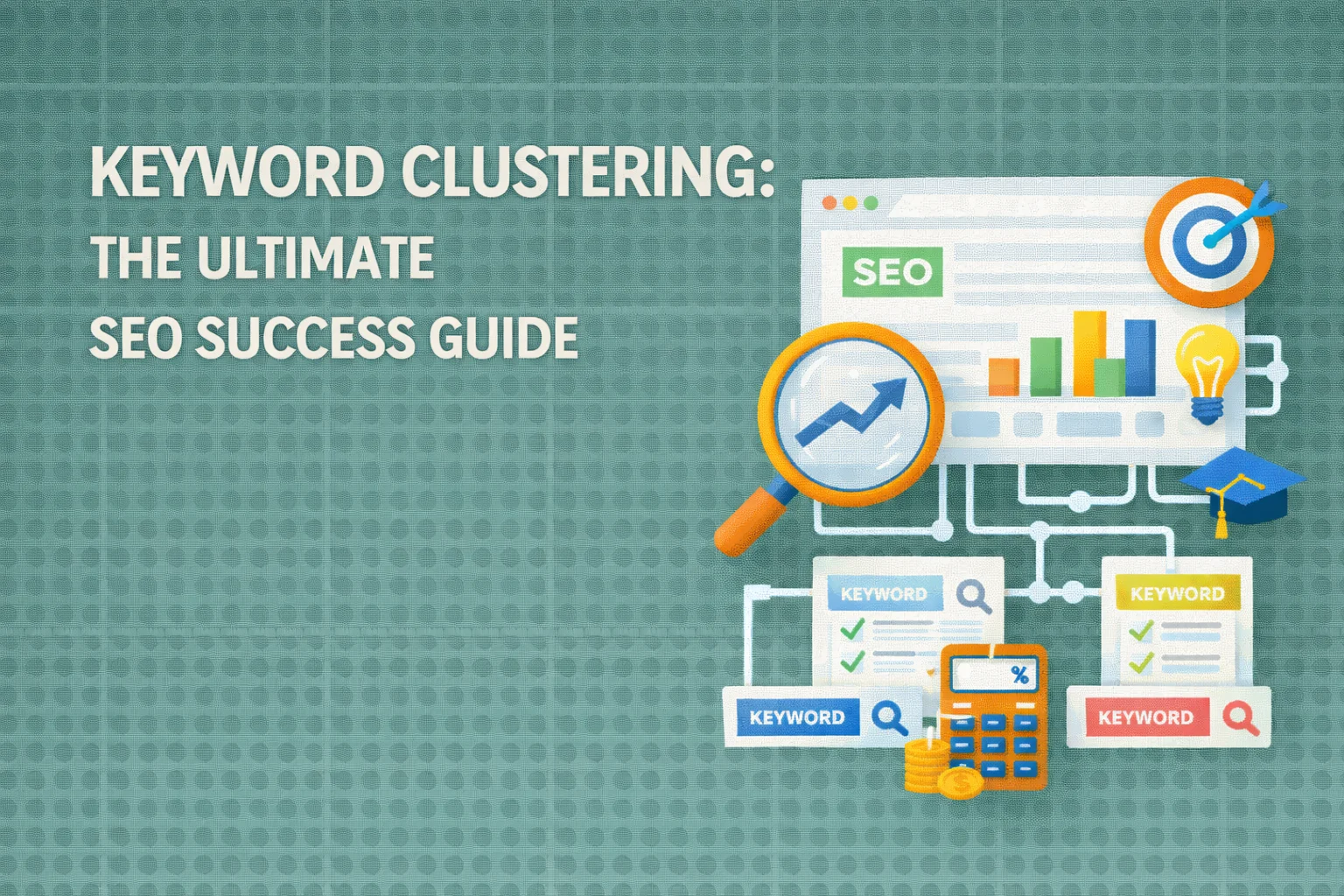

Keyword clustering has evolved from an optional SEO tactic to an essential strategy in 2026. At Search Savvy, we’ve witnessed firsthand how this powerful approach transforms content strategies and drives measurable results. Rather than optimizing individual pages for single keywords-an outdated practice that limits your visibility-keyword clustering enables you to target multiple related search terms with comprehensive, authoritative content that search engines reward.
The digital landscape has shifted dramatically. Search engines now look beyond single keywords and focus on context and user intent. Google’s advanced natural language processing capabilities mean that websites need sophisticated strategies to stay competitive. This is where keyword clustering becomes your competitive advantage. At Search Savvy, we recommend this approach because it aligns perfectly with how modern search algorithms evaluate and rank content.
This comprehensive guide will walk you through everything you need to know about keyword clustering-from understanding its fundamental principles to implementing advanced strategies that deliver results. Whether you’re an SEO professional refining your approach or a business owner looking to maximize online visibility, you’ll discover actionable insights that translate directly into improved rankings and organic traffic.
What Is Keyword Clustering and How Does It Work?
Keyword clustering is the strategic process of grouping related keywords based on their semantic relevance and shared search intent. Instead of focusing your content or web page around a single keyword or keyword phrase, keyword clustering involves researching similar, related keywords and grouping them together thematically to help search engines form better connections between each piece of website content.
The mechanics of keyword clustering are straightforward yet powerful. When you create a cluster, you identify a primary keyword-typically a high-volume, broad search term-and surround it with secondary keywords that include synonyms, long-tail variations, and related phrases. For example, if your primary keyword is “CRM software,” your cluster might include “best CRM software,” “top CRM tools 2026,” “CRM software reviews,” and “CRM systems for small business.”
Keyword clustering works because it mirrors how people actually search. Users don’t always use identical phrases when looking for the same information. By grouping similar keywords based on user search intent, you can target related keywords on one page instead of spreading them across multiple pages and content pieces, maximizing the page’s visibility in search engines.
According to Search Savvy’s research, a single well-optimized page can rank for approximately 2,200 related queries when keyword clustering is implemented effectively. This exponential increase in visibility demonstrates why clustering has become indispensable in 2026.
Why Is Keyword Clustering Important in 2026?
Keyword clustering addresses several critical challenges facing modern SEO practitioners while delivering benefits that traditional single-keyword strategies simply cannot match.
Expanded Organic Reach and Visibility
Keyword clustering dramatically expands your website’s footprint in search results. With keyword clusters, you can rank for a number of related keywords united by the same search intent instead of optimizing a page for a single keyword. This means one piece of comprehensive content can capture traffic from dozens or even hundreds of search queries.
According to a recent survey, 77% of SEO professionals reported increased traffic and better SERP rankings after incorporating keyword clustering tools into their strategies. These aren’t marginal improvements-businesses implementing keyword clustering see substantial gains in organic visibility.
Improved Content Quality and User Experience
Keyword clustering naturally encourages the creation of more comprehensive, valuable content. When you target a cluster of related keywords, you’re forced to address a topic from multiple angles, providing depth that satisfies both search engines and users. Effective keyword clustering not only improves your SEO strategy but also helps structure your website for better user experience and navigation, ensuring that relevant content is easy to find.
Prevention of Content Cannibalization
One of the most valuable benefits of keyword clustering is eliminating internal competition. Without clustering, you might inadvertently create multiple pages targeting similar keywords, causing them to compete against each other. This method helps reduce content cannibalization, where different pages on the same site compete against each other. Keyword clustering ensures each page has a distinct purpose and target audience.
Building Topical Authority
Search engines increasingly prioritize websites that demonstrate expertise on specific topics. By strategically organizing keyword clusters, you can target short-tail and long-tail keywords across specific topics within your content, building topical authority that strengthens your site’s structure and leads to better indexing and higher page ranks.
Resource Efficiency
Keyword clustering makes your content creation more efficient. Rather than producing numerous narrowly focused blog posts, you can create comprehensive content that covers full topics in depth. This approach requires fewer resources while delivering superior results.
How Do You Create Effective Keyword Clusters?
Creating keyword clusters involves a systematic process that combines research, analysis, and strategic organization. Here’s how to build clusters that drive results.
Step 1: Conduct Comprehensive Keyword Research
Keyword clustering begins with extensive keyword research. Start by generating a broad list of potential keywords related to your topic, industry, or business. Use tools like Semrush, Ahrefs, or SE Ranking to discover keywords along with their search volume, difficulty scores, and related terms.
Focus on gathering both short-tail keywords (1-2 words with high search volume) and long-tail keywords (3+ words with more specific intent). Long-tail keywords are more effective for winning higher rankings on the SERP because high-volume keywords are extremely difficult to rank for.
Your initial keyword list should be extensive-aim for at least 100-200 keywords to identify meaningful patterns and clusters. Include variations, synonyms, questions, and related phrases that your target audience might use.
Step 2: Analyze Search Intent
Keyword clustering effectiveness depends on grouping keywords that share the same search intent. Search intent is the reason why a user performs a search-it’s the main motivator behind them entering a query into a search engine.
Search intent typically falls into four categories:
- Informational: Users seeking knowledge or answers (e.g., “what is keyword clustering”)
- Navigational: Users looking for a specific website or page (e.g., “Search Savvy blog”)
- Commercial: Users researching products or services (e.g., “best keyword clustering tools”)
- Transactional: Users ready to make a purchase (e.g., “buy SEO software”)
Keywords within a cluster must share the same intent. Mixing intents within a single cluster creates unfocused content that fails to satisfy any user need effectively.
Step 3: Perform SERP Analysis
SERP-based clustering consistently outperformed other methods by a wide margin in 2026 tool tests, scoring around 70–89/100 on clustering quality-the highest of any approach. This method involves analyzing search engine results pages to determine which keywords truly belong together.
For each candidate keyword group, search for representative terms and examine the top-ranking results. If the same pages or domains consistently appear for multiple keywords, those keywords share search intent and belong in the same cluster. If completely different results appear, those keywords need separate clusters.
This manual SERP validation is the most reliable method for ensuring your clusters align with how search engines actually understand keyword relationships.
Step 4: Group Keywords into Clusters
Once you’ve analyzed intent and SERPs, organize your keywords into logical groups. Each cluster should have:
- One primary keyword: The main term with the highest search volume and clearest commercial value
- Multiple secondary keywords: Related terms, synonyms, and long-tail variations
- A unified theme: All keywords addressing the same topic or question
A good rule of thumb is: one search intent = one keyword cluster = one page.
Step 5: Choose Between Manual and Automated Clustering
You can cluster keywords manually using spreadsheets, which provides deep insight but is extremely time-intensive, or use automated tools that employ algorithms to analyze semantic relationships and SERP similarities.
Popular keyword clustering tools for 2026 include:
- Semrush Keyword Strategy Builder: Analyzes up to 10,000 keywords at once
- SE Ranking Keyword Grouper: Offers affordable clustering with adjustable granularity levels
- Ahrefs Keywords Explorer: Provides clustering based on massive keyword databases
- Keyword Insights: Specializes in clustering for content planning
For small business owners, it’s faster to use tools that streamline the process, as manual clustering in spreadsheets can be comprehensive but time-consuming.
What Are the Different Types of Keyword Clustering?
Understanding the various clustering methods helps you choose the right approach for your specific needs.
Pattern-Based Clustering
Keyword clustering through pattern recognition groups keywords based on similar wording or phrase structure. This method is quick but offers low precision because it doesn’t consider actual search intent or SERP similarities. Use this for initial organization or small keyword lists.
Semantic/NLP-Based Clustering
Semantic clustering uses natural language processing to group keywords by meaning rather than exact wording, offering medium precision and smarter grouping capabilities. This approach recognizes that “best CRM software” and “top CRM tools” have similar meanings even though they use different words.
SERP-Based Clustering
SERP-based clustering groups keywords by actual search result similarity and offers the highest precision while remaining SEO-aligned. This method analyzes which URLs rank for which keywords and groups keywords that return similar results, ensuring your clusters match how search engines actually categorize topics.
Soft vs. Hard Clustering
Soft keyword clustering strategy gives a more generalized idea of the niche and different keywords competitors are targeting, while hard keyword clustering strategy eliminates irrelevant search queries and distinguishes many user intents by comparing queries against each other.
Choose soft clustering for broader topical coverage and hard clustering for more specific, intent-focused content strategies.
How Do You Implement Keyword Clusters in Your Content?
Creating clusters is only half the battle. Successful implementation requires strategic content optimization.
Optimize Existing Content or Create New Pages
For each keyword cluster, determine whether to update existing content or create new pages. Include the primary keyword in the URL slug, title tag, meta description, and H1 tag, mention it within the first paragraph of body content, and naturally include primary and secondary keywords throughout your body content.
Use secondary keywords in subheadings where appropriate, creating a natural flow that addresses multiple aspects of the topic. Avoid keyword stuffing-focus on providing comprehensive value while naturally incorporating cluster terms.
Create Pillar Pages and Supporting Content
Structure your clusters using a hub-and-spoke model. The pillar page targets your primary keyword with comprehensive coverage, while supporting blog posts address specific long-tail keywords and subtopics within the cluster. These blogs can target longer-tail keyword phrases, subtopics, or questions related to your core keywords, reinforcing the authority of your pillar pages.
Leverage Internal Linking
Connect your clustered content through strategic internal linking. Link supporting content back to pillar pages and vice versa, creating a network that helps search engines understand topical relationships. This structure passes authority throughout your cluster while improving user navigation.
Monitor and Refine Performance
Track rankings for all keywords in your clusters using tools like Google Search Console or position tracking software. As search trends evolve, new keywords will emerge that might fit into existing clusters or form new clusters altogether-periodically revisit your keyword research to identify new terms.
Monitor organic traffic, engagement metrics, and conversion rates to identify high-performing clusters and opportunities for improvement.
What Mistakes Should You Avoid with Keyword Clustering?
Even experienced SEO professionals make clustering mistakes that undermine their efforts.
Grouping Keywords Without Checking Intent
One mistake is grouping keywords based only on similar wording without checking their intent-two terms may appear alike but attract different users or answer different questions. Always validate clusters with SERP analysis to ensure alignment.
Overloading Pages with Too Many Keywords
Overloading a single page with too many keywords may confuse search engines and reduce content clarity. Focus on one clear topic per cluster with natural keyword variations rather than forcing dozens of unrelated terms onto a single page.
Neglecting Long-Tail Keywords
While short-tail keywords attract volume, long-tail keywords drive conversions. For long-form content usually above 1500-2000 words, keyword clustering is really important because it means putting related keywords in one article instead of writing many short pieces targeting just one keyword.
Creating Overlapping Clusters
Ensure your clusters don’t overlap significantly. If multiple clusters target very similar keywords with the same intent, consolidate them to avoid internal competition and content cannibalization.
Failing to Update Clusters Over Time
Keyword clustering isn’t a one-time task. Search trends evolve, new competitors emerge, and user behavior shifts. Regular cluster maintenance ensures your strategy remains effective and capitalizes on emerging opportunities.
Frequently Asked Questions About Keyword Clustering
Q: How many keywords should be in a keyword cluster?
A: There’s no fixed number, but effective clusters typically contain 5-20 related keywords including one primary keyword and 4-19 secondary keywords. The exact number depends on topic breadth, search volume distribution, and how many variations exist for your topic. Focus on quality over quantity-every keyword should genuinely relate to the cluster’s core theme.
Q: Can keyword clustering help with voice search optimization?
A: Absolutely. Long-tail keywords are becoming increasingly important, especially with the rise of voice search, as these phrases are more specific and mimic natural speech patterns. Keyword clustering naturally incorporates the question-based, conversational phrases people use with voice assistants, making your content more discoverable through voice search.
Q: How is keyword clustering different from topic clustering?
A: Keyword clusters focus on grouping keywords according to relevance and intent within a single article, while topic clusters are made out of multiple content pieces organized around a central theme. Keyword clustering happens at the page level, while topic clustering organizes your entire content architecture around pillar topics.
Q: Do I need expensive tools to do keyword clustering effectively?
A: Not necessarily. While premium tools like Semrush and Ahrefs streamline the process significantly, you can perform basic keyword clustering manually using free tools like Google Keyword Planner for research and spreadsheets for organization. There are also free keyword clustering tools like Cluster AI that lets you turn a cluster of up to 200 keywords into structured lists of topics. Start with what you can afford and upgrade as you see results.
Q: How often should I update my keyword clusters?
A: Review your keyword clusters quarterly at minimum, with monthly reviews for fast-changing industries. Watch for new trending terms, shifting search intent, and emerging competitors. Update existing clusters when you identify high-value keywords that fit naturally, and create new clusters when new topics gain traction in your industry.
Q: Can keyword clustering improve my Google rankings quickly?
A: Keyword clustering typically shows results within 3-6 months, though this varies by industry competitiveness and implementation quality. Benefits include faster ranking improvements in the SERPs, strong rankings for long-tail keywords, improved rankings for short-tail keywords, and higher organic traffic. The strategy compounds over time as your topical authority grows, making patience and consistency essential.
Conclusion: Your Path to SEO Success Through Keyword Clustering
Keyword clustering represents the evolution of modern SEO-a shift from isolated keywords to comprehensive topical coverage that aligns with how search engines evaluate content in 2026. In the evolving SEO landscape of 2026, keyword clustering has moved from a nice-to-have trick to an essential strategy.
At Search Savvy, we’ve guided countless businesses through this transformation, watching their organic traffic multiply as they embrace clustering strategies. The benefits extend far beyond rankings-you’ll create better content, provide superior user experiences, and build lasting authority in your industry.
Start implementing keyword clustering today. Begin with a single topic cluster, validate it through SERP analysis, create comprehensive content that addresses your audience’s needs, and track your results. As you refine your approach and expand your clusters, you’ll discover why keyword clustering has become the foundation of successful SEO strategies in 2026 and beyond.
The digital landscape will continue evolving, but the principles of keyword clustering-understanding intent, providing value, and aligning with how people actually search-will remain timeless. Embrace these strategies now, and you’ll position yourself not just for today’s success but for continued growth as search continues to advance.