
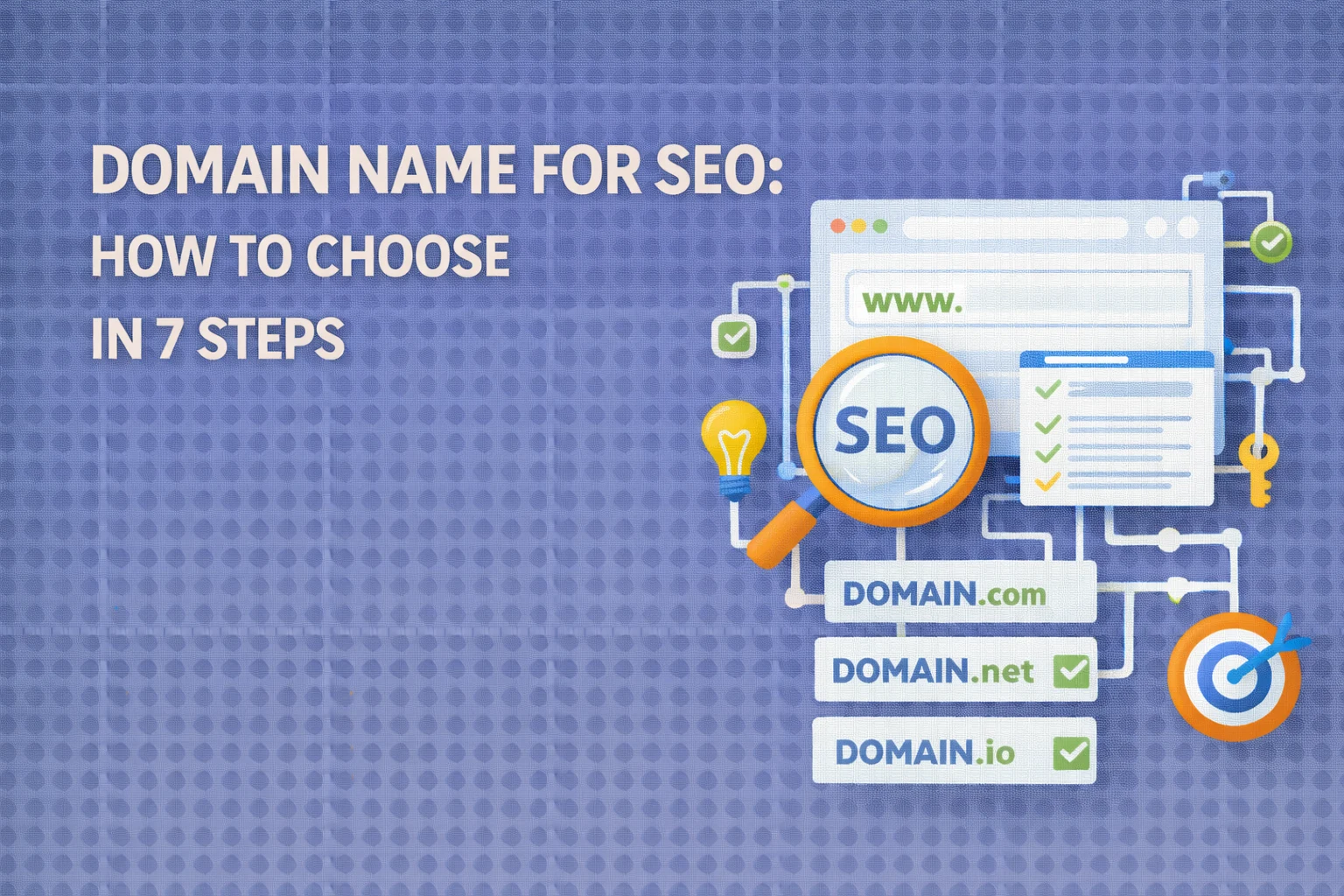

Domain name selection is one of the most critical decisions you’ll make when building your online presence. At Search Savvy, we’ve seen countless businesses struggle with rankings simply because they didn’t understand the SEO implications of their domain choice. Your domain name serves as your digital address, brand identity, and first impression all rolled into one. While it won’t make or break your SEO strategy alone, choosing the right domain name for SEO can give you a significant competitive advantage in search rankings.
In this comprehensive guide, Search Savvy breaks down the exact process for selecting a domain name that supports your SEO goals while building a memorable brand. Whether you’re launching a new website or considering a rebrand, these seven steps will help you make an informed decision that benefits your search visibility for years to come.
Why Is Domain Name Selection Important for SEO in 2026?
Domain name choices impact multiple aspects of your search engine optimization strategy. Search engines like Google use your domain as one of over 200 ranking signals to determine your website’s relevance, authority, and trustworthiness. According to Search Savvy’s insights from analyzing current SEO trends, while exact match domains (EMDs) have lost much of their influence since Google’s EMD update, strategic domain selection still matters significantly.
Domain names influence how search engines rank your website in organic search traffic, and balancing a memorable, brandable domain with relevant keywords remains crucial for SEO success. In 2026, the focus has shifted from keyword-stuffing domains to creating authentic brand identities that users trust and remember. Your choice of domain affects almost everything about your website, including how easy it is to rank for keywords, which topics your site is considered an authority on, and ultimately how many people will browse your products.
How Does Domain Name Impact Search Engine Rankings?
Domain names affect SEO through several mechanisms. First, they contribute to your site’s overall authority and trustworthiness signals. A strong domain indicates to Google that your site is credible, making it more likely to rank well in search results. Second, memorable domains generate direct traffic, reduce bounce rates, and increase brand searches-all positive user experience signals that Google values.
Google’s algorithms prioritize sites that are reliable and offer a positive user experience, with quality content, backlinks, technical SEO, keyword optimization, user experience, and brand signals serving as the most important ranking factors in 2026. Your domain name intersects with several of these factors, particularly brand signals and user experience.
Step 1: Prioritize Branding Over Keyword Stuffing
Domain name for SEO starts with understanding that branding has become more valuable than exact keyword matching. Google likes brands because users like brands, and a strong online brand means users are more likely to click on, read, share, and link to a website, ultimately helping gain higher Google rankings.
What Makes a Brandable Domain?
A brandable domain is:
- Unique and memorable: Easy to recall after hearing it once
- Short and simple: Typically 3-4 words or 6-12 characters
- Easy to spell: Avoids unusual spellings or confusing characters
- Pronounceable: Can be easily shared verbally without confusion
For example, brands like Uber.com and Apple.com succeed because they’re instantly memorable and don’t rely on descriptive keywords. Experts recommend that if you’re starting off, focus on your brand rather than keywords because your website will probably evolve over time, and choosing a flexible domain name helps ensure it continues to be applicable as your business develops.
When Can Keywords Help?
Domain names can include broad, relevant keywords when they naturally fit your brand identity. When you include relevant keywords in your domain name, it tells search engines what your website is about and can improve targeted visibility in search results. However, avoid creating awkward or spammy-sounding combinations just to include keywords.
Pro tip from Search Savvy: If your brand name is “Chicago Bob’s Guitar Repair,” a domain like ChicagoBobs.com works better than Chicago-Guitar-Repair-Shop.com. The former builds brand identity while the latter looks spammy and lacks memorability.
Step 2: Keep It Short, Simple, and Memorable
Domain name selection should emphasize simplicity. The best domains are short, brandable, and flexible enough to grow with your business, with memorability being key to building organic traffic.
Why Length Matters for SEO
Short domains offer multiple advantages:
- Easier to type: Reduces user errors and lost traffic
- More memorable: Users can recall and return directly
- Better for mobile: Easier to enter on small screens
- Stronger brand identity: Shorter names appear more professional
Shorter names are catchier and easier to remember, and a user should effortlessly type your domain name without confusion.
Avoid Common Pitfalls
Domain name for SEO best practices include avoiding:
- Hyphens: Users often forget them and land on competitor sites
- Numbers: Confusion between numerals (5) and words (five)
- Special characters: Can confuse both users and search engines
- Intentional misspellings: May seem creative but cause user frustration
Special characters can make your domain look unique, but they can harm your SEO efforts as search engines can’t always understand them, and they can confuse people and worsen the user experience.
Step 3: Choose the Right Top-Level Domain (TLD)
Domain name choices extend to your top-level domain extension. The TLD is the ending of your domain (.com, .net, .org, etc.) and can impact both SEO and user perception.
Which TLD Is Best for SEO?
The .com top-level domain is best for SEO if you are in the USA, while local top-level domains work best if you’re targeting a specific country. Here’s the hierarchy:
For US and international audiences:
- .com (first choice-most trusted and familiar)
- .org (for nonprofits)
- .net (acceptable alternative)
For country-specific targeting:
- Country code TLDs (.uk, .ca, .de) signal geographic relevance
- Geographic TLDs influence rankings by signaling to Google where you are, making you more likely to show up in results for people searching in that location
For niche industries:
- Industry-specific TLDs (.tech, .io, .app) can work if they align with your brand
- However, always secure the .com version if possible
Why .com Dominates
The .com extension is the most common on the web and most familiar for internet users, making it a good choice for a positive and reliable user experience. Users instinctively trust .com domains more, and they’re less likely to make typing errors.
Step 4: Check Domain History and Reputation
Domain name for SEO requires due diligence on any pre-owned or expired domain you’re considering. A domain’s past can significantly impact your SEO efforts.
How to Research Domain History
Before purchasing, investigate:
1. Previous content and usage:
- Use the Wayback Machine to see historical versions
- Check if the domain was used for link farms, spam, scams, or adult content that can hurt your SEO efforts
2. Backlink profile:
- Examine existing backlinks using tools like Ahrefs Backlink Checker or SEMrush Domain Overview
- Look for toxic or spammy link patterns
3. Domain penalties:
- Check for previous Google penalties or manual actions
- If the domain has been in trouble with Google in the past through link spam or bad neighborhoods, it will be harder to rank
4. Registration details:
- Use WHOIS lookup to see ownership history
- Verify when the domain was first registered
The Value of Domain Age
While domain age itself isn’t a direct ranking factor, older domains tend to have more backlinks which does have an impact on rankings. However, purchasing an expired domain solely for its age is risky without thorough vetting.
Step 5: Ensure Brand Consistency Across Platforms
Domain name selection should align with your broader digital presence. In 2026, brand consistency across all platforms has become increasingly important for both user experience and SEO.
Secure Matching Social Media Handles
Your domain name should align with your social media handles for a seamless brand identity, as having different names for your website and social profiles can confuse customers and weaken your brand.
Before finalizing your domain:
- Check availability on major social platforms (Instagram, Twitter, Facebook, LinkedIn, TikTok)
- Register matching handles even if you don’t plan to use them immediately
- Consider slight variations if exact matches aren’t available
Protect Your Brand
Register multiple variations to prevent:
- Competitors from capitalizing on similar names
- Typosquatting (common misspellings)
- Different TLD versions redirecting to competitors
Search Savvy recommends securing at minimum:
- Your primary .com domain
- Common misspellings
- Relevant country-specific TLDs if operating internationally
- Alternative TLDs (.net, .org) to protect your brand
Step 6: Consider Long-Term Scalability
Domain name for SEO isn’t just about current needs-it’s about future growth. Choosing a domain name that is more general or flexible and avoiding phrases that are too narrow or restricted ensures your domain name continues to be applicable and valuable as your business develops.
Planning for Business Evolution
Avoid overly specific domains that might limit future expansion. For example:
- Too narrow: “JanesVintageDresses.com” restricts future product lines
- Better choice: “JanesBoutique.com” allows for expanding into accessories, modern clothing, etc.
Industry and Location Considerations
Local domains like ChicagoBobs.com can help specifically target customers in Chicago and give you a head start by letting customers and search engines know your location. However, consider whether geographic restriction aligns with your growth plans.
If you plan to expand beyond your initial location, a branded domain offers more flexibility than a geographically specific one.
Step 7: Test Memorability and Pronunciation
Domain name selection requires real-world testing before making your final decision. A domain that looks good on paper might be difficult to communicate verbally or remember after hearing it once.
The “Radio Test”
Ask yourself: If you mentioned your domain on a podcast or radio show, would listeners:
- Know how to spell it?
- Remember it later?
- Be able to type it without seeing it written?
If the answer is no to any of these, reconsider your choice.
Get Feedback
Before purchasing:
- Share your top choices with trusted colleagues or friends
- Ask them to repeat the domain back after hearing it once
- Have them spell it out to identify potential confusion
- Wait 24 hours and see which options they still remember
Use Domain Name Generators
Domain name generators can spark ideas you may not have thought of by combining your keywords with creative variations and showing available extensions. Tools like Namecheap’s Domain Name Generator, GoDaddy’s Domain Search, or NameMesh can help brainstorm options.
What About Domain Migration and Rebranding?
Domain name changes can impact SEO, but proper planning minimizes risks. Changing your domain name can shake up your SEO, but setting up 301 redirects to transfer SEO elements from your old domain to the new one and verifying the new domain with Google Search Console helps Google spot and index your new domain faster.
Only consider changing your domain if:
- Your current domain has serious branding issues
- You’re experiencing domain penalty problems
- You’ve acquired a significantly better domain
- Your business has fundamentally changed
The transition process requires meticulous execution to preserve rankings and authority built over time.
People Also Ask: Domain Name SEO Questions
Does having keywords in my domain name help with SEO?
Domain names with relevant keywords provide minimal direct SEO benefit in 2026. Google’s Exact Match Domain system ensures it does not give too much importance to domains created to match very specific search terms. Focus on creating a strong brand identity rather than keyword-stuffing your domain. However, naturally including a broad keyword can help users understand what your site offers, potentially improving click-through rates.
How long should my domain name be for optimal SEO?
Domain names should ideally be 3-4 words or 6-12 characters for best SEO performance. Shorter names are catchier and easier to remember, which helps with memorability and allows users to effortlessly type your domain name. Short domains create better user experiences, leading to more direct traffic and improved brand recall-both indirect SEO benefits.
Can I change my domain name without losing SEO rankings?
You can change domain names while preserving most SEO value if done correctly. Maintaining the old domain’s activity during the transition, updating links, informing Google through Search Console, and utilizing 301 redirects effectively are essential steps to mitigate SEO loss. However, some ranking fluctuation is inevitable during the transition period.
Do new domains have a harder time ranking than old domains?
Domain age itself is not a significant ranking factor in 2026. What matters more is the history and authority built over time, as older domains often have advantages in terms of accumulated backlinks and trust signals, but a new domain with excellent content and user experience can still rank well relatively quickly. Focus on building quality content and earning authoritative backlinks rather than relying on domain age.
Should I use hyphens or numbers in my domain name?
Domain name for SEO best practices strongly advise against using hyphens or numbers. When a person hears your domain, they might not know whether to spell the number or use a numeral, and many users will type the domain without hyphens and end up on a different website. These characters create confusion, increase user error, and make domains harder to remember-all negatively impacting your SEO indirectly through poor user experience.
What’s more important for SEO: an exact match domain or a branded domain?
Branded domains are significantly more valuable for SEO in 2026 than exact match domains. Google likes brands because users like brands, and a strong online brand means users are more likely to click on, read, share, and link to a website, ultimately helping gain higher Google rankings. While exact match domains may provide minimal keyword relevance signals, they lack the trust, memorability, and long-term value that branded domains offer.
Final Thoughts: Making Your Domain Work for SEO
Domain name selection represents just one piece of your overall SEO strategy, but it’s a foundational decision that impacts everything you build afterward. At Search Savvy, we’ve guided hundreds of businesses through this process, and the most successful websites share common traits: memorable brand names, user-friendly domains, and strategic thinking about long-term growth.
Remember that your domain name is a long-term investment. While you can change it later, doing so comes with significant costs in terms of time, effort, and potential ranking fluctuations. Take the time now to choose wisely, following these seven steps to select a domain name that supports both your SEO goals and your brand identity.
Focus on creating a domain that users trust, remember, and want to return to. Combine that foundation with high-quality content, excellent technical SEO, and a positive user experience, and you’ll build a website that succeeds in search rankings for years to come.
Ready to optimize your domain strategy? Visit Google’s domain best practices for additional technical guidance, explore Google Search Console to monitor your domain’s performance in search results, or use tools like Ahrefs and SEMrush for comprehensive domain analysis.