
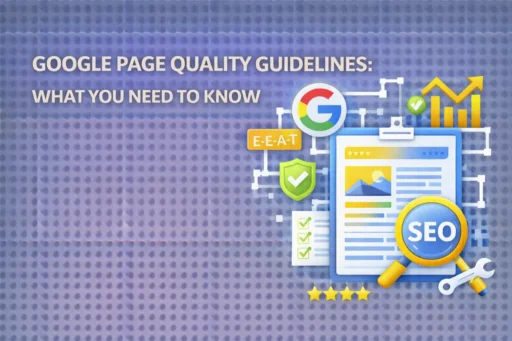

Google Page Quality Guidelines represent the cornerstone of modern SEO strategy, defining how the world’s largest search engine evaluates and ranks web content. Understanding these guidelines isn’t just beneficial-it’s essential for anyone serious about digital visibility in 2026. At Search Savvy, we’ve witnessed firsthand how mastering these principles can transform a website’s performance, turning struggling pages into authoritative resources that dominate search results.
Google Page Quality Guidelines are part of a comprehensive framework used by over 16,000 human quality raters worldwide to assess search results. While these evaluations don’t directly impact individual page rankings, they provide critical feedback that shapes Google’s algorithms. Think of quality raters as the quality control team that ensures search results meet user expectations. At Search Savvy, we help businesses align their content with these standards to achieve sustainable, long-term visibility.
The latest updates to these guidelines, released in January 2025, expanded the document from 170 to 181 pages and introduced significant refinements focused on combating spam, evaluating AI-generated content, and emphasizing user experience. This evolution reflects Google’s commitment to delivering reliable, helpful information while cracking down on manipulative tactics.
What Are the Google Page Quality Guidelines?
Google Page Quality Guidelines are detailed instructions provided to quality raters who evaluate web pages and search results. These guidelines help Google determine whether content is accurate, reliable, and genuinely helpful to users. The framework has evolved significantly since its introduction in 2013, with the most recent update in January 2025 bringing important changes to how Google assesses content quality.
The guidelines evaluate content through several key lenses: Page Quality (the overall value of content), Needs Met (ability to respond to user intent), and E-E-A-T principles (Experience, Expertise, Authoritativeness, and Trustworthiness). According to Search Savvy’s analysis, websites that align with these principles consistently outperform competitors in search rankings and user engagement.
How Do the Google Page Quality Guidelines Work?
Google Page Quality Guidelines work by providing a standardized evaluation framework that human raters use to assess content across the web. Quality raters receive specific scenarios and analyze sample web pages, assigning scores based on multiple factors. Their evaluations become key indicators that help Google refine its algorithms to better recognize high-quality content automatically.
The process operates on two fundamental levels. First, raters evaluate individual page quality by examining factors like content expertise, website reputation, and user experience. Second, they assess how well search results meet user needs by considering search intent, result relevance, and information accuracy. This dual approach ensures that Google’s algorithms learn to surface content that both meets technical quality standards and genuinely helps users.
While quality raters cannot manually penalize individual domains, their collective feedback identifies patterns that Google’s machine learning systems incorporate into ranking algorithms. This means that pages consistently rated as high-quality across multiple evaluations signal to Google’s systems that similar content should rank well.
Why Are the Google Page Quality Guidelines Important in 2026?
Google Page Quality Guidelines have become critically important in 2026 due to three major shifts in the digital landscape. First, the explosion of AI-generated content has made distinguishing quality from quantity more challenging than ever. Second, growing concerns about misinformation have pushed Google to prioritize trustworthy sources, especially for sensitive topics. Third, user expectations have evolved-today’s searchers demand content with genuine insights rather than rehashed information.
The January 2025 update specifically addresses these challenges by refining how Google identifies low-quality, scaled content abuse, expired domain manipulation, and site reputation misuse. These updates make it clear: Google rewards accuracy, expertise, and user-first intent while penalizing shortcuts and manipulative tactics.
For businesses, ignoring these guidelines means risking invisibility in search results. A 2024 SEMrush study found that pages with strong E-E-A-T signals had a 30% higher chance of ranking in the top three positions compared to those with weak signals. In the competitive landscape of 2026, this difference can determine success or failure.
What Is E-E-A-T and How Does It Relate to Page Quality?
Google Page Quality Guidelines center around E-E-A-T, which stands for Experience, Expertise, Authoritativeness, and Trustworthiness. This framework, originally introduced as E-A-T in 2014, gained its additional “E” for Experience in 2022, reflecting Google’s recognition that first-hand knowledge matters immensely for content credibility.
Experience refers to the content creator’s direct, real-world involvement with the subject matter. A travel blogger who has actually visited destinations they review demonstrates experience. A chef sharing recipes they’ve personally tested shows experience. This component distinguishes authentic content from generic, research-only material.
Expertise focuses on demonstrated knowledge or qualifications in a specific field. Financial advice from a certified financial planner carries more weight than generic investment tips. Medical information from licensed healthcare professionals ranks higher than wellness blogs without credentials.
Authoritativeness measures recognition within an industry. It’s reflected through citations from reputable sources, backlinks from respected websites, positive reviews from industry experts, and awards or accolades within the field. Authority is as much about what others say about you as what you claim about yourself.
Trustworthiness forms the foundation of the entire framework. According to the September 2025 guidelines, trust is the most critical component because “untrustworthy pages have low E-E-A-T no matter how Experienced, Expert, or Authoritative they may seem.” Trustworthiness encompasses accurate information, transparent authorship, clear contact information, secure connections (HTTPS), and protection of user privacy.
How Has AI Content Changed the Google Page Quality Guidelines?
Google Page Quality Guidelines now explicitly address AI-generated content, treating it as neither inherently good nor bad. The January 2025 update states that “Generative AI can be a helpful tool for content creation, but like any tool, it can also be misused.” This balanced approach recognizes AI’s potential while setting clear quality standards.
The guidelines emphasize that AI content is acceptable only when it adds real value. Keyword-stuffed, low-quality AI content won’t rank well. AI should assist, not replace, human expertise and originality. Google’s quality raters are now specifically trained to identify scaled content abuse-mass-producing low-value content, whether manually or with AI, to flood search results and manipulate rankings.
To meet Google’s standards, AI-assisted content must be thoroughly reviewed and refined by humans with genuine expertise. Content creators should focus on user intent, ensuring the content actually answers questions or solves problems. Fluff and generic information get penalized, while substance and originality get rewarded. The key distinction: AI can help with research and structure, but insights, examples, and expertise need to be authentically human.
What Types of Content Does Google Consider Lowest Quality?
Google Page Quality Guidelines now define lowest-quality content with greater precision following the May 2025 updates. The lowest rating is required if a page has a harmful purpose or is designed to deceive people about its true purpose or who is responsible for the content.
Pages created purely for monetization with no benefit to users receive the lowest rating. This includes thin affiliate sites that add no unique value, doorway pages designed only to funnel traffic, and content farms churning out low-effort articles. Low-effort or unoriginal content that doesn’t provide distinctive value over competitors also qualifies for the lowest rating.
The guidelines specifically call out several spam practices: scaled content abuse (mass-producing unoriginal content), expired domain abuse (buying old domains with backlinks and repurposing them with low-quality content), and site reputation abuse (well-known sites hosting low-quality third-party content that misleads users about credibility).
Google’s Danny Sullivan provided a telling example: travel sites that all feature the same smiling author sidebar and identical structural elements become indistinguishable. The solution isn’t copying what ranks-it’s differentiating through originality, genuine expertise, and unique value.
How Do YMYL Topics Impact Page Quality Requirements?
Google Page Quality Guidelines apply particularly rigorous standards to YMYL (Your Money or Your Life) topics-content that could significantly impact a person’s health, financial stability, safety, or well-being. The 2025 guidelines expanded YMYL scope to officially include topics related to elections, institutions, and public trust.
YMYL content faces heightened scrutiny because incorrect or misleading information can have serious real-world consequences. Medical advice from unqualified sources could harm health. Financial guidance from non-experts could destroy savings. Legal information from non-lawyers could result in serious consequences.
For YMYL topics, demonstrating E-E-A-T becomes non-negotiable. Content must come from qualified experts with verifiable credentials. Sources must be cited thoroughly. Author bios must clearly establish relevant expertise. The website must demonstrate overall trustworthiness through transparent ownership, clear contact information, and positive reputation signals.
Even well-intentioned YMYL content without proper expertise and authority will struggle to rank. Google’s algorithms have become increasingly sophisticated at identifying genuine credentials versus surface-level claims. For businesses operating in YMYL spaces, investing in qualified content creators and comprehensive fact-checking isn’t optional-it’s essential for visibility.
What Technical Factors Support Google Page Quality?
Google Page Quality Guidelines extend beyond content quality to encompass technical factors that signal trustworthiness and user experience. These technical elements create the foundation upon which quality content can succeed.
Security starts with HTTPS encryption, which is non-negotiable in 2026. Sites without secure connections immediately signal untrustworthiness to both users and Google. Beyond basic encryption, technical trust includes protecting user privacy, securing payment information, and implementing proper data protection measures.
Performance matters significantly for page quality. Fast loading speeds across all devices, mobile responsiveness, and seamless user experiences contribute to quality assessments. Pages that load slowly or function poorly on mobile devices receive lower quality ratings regardless of content quality.
Structured data helps Google understand content context and purpose. Implementing schema markup for articles, products, reviews, local businesses, and other content types provides clear signals about page content and intent. This clarity supports both quality assessment and feature eligibility (rich snippets, knowledge panels, etc.).
Site architecture influences how Google perceives expertise and authority. Clear navigation, logical content organization, comprehensive internal linking, and intuitive user paths all contribute to quality signals. A well-organized site suggests professionalism and attention to detail that extends to content quality.
Quality raters are now required to turn off ad blockers when evaluating pages, ensuring ratings reflect actual user experience. This means excessive, intrusive, or deceptive advertising directly impacts quality ratings. While monetization is acceptable, it must not significantly detract from content value or user experience.
How Can You Improve Your Content for the Guidelines?
Google Page Quality Guidelines provide a roadmap for content improvement that Search Savvy implements with clients across industries. Improvement starts with honest assessment: Does your content demonstrate genuine expertise? Does it provide unique value? Would users trust it for important decisions?
Enhance author credibility by creating detailed author bios that highlight relevant qualifications, certifications, and experience. Link to author social profiles and professional websites. For YMYL content, ensure authors have appropriate credentials and clearly display them.
Demonstrate first-hand experience through case studies, personal examples, original research, photos showing real use, and specific details that only come from direct involvement. Generic, research-only content increasingly struggles to compete against authentic experience.
Build authoritative signals by earning quality backlinks from respected sources in your industry, getting cited or mentioned by industry publications, publishing guest content on authoritative sites, and participating meaningfully in professional communities. Authority comes from recognition, not self-proclamation.
Establish transparency with comprehensive “About Us” pages, clear contact information, privacy policies and terms of service, disclosure of affiliate relationships or sponsored content, and transparent content creation processes. Transparency builds trust with users and search engines alike.
Focus on originality by providing perspectives competitors don’t offer, including proprietary data or research, taking unexpected angles on common topics, and going deeper than surface-level coverage. The updated guidelines specifically reward content that differentiates through genuine value rather than mimicking what already ranks.
Optimize user experience through clear formatting with short paragraphs and bullet points, comprehensive coverage that truly satisfies user intent, multimedia elements that enhance understanding, and mobile-friendly design with fast loading speeds. Content value includes how easily users can consume and apply information.
What Changes Should You Expect in Page Quality Guidelines?
Google Page Quality Guidelines continue evolving to address emerging challenges in digital content. Based on trends in the 2025 updates and Google’s public statements, several themes will likely shape future guideline changes.
AI content evaluation will become increasingly sophisticated. Google’s algorithms are learning to distinguish AI-assisted content that adds value from AI-generated spam. Future updates will likely provide more specific guidance on AI transparency, disclosure requirements, and quality thresholds for AI-assisted content.
Voice search optimization ties directly to E-E-A-T principles. Voice assistants preferentially surface content from trusted, authoritative sources because accuracy matters more in voice results with limited options. Content creators should ensure their material demonstrates expertise that qualifies it for voice search features.
User engagement metrics play growing roles in quality assessment. Click-through rates, dwell time, return visits, and interaction patterns signal content value and trustworthiness. Google’s algorithms increasingly interpret strong engagement as confirmation of quality and reliability.
Personalization factors into quality assessment as Google evaluates how well content meets specific user needs based on location, language, device type, and search context. Local businesses, in particular, should optimize for regional relevance and local authority signals.
Interactive content and multimedia elements will likely receive enhanced consideration as quality signals. As content formats evolve beyond traditional text articles, guidelines will adapt to evaluate video, podcasts, interactive tools, and other formats that demonstrate expertise and provide value.
The overarching trend is clear: Google increasingly favors content from sources that demonstrate genuine expertise, invest in quality over quantity, and prioritize user value above algorithmic manipulation. These principles aren’t temporary-they represent fundamental shifts in how search engines evaluate and surface content.
Frequently Asked Questions About Google Page Quality Guidelines
Do quality raters directly impact my website’s rankings?
No, individual quality rater evaluations don’t directly change your website’s rankings. Quality raters provide feedback that helps Google improve its algorithms, but they don’t have the ability to manually boost or penalize specific sites. However, if your content consistently receives low ratings across multiple evaluations, the patterns identified will influence how Google’s algorithms treat similar content.
How often does Google update the Page Quality Guidelines?
Google updates the Search Quality Rater Guidelines several times per year. Major updates typically occur every 6-12 months, with smaller refinements happening more frequently. The January 2025 update represented a significant expansion focused on AI content and spam, while smaller updates throughout the year address specific issues or add clarifying examples.
Can AI-generated content rank well in Google search results?
Yes, AI-generated content can rank well if it meets Google’s quality standards. The 2025 guidelines explicitly state that AI can be a helpful tool for content creation, but the content must be accurate, unique, and beneficial to users. Most AI-generated content requires significant human oversight, editing, and enhancement with genuine expertise to meet E-E-A-T standards and rank effectively.
What’s the difference between Page Quality and Needs Met ratings?
Page Quality ratings assess the overall value and trustworthiness of a webpage itself, considering factors like E-E-A-T, content quality, and website reputation. Needs Met ratings evaluate how well a search result satisfies a user’s specific query, considering relevance, completeness, and usefulness for that particular search intent. A page can have high page quality but low needs met rating if it doesn’t answer the specific question asked.
How important is website reputation for Page Quality?
Website reputation is critically important for page quality assessment. Raters are instructed to research what independent sources say about the website and content creators. Positive reviews, citations from reputable sources, industry recognition, and absence of significant complaints all contribute to reputation. For YMYL topics especially, a website’s established reputation can make the difference between high and low quality ratings.
Should I disclose when content is AI-assisted?
While Google doesn’t currently require AI disclosure, transparency generally supports trustworthiness-a core E-E-A-T principle. More importantly, AI-assisted content should always be reviewed and enhanced by human experts who add genuine insights, verify accuracy, and ensure the content demonstrates real expertise. The focus should be on meeting quality standards rather than how the content was created.
Conclusion: Mastering Google Page Quality for Long-Term Success
Google Page Quality Guidelines represent more than a set of evaluation criteria-they reflect a fundamental philosophy about what makes content valuable to users. As we navigate 2026, the message from Google is crystal clear: quality, expertise, and user value will always outweigh shortcuts, manipulation, and algorithmic gaming.
At Search Savvy, we’ve seen businesses transform their digital presence by embracing these principles. The path forward isn’t complex, but it requires commitment to authentic expertise, transparent practices, and genuine user value. Whether you’re creating content, building websites, or refining your SEO strategy, aligning with these guidelines positions you for sustainable success.
The businesses that thrive in search results aren’t those that game the system-they’re those that earn trust through consistent quality, demonstrated expertise, and unwavering focus on user needs. That’s the future Google is building, and that’s where Search Savvy helps clients succeed.
Ready to align your content strategy with Google’s Page Quality Guidelines? The investment you make in expertise, quality, and trust today will pay dividends in visibility, credibility, and conversions for years to come.