
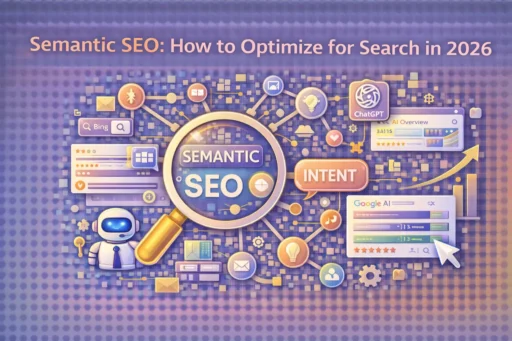

The landscape of search engine optimization has undergone a transformative shift in 2026, moving far beyond traditional keyword stuffing and exact-match phrases. At Search Savvy, we’ve witnessed firsthand how semantic SEO has become the cornerstone of successful digital marketing strategies. As AI-powered search engines like Google’s AI Overviews and conversational platforms continue to dominate, understanding semantic search isn’t just advantageous-it’s essential for survival in the digital marketplace. This comprehensive guide will walk you through everything you need to know about semantic SEO and how to optimize your content for semantic search in 2026.
What Is Semantic SEO?
Semantic SEO is the practice of optimizing content based on context, meaning, and relationships between topics rather than focusing solely on individual keywords. Unlike traditional SEO, which relied heavily on exact keyword matches and repetition, semantic SEO helps search engines understand the intent behind a user’s query and the contextual meaning of the content on your website.
According to Search Savvy’s latest research, semantic search technology now powers over 89% of all major search platforms in 2026. This shift means that search engines no longer just match words-they interpret meaning, analyze user intent, and deliver results based on comprehensive topic understanding. When someone searches for “best smartphones with good cameras,” semantic search understands they want budget-friendly options with excellent photography capabilities, even if those exact words aren’t used in the content.
How Does Semantic Search Work in 2026?
Semantic search leverages advanced technologies including natural language processing (NLP), machine learning algorithms, and vector embeddings to understand and process user queries based on intent and contextual meaning. Here’s how the process unfolds:
Query Analysis: When a user submits a search query, the search engine analyzes it to identify keywords, phrases, entities, and relationships between terms. The system attempts to interpret the searcher’s underlying intent beyond the literal words typed.
Vector Embeddings: The query is transformed into numerical vector embeddings that capture semantic relationships in multi-dimensional space. These embeddings represent the meaning and context of words rather than just their surface-level text.
Knowledge Graph Integration: Search engines like Google utilize massive knowledge graphs containing billions of data points about entities and their relationships. This helps the system understand context and deliver more relevant results.
Semantic Matching: Using algorithms like k-nearest neighbor (kNN), the search engine matches query vectors with document vectors to find conceptually similar content rather than exact keyword matches. This is why semantic search delivers relevant results even when there’s no direct word overlap between the query and the content.
Why Is Semantic Search Optimization Important in 2026?
Semantic search optimization has become critical in 2026 for several compelling reasons. First, AI-driven search experiences have fundamentally changed how users discover information. Google’s AI Overviews now appear in nearly half of all search queries, according to recent data from Search Engine Journal. These AI-generated summaries prioritize content that demonstrates topical authority and comprehensive coverage over simple keyword matching.
At Search Savvy, we’ve observed that websites optimized for semantic search experience 42% higher visitor retention rates compared to those still relying on traditional keyword-focused strategies. This is because semantic SEO aligns perfectly with user intent, delivering exactly what searchers are looking for-even when they don’t use precise terminology.
Additionally, voice search adoption continues to surge, with 55% of households expected to own smart speakers by 2026. Voice queries are naturally conversational and require semantic understanding to deliver accurate results. Optimizing for semantic search ensures your content is discoverable through voice assistants like Alexa, Siri, and Google Assistant.
How Do You Implement Semantic SEO Strategies?
Semantic SEO implementation requires a strategic, multi-faceted approach that goes beyond traditional optimization techniques. Here are the essential strategies Search Savvy recommends for 2026:
Build Topic Clusters and Pillar Content
The most fundamental shift in semantic SEO is moving from targeting single keywords to mastering topic clusters. This strategy involves creating one comprehensive pillar page that broadly covers a high-level subject, then developing numerous detailed cluster pages that dive deep into specific subtopics. All cluster pages link back to the pillar page and to each other, creating a semantic web that signals topical authority to search engines.
For example, if your pillar page covers “Content Marketing,” your cluster pages might explore “Email Marketing Strategies,” “Social Media Content Planning,” and “Video Marketing Tips.” This interconnected structure helps AI systems understand the relationships between concepts on your site, increasing the likelihood of being cited in generative answers.
Optimize for Natural Language and Conversational Queries
Semantic search thrives on natural language processing. Write your content the way people actually speak and ask questions. Instead of awkwardly inserting keywords like “best SEO tools 2026,” use natural phrases such as “What are the most effective SEO tools available this year?”
Structure your content with question-based subheadings (like the ones in this article) that mirror common voice search queries. According to Google Cloud’s semantic search documentation, search engines now interpret entire topic networks rather than isolated phrases, making conversational content more discoverable.
Leverage Structured Data and Schema Markup
Structured data adds a critical layer of context that helps search engines understand your content’s meaning. Implement schema markup for articles, FAQs, products, reviews, and local businesses to explicitly tell search engines what your content represents.
While schema markup doesn’t directly correlate with higher rankings, it significantly improves how AI systems parse and understand your content. This increases your chances of appearing in rich snippets, AI Overviews, and voice search results.
Focus on E-E-A-T Principles
Experience, Expertise, Authoritativeness, and Trustworthiness (E-E-A-T) have become central to semantic SEO success in 2026. Search engines now evaluate not only what is written but who writes it and why. Establish author credibility through detailed bios, showcase real-world experience, earn quality backlinks from reputable sources, and maintain consistent brand mentions across the web.
Answer People Also Ask Questions
The “People Also Ask” feature appears in approximately 48.4% of search queries, making it a goldmine for semantic SEO optimization. Identify common questions related to your primary keyword and incorporate these questions and their answers directly into your content. This enriches your semantic depth and increases visibility in featured snippets.
What Tools Help With Semantic SEO Optimization?
Several powerful tools can streamline your semantic SEO efforts in 2026. Natural language processing APIs like Google’s NLP API help analyze content meaning and identify semantic relationships. Keyword clustering tools group related terms based on intent rather than just search volume. Topic research platforms like Clearscope’s Topic Explorer reveal semantic terrain around concepts, showing what people ask and where content gaps exist.
AI-powered content optimization tools assist with research, outline generation, and identifying semantically related keywords. However, the most successful approach combines AI efficiency with human expertise, creativity, and strategic nuance-a principle Search Savvy champions in all our optimization work.
How Is Semantic Search Different From Keyword Search?
The fundamental difference lies in how results are determined. Keyword search returns results that match words to words, focusing on exact matches or close synonyms. If you search for “affordable laptops,” a keyword-based system looks for those specific terms.
Semantic search, however, matches the meaning behind words. It understands that “affordable laptops,” “budget-friendly computers,” and “cheap notebooks” all represent the same user intent. Semantic search analyzes context, user behavior, location, search history, and entity relationships to deliver conceptually relevant results-even when there’s no direct word overlap.
This distinction becomes especially important for conversational and voice searches, where users phrase queries naturally rather than using SEO-optimized keywords.
What Are the Technical Requirements for Semantic SEO?
Semantic SEO effectiveness depends heavily on solid technical foundations. Your website must achieve “Good” status on all Core Web Vitals-Largest Contentful Paint (LCP), First Input Delay (FID), and Cumulative Layout Shift (CLS). Page speed and stability directly impact user experience, which is a core semantic ranking signal.
Implement clean, descriptive URL structures that clearly communicate page topics (e.g., /semantic-seo-guide-2026). Use HTML semantic tags correctly: <h1> for main topics, <h2> for subtopics, <h3> for supporting points, and appropriate tags like <figure> and <article> to provide additional semantic meaning.
Ensure proper site architecture with logical internal linking that helps both users and AI crawlers understand content relationships. A well-structured site with clear topical hierarchies enables search engines to more accurately interpret your semantic authority.
Frequently Asked Questions About Semantic SEO
What is the difference between semantic SEO and traditional SEO?
Traditional SEO focuses on optimizing content for specific keywords with exact matches and high keyword density. Semantic SEO optimizes for topics, context, and user intent, allowing content to rank for a broader range of related queries even without exact keyword matches.
How long does it take to see results from semantic SEO?
Results typically begin appearing within 3-6 months of implementing semantic SEO strategies. However, building true topical authority requires consistent content creation, internal linking, and E-E-A-T development over time. The investment pays long-term dividends in sustainable rankings and AI visibility.
Do I still need to do keyword research for semantic SEO?
Yes, keyword research remains foundational. However, the approach shifts from targeting individual keywords to grouping keywords based on relationships, context, and user intent. Focus on keyword clusters that reflect how search engines interpret topics rather than treating keywords as isolated terms.
Can small businesses compete using semantic SEO?
Absolutely. Semantic SEO actually levels the playing field by rewarding expertise and comprehensive topic coverage over domain authority alone. Small businesses with deep expertise in niche topics can outrank larger competitors by demonstrating genuine authority and providing superior content depth.
How does semantic SEO affect AI search platforms like ChatGPT?
Semantic SEO directly influences visibility in AI-powered search platforms. These systems prioritize content that demonstrates topical authority, uses natural language, includes proper citations, and maintains high E-E-A-T standards. The goal shifts from ranking in blue links to being cited as a trusted source in AI-generated answers.
What is the most important factor in semantic SEO?
While all factors matter, topical authority stands out as the most critical element. Search engines and AI systems need to recognize your brand as a comprehensive, trustworthy source on specific topics. This requires creating interconnected content clusters, earning quality backlinks, and consistently demonstrating expertise across related subtopics.
At Search Savvy, we help businesses navigate the evolving landscape of semantic search optimization. Our data-driven approach combines cutting-edge AI tools with human expertise to build topical authority, improve organic visibility, and future-proof your SEO strategy for 2026 and beyond. Ready to transform your search presence? Let’s talk about how semantic SEO can elevate your digital marketing results.