![AI Search Engines [2026 Guide]](https://searchsavvy.in/wp-content/uploads/2026/01/How-to-Optimize-Content-for-AI-Search-Engines-2026-Guide-512x341.webp)
![AI Search Engines [2026 Guide]](https://searchsavvy.in/wp-content/uploads/2026/01/How-to-Optimize-Content-for-AI-Search-Engines-2026-Guide.webp)

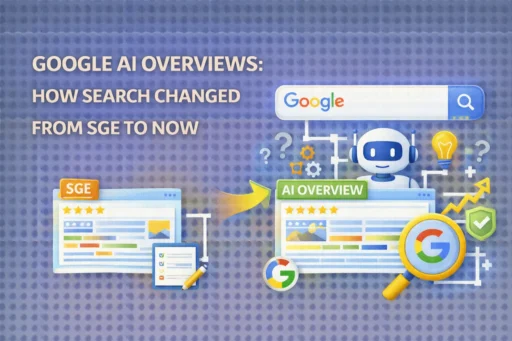
The digital landscape has transformed dramatically. Search is no longer just about typing keywords into Google and scrolling through ten blue links. In 2026, AI-powered search engines like ChatGPT, Google’s Search Generative Experience (SGE), Perplexity, Claude, and Microsoft Copilot are fundamentally changing how people find information online. At Search Savvy, we’ve been tracking these shifts closely, and the data is clear: businesses that don’t optimize for AI search are already falling behind.
Consider this: AI referral traffic surged 527% between January and May 2026, with AI-referred sessions jumping from 17,076 to 107,100 in just five months. Meanwhile, 60% of searches now end without a single click because users find their answers directly in AI-generated responses. The question isn’t whether you should optimize content for AI search engines-it’s how quickly you can adapt your strategy.
Search Savvy has developed a comprehensive framework to help businesses navigate this new frontier. This guide will walk you through everything you need to know about optimizing content for AI search engines in 2026, from understanding how these systems work to implementing proven strategies that increase your visibility across multiple AI platforms.
What Are AI Search Engines and How Do They Work?
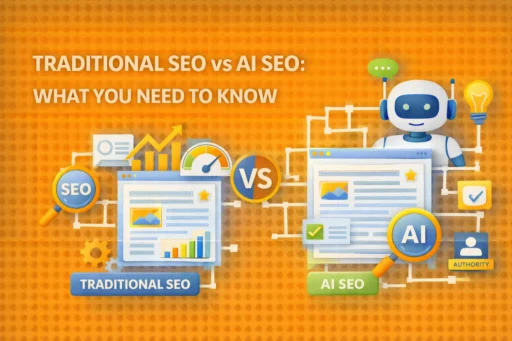
Optimize content for AI search engines by first understanding what makes them fundamentally different from traditional search. Unlike conventional search engines that crawl websites and match keywords to rank pages, AI search engines synthesize information from multiple sources to generate single, comprehensive answers.
Traditional search engines like Google used to simply match your search term to the most relevant page based on keywords, backlinks, and metadata. AI-powered search engines-including ChatGPT with 59.5% US market share, Microsoft Copilot (14%), Google Gemini (13.4%), Perplexity (6.2%), and Claude (3.2%)-operate differently. These platforms use Large Language Models (LLMs) and natural language processing to understand user intent, context, and the semantic meaning behind queries.
According to Search Savvy’s research, when someone asks an AI search engine a question, the system doesn’t just return a list of links. Instead, it generates a synthesized response drawing from web pages, documentation, FAQs, forum posts, and structured data. This means your content needs to be structured not just for ranking, but for citation and extraction.
The implications are profound. Your pages must provide clear, comprehensive answers while demonstrating obvious expertise and authority. Content that’s easy for AI systems to parse, understand, and reference has the highest chance of being cited in AI-generated responses-which translates directly to visibility and traffic.
Why Is Optimizing Content for AI Search Engines Important in 2026?
Optimize content for AI search engines because the traffic opportunity is exploding while traditional search behaviors are declining. In June 2026, AI referrals to top websites spiked 357% year-over-year, reaching 1.13 billion visits. Some SaaS websites now see over 1% of all sessions coming from LLMs, and that percentage is growing rapidly.
The shift in user behavior is equally dramatic. Approximately 20% of global internet users now engage with voice search technology, with usage varying by demographics and regions. Voice searches tend to be longer, more conversational, and often include location-based intent. Users asking their smart speakers complex questions expect different content than those typing short queries into a search bar.
ChatGPT alone processes queries from over 400 million weekly active users, while Perplexity handles 780 million monthly queries-a 239% increase from August 2024. These aren’t niche platforms; they’re becoming primary information sources for millions of people worldwide.
At Search Savvy, we’ve observed that websites appearing in AI-generated responses see higher-quality traffic. When people click through from AI Overviews or ChatGPT citations, they spend more time on site and demonstrate higher engagement because the AI has already provided them with relevant context. This creates a more engaged audience and new opportunities for conversions.
How Does Content Structure Impact AI Search Visibility?
Optimize content for AI search engines by implementing structured heading hierarchies that AI systems can easily parse. Research analyzing 400+ websites found that sites with H2→H3→bullet point structures are 40% more likely to be cited by AI engines. The reason is simple: AI tools rely on headers, tables, and other page structure elements to determine whether content is relevant to a user’s query.
Short paragraphs are crucial. AI search tools prioritize content that can be easily parsed and extracted. Carefully organizing your pages, maintaining paragraphs under 3-4 sentences, and including bullet points and tables where possible make it dramatically more likely that AI tools will extract key insights from your content.
Schema markup provides another powerful signal. Proper Article and FAQ schema increases citations by 28% because it gives AI systems clear, structured signals about your content type-whether it’s a recipe, product, FAQ, or how-to guide. Sites can use tools like Google’s Structured Data Markup Helper or plugins like Yoast or RankMath to add schema without coding expertise.
Direct answer formatting matters enormously. Pages with opening paragraphs that directly answer queries get cited 67% more often than those that bury the answer. AI models favor content that gets straight to the point, providing clear value in the first few sentences before expanding into details.
What Role Do Keywords Play in AI Search Optimization?
Optimize content for AI search engines by targeting keywords naturally, but with a crucial difference from traditional SEO. Keyword targeting remains essential for Generative Engine Optimization (GEO) because it helps align content with the specific language and intent of user queries. However, AI engines prioritize meaning over repetition.
Stuffing content with keywords or building pages around awkward keyword variations actively works against you with AI systems. Today’s AI models prioritize semantic understanding, context, and natural language over keyword density. Over-optimizing for keywords makes content sound unnatural and turns off both readers and AI search systems.
Instead, focus on long-tail keywords and conversational phrases. Instead of “best phone 2026,” users now ask AI engines, “What’s the best phone in 2026 for photography and battery life?” AI understands the intent, context, and expected response type, so your content should address these complex, multi-part queries naturally.
Think about how someone might phrase a query in voice search or to ChatGPT, then structure content accordingly. Use natural language that mirrors how people actually speak and ask questions. This approach-combined with strategic keyword placement in headings, first sentences of paragraphs, and meta descriptions-creates the optimal balance for both human readers and AI systems.
How Can You Create AI-Friendly Content That Gets Cited?
Optimize content for AI search engines by focusing on freshness, authority, and originality. Content updated within the last 30 days gets 3.2x more AI citations than older content. AI systems heavily favor recent information, particularly for topics where information changes rapidly.
Original data and statistics dramatically increase citation rates. Pages with original data tables see 4.1x more AI citations because AI models can easily parse and reference structured information. Create comparison tables, statistics compilations, or benchmark data that AI systems can extract and attribute to your site.
Authoritative backlink profiles matter enormously. Sites with 50+ referring domains see 5x more AI traffic than those with weaker link profiles. This aligns with traditional SEO best practices, but it’s even more critical for AI optimization because AI engines use authority signals to determine which sources to trust and cite.
Expert quotes and first-party research establish expertise. Media mentions across trusted publications, schema-enriched pages with structured data, and expert quotes with branded citations all signal to AI systems that your content comes from an authoritative source. Digital PR and brand visibility are now essential inputs for LLM recommendations.
What Technical Optimizations Improve AI Search Performance?
Optimize content for AI search engines through critical technical elements that many overlook. Mobile page speed is crucial-sites loading under 2 seconds get preferential treatment from Perplexity and other AI search platforms. Use Google’s PageSpeed Insights to monitor and optimize your mobile performance continuously.
Avoid hiding important answers in tabs or expandable menus. AI systems may not render hidden content, so key details can be skipped entirely. Similarly, relying on PDFs for core information often fails because while search engines can index text-based PDFs, they lack the structured signals like headings and metadata that HTML provides.
Structured data implementation should be a priority. Use FAQ, HowTo, Article, and Product markup depending on your content type. This structured data helps AI systems understand your content context and increases your chances of getting featured in rich results and AI-generated summaries. You can validate your schema using Google’s Rich Results Test.
Content clustering builds authority signals. Instead of publishing one-off pieces, build clusters of high-quality content around specific themes or topics. When your site has multiple posts covering a topic from different angles with strategic interlinking, it signals authority, expertise, and relevance to AI systems.
How Should You Monitor and Measure AI Search Success?
Optimize content for AI search engines by tracking specialized metrics beyond traditional SEO measurements. Success now requires understanding how your content performs across traditional search, AI-generated responses, and voice search results simultaneously.
Set up custom channels in Google Analytics 4 for AI referral traffic. Track sessions coming from chatgpt.com, claude.ai, perplexity.ai, and other AI platforms separately. Monitor not just traffic volume but engagement metrics-AI referral traffic often has higher session duration and engagement than traditional search traffic.
AI citation frequency provides crucial insights. Use specialized AI citation tracking tools to monitor real-time mentions across ChatGPT, Claude, and Perplexity. Some sites are now seeing ChatGPT account for 40-60% of all AI referral traffic across industries, with Perplexity surging in Finance (0.073%) and Legal (0.041%) sectors.
Content freshness tools help maintain citation rates. Since content updated within 30 days gets 3.2x more citations, set up systematic update schedules for your most important pages. Track when content needs refreshing to maintain AI visibility using Google Search Console.
What Are Common Mistakes to Avoid in AI Optimization?
Optimize content for AI search engines by avoiding these critical missteps. First, never focus exclusively on one AI platform. ChatGPT dominates with 59.5% market share, but Gemini, Perplexity, Claude, and others are growing rapidly. A diversified approach captures visibility across multiple platforms where your target audience searches.
Don’t ignore traditional SEO fundamentals. Research shows that 77% of AI optimization success comes from a strong traditional SEO foundation. AI search isn’t replacing SEO-it’s building on top of it. Sites that rank well in traditional search are more likely to be cited by AI systems.
Avoid creating walls of text without structure. Long, unbroken paragraphs blur ideas together and make it harder for AI to separate content into usable chunks. Break content into scannable sections with clear headings, short paragraphs, and bullet points where appropriate.
Never sacrifice quality for AI optimization. AI models increasingly favor content that serves human users first. Google’s official guidance states their “core goal remains the same: to help people find outstanding, original content that adds unique value.” Focus on your visitors and provide them with unique, satisfying content, and you’ll be well-positioned as AI search evolves.
How Will AI Search Continue to Evolve Through 2026?
Optimize content for AI search engines by preparing for continued rapid evolution. Voice search is expected to account for over 60% of web queries by late 2026 and into 2026. Voice queries are longer and more conversational, requiring content that addresses specific, complex questions in natural language.
Visual search capabilities are expanding rapidly. Tools like Google Lens, Bing Visual Search, and Pinterest’s visual search now let users search using images. AI-powered image recognition algorithms enable optimization of images with descriptive metadata and tags, making them more discoverable in visual search results.
Zero-click search will continue growing. With 60% of searches already ending without clicks, this trend shows no signs of slowing. Successful strategies will focus on answer visibility over SERP position, ensuring your brand gets cited even when users don’t click through.
Multi-modal search integration will deepen. AI systems are developing capabilities to understand and respond to combinations of text, voice, image, and video queries. Content strategies must account for users encountering your brand through various touchpoints-traditional search results, AI-generated overviews, voice search responses, and direct AI assistant interactions.
Conclusion: Your AI Search Optimization Strategy for 2026
The transformation from traditional search engine optimization to AI-powered search represents one of the most significant shifts in digital marketing history. At Search Savvy, we’ve seen firsthand how businesses that embrace this change early gain substantial competitive advantages in visibility, traffic quality, and engagement.
The key insight is that AI search optimization isn’t about abandoning traditional SEO-it’s about expanding your strategy to capture visibility across multiple search modalities. Focus on creating content that demonstrates expertise, provides clear answers, uses structured data, and stays fresh. Build authority through original research, expert quotes, and quality backlinks. Structure your content with AI parsing in mind while maintaining exceptional value for human readers.
The fractures in search aren’t a problem-they’re an opportunity. Brands that master content optimization for AI search engines while maintaining strong traditional SEO foundations will win across Google, ChatGPT, Perplexity, and whatever platforms emerge next. Start implementing these strategies today, and your content will be positioned to capture the massive traffic opportunity that AI search represents through 2026 and beyond.
Frequently Asked Questions
Q: How long does it take to see results from AI search optimization?
A: AI search optimization typically shows results faster than traditional SEO. Since AI engines favor fresh content (updated within 30 days), you can start seeing citations within weeks. However, building comprehensive authority across multiple AI platforms requires consistent effort over 3-6 months, including content updates, schema implementation, and backlink development.
Q: Do I need different content for each AI search engine?
A: No, you don’t need separate content for each platform. The core optimization principles-structured data, clear answers, authoritative sources, and fresh content-work across all AI search engines. Focus on creating high-quality, well-structured content that addresses user intent comprehensively, and it will perform well across ChatGPT, Perplexity, Claude, and Google SGE simultaneously.
Q: Will AI search completely replace traditional Google search?
A: Traditional search and AI search will coexist for the foreseeable future. While AI search is growing rapidly (527% increase in referral traffic in early 2026), traditional search still handles billions of queries daily. A hybrid strategy that optimizes for both traditional SEO and AI citations provides the broadest visibility and captures users regardless of their preferred search method.
Q: How much does AI search optimization cost compared to traditional SEO?
A: AI search optimization leverages many existing SEO investments. If you already have strong traditional SEO, adding AI optimization requires incremental costs for schema implementation, content updates, and specialized tracking tools. Most businesses can implement effective AI search strategies for 20-30% more than their current SEO budget, with significantly higher returns given the explosive growth in AI search traffic.
Q: What’s the single most important factor for AI search visibility?
A: While multiple factors matter, freshness combined with authority delivers the highest impact. Content updated within 30 days gets 3.2x more citations, but only if it comes from authoritative sources with strong backlink profiles. Focus on systematically updating your most important content while building authority through original research, expert quotes, and high-quality backlinks.
Q: Should small businesses prioritize AI search optimization in 2026?
A: Absolutely. Small businesses may actually have an advantage in AI search because AI engines prioritize content quality and relevance over domain authority alone. Focus on creating expert content in your niche, implementing schema markup, and maintaining fresh information. Local businesses can particularly benefit from voice search optimization, as many voice queries include location-based intent that larger competitors may overlook.
Ready to optimize your content for AI search engines? Visit Search Savvy for expert guidance, cutting-edge tools, and strategies that position your brand for success in the AI-powered search landscape of 2026.