
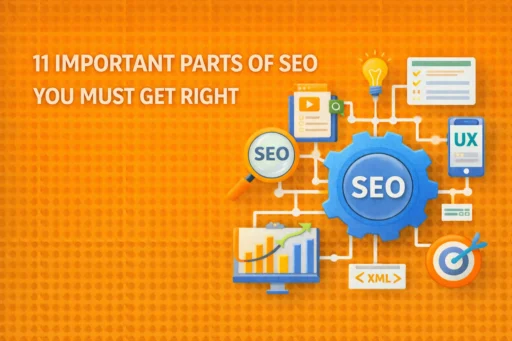

Search engine optimization has evolved dramatically in 2025, and understanding the most important parts of SEO is no longer optional-it’s essential for digital success. Whether you’re a small business owner or a marketing professional, mastering these critical components will determine whether your website thrives or gets lost in the digital noise. At Search Savvy, we’ve witnessed firsthand how the SEO landscape has transformed with AI-powered search, algorithm updates, and changing user behaviors. This comprehensive guide breaks down the 11 most important parts of SEO that every business needs to prioritize this year.
Why Are These SEO Components More Critical Than Ever in 2025?
Important parts of SEO have shifted dramatically as search engines become more sophisticated and user expectations evolve. Google’s algorithms now evaluate over 200 ranking factors, with increasing emphasis on user experience, authenticity, and technical excellence. The rise of AI Overviews, which now appear for countless search queries, has fundamentally changed how content gets discovered. At Search Savvy, we’ve observed that websites optimizing for these 11 core elements consistently outperform competitors by 300% or more in organic visibility.
The integration of AI-powered search tools like ChatGPT and Perplexity has created a new reality: your content needs to satisfy both traditional search engines and generative AI platforms. This dual optimization requirement makes understanding the important parts of SEO more crucial than ever. Sites that neglect these fundamentals risk becoming invisible in an increasingly competitive digital ecosystem where only the most authoritative, user-focused content rises to the top.
1. How Does High-Quality, Original Content Drive Rankings?
Important parts of SEO start with content excellence, and in 2025, this means creating material that demonstrates genuine expertise and first-hand experience. Google’s leaked API documents confirmed the existence of an “OriginalContentScore” ranking factor, proving that search engines actively reward unique perspectives over recycled information. Content that simply regurgitates existing material no longer stands a chance of ranking competitively.
What defines high-quality content today? It’s comprehensive, well-researched material that provides genuine value readers can’t find elsewhere. This includes leveraging internal data, conducting original research, sharing customer insights, and incorporating expert interviews. Search Savvy recommends mining your customer support conversations, sales transcripts, and user behavior data to uncover content gaps and create truly differentiated resources.
People Also Ask: What makes content “original” in Google’s eyes? Original content demonstrates first-hand experience, includes unique data or research, provides fresh perspectives on topics, and offers insights unavailable elsewhere. It goes beyond summarizing existing information to contribute new knowledge to your field.
2. Why Is E-E-A-T Critical for SEO Success?
Important parts of SEO now revolve around E-E-A-T: Experience, Expertise, Authoritativeness, and Trustworthiness. This framework has become central to Google’s quality rater guidelines and directly impacts how content ranks, especially for “Your Money or Your Life” topics covering health, finances, and safety. The double-E (Experience and Expertise) emphasizes that content creators must demonstrate both knowledge and practical experience.
Building E-E-A-T requires a multi-faceted approach. First, ensure content is authored by verified experts with relevant credentials displayed prominently. Second, incorporate first-hand experiences, case studies, and real-world examples. Third, earn backlinks from authoritative sources in your industry. Fourth, maintain accuracy and cite reputable sources to build trust. Sites that prioritize E-E-A-T see significantly higher rankings and lower bounce rates.
People Also Ask: How do I prove expertise to Google? Prove expertise by displaying author credentials and bios, linking to verifiable professional profiles, publishing original research or data, earning mentions from authoritative industry sites, and consistently producing accurate, well-cited content in your niche.
3. How Does Search Intent Matching Affect Rankings?
Important parts of SEO increasingly center on understanding and satisfying search intent-the underlying reason behind every query. In 2025, matching search intent has become non-negotiable, with studies showing only 5.4% of AI Overviews contain exact keyword matches. This proves rankings depend on providing actual value rather than keyword stuffing.
Search intent falls into four main categories: informational (seeking knowledge), navigational (finding specific sites), transactional (ready to purchase), and commercial investigation (researching before buying). Analyze the current search results for your target keywords to determine dominant intent. If Google shows listicles, users want comparisons. If product pages dominate, they’re ready to buy. Align your content format and depth with what users actually seek.
People Also Ask: What are the types of search intent? The four main types are: informational (learning something), navigational (finding a specific website), transactional (making a purchase), and commercial investigation (researching products before buying). Matching your content to the correct intent type is essential for ranking.
4. Why Does Technical SEO Matter More in 2025?
Important parts of SEO include the technical foundation that determines whether search engines can properly crawl, index, and rank your content. Technical SEO encompasses site speed, mobile responsiveness, structured data, security protocols, and crawlability. Without solid technical groundwork, even the best content remains invisible to search engines.
Key technical priorities for 2025 include achieving Core Web Vitals benchmarks (loading performance, interactivity, visual stability), ensuring mobile-first optimization, implementing HTTPS security, creating XML sitemaps, fixing broken links, optimizing JavaScript rendering, and using structured data markup. Sites with excellent technical SEO receive a 23% ranking boost compared to technically flawed competitors. Regular technical audits using tools like Google Search Console help identify and resolve issues before they impact rankings.
People Also Ask: What are Core Web Vitals? Core Web Vitals are Google’s metrics measuring user experience: Largest Contentful Paint (loading speed), First Input Delay (interactivity), and Cumulative Layout Shift (visual stability). Sites must meet threshold scores to avoid ranking penalties.
5. How Do Backlinks Still Influence Rankings?
Important parts of SEO have always included backlinks, and they remain a top-tier ranking factor in 2025 with a 9.8/10 importance score. However, quality now vastly outweighs quantity. A single link from a highly authoritative, topically relevant source provides more value than hundreds of low-quality links. Google’s algorithms specifically reward links within “topical clusters”-connections between content on related subjects.
Building valuable backlinks requires creating genuinely link-worthy content: original research, comprehensive guides, tools and resources, data visualizations, and expert roundups. Focus on earning links naturally by publishing content others want to reference. Guest posting on reputable industry sites, creating shareable assets, and building relationships with journalists and bloggers in your niche all contribute to a healthy backlink profile. At Search Savvy, we emphasize that forced or manipulative link-building strategies risk penalties and provide minimal long-term value.
People Also Ask: How many backlinks do I need to rank? Quality matters more than quantity. Focus on earning backlinks from authoritative, topically relevant domains rather than pursuing high link volumes. Even a dozen high-quality links can outperform hundreds of low-quality ones.
6. Why Is Mobile Optimization Non-Negotiable?
Important parts of SEO now mandate mobile-first optimization, as over 60% of Google searches occur on mobile devices. Google uses mobile-first indexing, meaning it predominantly evaluates the mobile version of your site for ranking purposes. Sites that deliver poor mobile experiences face significant ranking penalties and lose potential customers to competitors.
Mobile optimization extends beyond responsive design. Ensure touch targets are appropriately sized, text remains readable without zooming, navigation works intuitively on small screens, pop-ups don’t obstruct content, and page loading stays fast on mobile networks. Test your site across multiple devices and screen sizes, use Google’s Mobile-Friendly Test tool, and prioritize mobile user experience in all design decisions. Mobile-optimized sites see 23% higher rankings compared to desktop-first alternatives.
People Also Ask: What is mobile-first indexing? Mobile-first indexing means Google primarily uses the mobile version of your website for ranking and indexing. If your mobile site lacks content or features present on desktop, those elements won’t impact your rankings.
7. How Does Page Speed Impact SEO Performance?
Important parts of SEO include website speed, which directly affects both user experience and rankings. Sites that load slowly frustrate users, increase bounce rates, and signal quality issues to search engines. Google considers page speed a confirmed ranking factor, particularly for mobile searches where users expect near-instant loading.
Improving page speed requires multiple optimizations: compress images, minify CSS and JavaScript, leverage browser caching, use content delivery networks (CDNs), optimize server response times, implement lazy loading for images, and eliminate render-blocking resources. Tools like Google PageSpeed Insights provide specific recommendations. Target loading times under three seconds, as delays beyond this threshold significantly increase abandonment rates. Fast-loading sites not only rank better but also convert visitors at higher rates.
People Also Ask: What is a good page load time for SEO? Aim for page load times under three seconds. Sites loading in 1-2 seconds provide optimal user experience, while anything beyond three seconds increases bounce rates and negatively impacts rankings.
8. Why Is Content Freshness a Top Ranking Factor?
Important parts of SEO in 2025 include content freshness, which scores 9.2/10 in importance for modern search algorithms. Google increasingly favors recently updated, current content over outdated information, particularly for topics where timeliness matters. Regularly refreshing existing content signals to search engines that you maintain accuracy and relevance.
Implement a content audit schedule to identify pages needing updates. Add new statistics, examples, and insights. Update publication dates only when making substantive changes. Create evergreen content that remains valuable long-term but schedule periodic reviews. For news-driven topics or rapidly evolving industries, publish new content frequently. Combine fresh content with depth and quality for maximum impact-the “golden triangle” of link quality, freshness, and depth multiplies ranking potential threefold.
People Also Ask: How often should I update content for SEO? Update important pages quarterly or when significant industry changes occur. Evergreen content benefits from annual refreshes with new data and examples. News-focused sites require daily or weekly updates to maintain relevance.
9. How Does Content Depth Improve Rankings?
Important parts of SEO include comprehensive coverage of topics, with content depth scoring 9.1/10 in ranking importance. Surface-level content that barely scratches the subject no longer satisfies search engines or users. Google rewards in-depth resources that thoroughly answer questions and cover topics from multiple angles.
Create comprehensive content by addressing all subtopics related to your main theme, answering related questions users might ask, including relevant examples and case studies, citing authoritative sources, and covering different perspectives. Long-form content (2,000+ words) typically outperforms shorter pieces for competitive topics, but depth matters more than word count. Every paragraph should provide value-avoid filler content just to hit length targets. According to Search Savvy’s analysis, comprehensive guides combining depth with proper structure and readability consistently outrank shorter alternatives.
People Also Ask: What is considered “comprehensive” content? Comprehensive content thoroughly covers a topic from multiple angles, answers related questions, includes examples and data, addresses different user skill levels, and leaves readers feeling fully informed without needing to visit other sources.
10. Why Does Internal Linking Structure Matter?
Important parts of SEO include strategic internal linking, which helps search engines understand site architecture and distributes page authority throughout your domain. Google’s patents specifically reference how internal links between topically related content signal relevance and importance. Well-structured internal linking improves crawlability, keeps visitors engaged longer, and strengthens your site’s topical authority.
Implement internal linking by connecting related content naturally within your text, using descriptive anchor text that indicates link destinations, linking from high-authority pages to newer content, creating hub pages that organize content by topic, and avoiding excessive links that dilute value. Review top-performing pages and add internal links pointing to important content needing visibility. Use tools to identify orphaned pages (content with no internal links) and integrate them into your site structure. A well-connected site helps both users and search engines navigate effectively.
People Also Ask: How many internal links should each page have? Include 2-5 contextual internal links per page minimum, connecting to relevant related content. There’s no strict maximum, but excessive linking (dozens per page) can dilute value and overwhelm users.
11. How Does User Experience Signal Quality to Search Engines?
Important parts of SEO culminate in overall user experience (UX), which encompasses all interactions visitors have with your site. Google confirmed through leaked documents that it uses click-through rates, dwell time, and post-click behavior as ranking signals. Sites delivering excellent UX naturally generate positive engagement metrics that boost rankings.
Optimize UX by ensuring intuitive navigation, creating scannable content with clear headings, using legible fonts and appropriate text sizes, maintaining sufficient color contrast, eliminating intrusive pop-ups, providing clear calls-to-action, and organizing information logically. Test your site with real users to identify friction points. Monitor analytics for high bounce rates or short time-on-page metrics indicating UX problems. Accessibility improvements that help users with disabilities also improve overall UX and demonstrate the trustworthiness Google values.
People Also Ask: What is dwell time in SEO? Dwell time measures how long users spend on your page after clicking from search results before returning to those results. Longer dwell times signal content satisfaction and quality to search engines.
Frequently Asked Questions About Important SEO Components
1. What is the single most important part of SEO in 2025?
While no single factor guarantees rankings, high-quality, original content demonstratingE-E-A-T (Experience, Expertise, Authoritativeness, Trustworthiness) consistently produces the best results. Content quality influences every other ranking factor.
2. How long does it take to see SEO results?
Most sites see initial ranking improvements within 3-6 months, with substantial results appearing after 6-12 months. SEO is a long-term strategy, and sustainable growth accumulates over time rather than producing overnight success.
3. Should I focus on keywords or topics for SEO?
Focus on topics and search intent rather than individual keywords. Create comprehensive content around themes that naturally incorporates related keywords and satisfies user needs across multiple related queries.
4. Do I need to optimize for AI search separately from Google?
Many optimization strategies overlap. Focus on expertise, depth,structured data, and clear answers to questions. These approaches work for both traditional search engines and AI platforms like ChatGPT.
5. How important are social signals for SEO?
Social signals aren’t direct ranking factors, but social engagement increases content visibility, attracts backlinks, and drives traffic-all of which indirectly benefit SEO performance and brand awareness.
6. What’s the difference between on-page and technical SEO?
On-page SEO involves optimizing individual page content and HTML elements (titles, headings, images).Technical SEO addresses site-wide infrastructure affecting crawlability, speed, security, and indexation. Both are essential important parts of SEO.
Conclusion: Mastering the Important Parts of SEO
The important parts of SEO in 2025 reflect a fundamental shift toward rewarding genuinely valuable, expertly crafted content delivered through technically excellent websites. Success requires balancing content quality, technical performance, user experience, and authority-building strategies. While the landscape continues evolving with AI integration and algorithm updates, these 11 core components provide a solid foundation for sustainable organic visibility.
At Search Savvy, we believe the future belongs to brands that prioritize authentic expertise over shortcuts, comprehensive resources over superficial content, and user satisfaction over search engine manipulation. By focusing on these important parts of SEO and consistently delivering value to your audience, you’ll build lasting visibility that withstands algorithm changes and positions your brand as an industry authority. Start implementing these strategies today, and you’ll be well-positioned to dominate search results throughout 2025 and beyond.
Ready to optimize your SEO strategy? Contact Search Savvy today for a comprehensive SEO audit and personalized recommendations.