

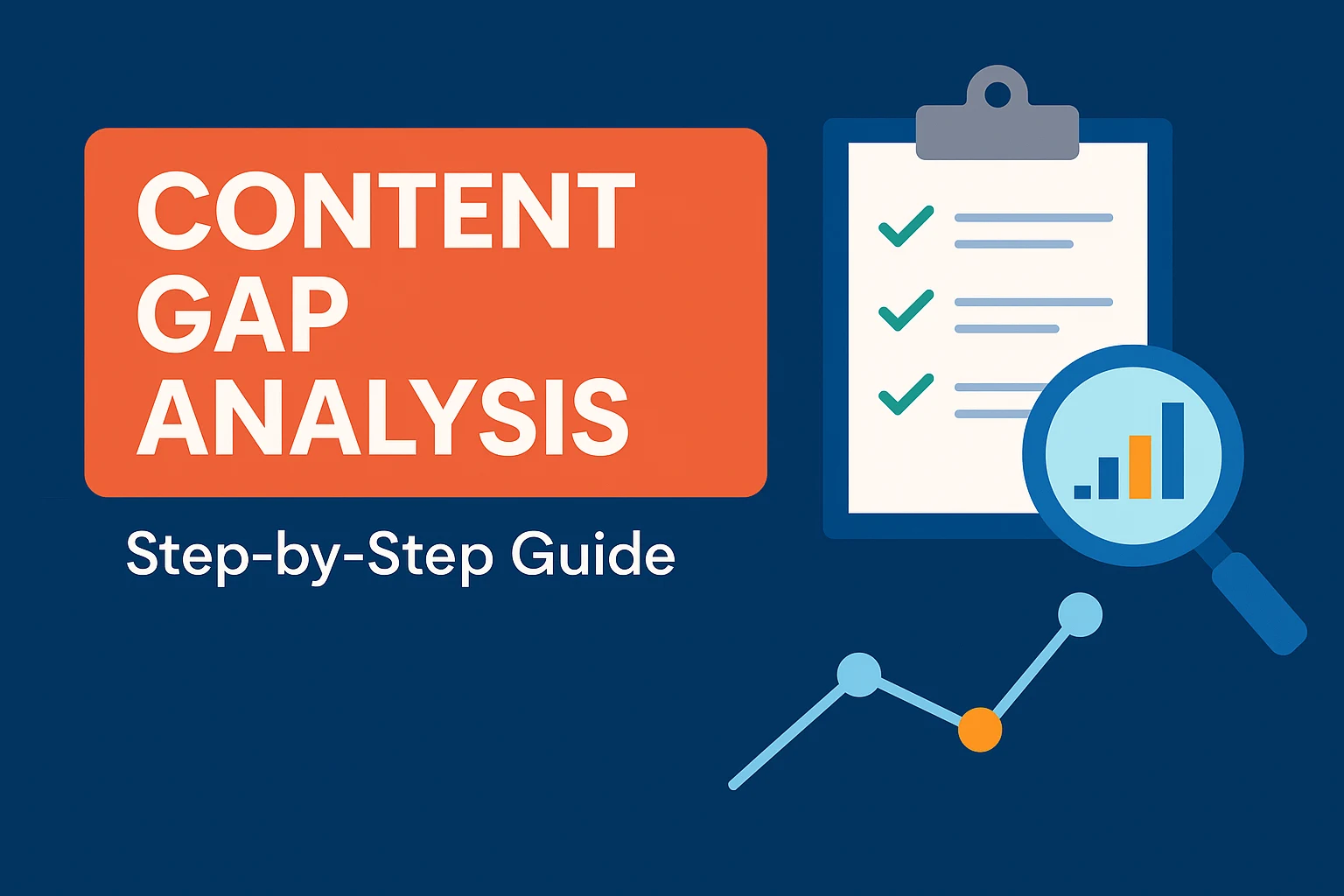

Content Gap Analysis is the strategic process that separates successful digital marketing campaigns from those that struggle to gain traction. In today’s competitive online landscape, understanding what your audience searches for-and what your competitors are already ranking for-has become essential for business growth. At Search Savvy, we’ve witnessed countless businesses transform their content strategies by implementing systematic gap analysis, uncovering hidden opportunities that drive organic traffic and conversions.
Content Gap Analysis represents more than just keyword research. It’s a comprehensive methodology for identifying missing topics, underperforming content, and valuable keywords that your competitors dominate but you haven’t targeted yet. According to Search Savvy’s insights, businesses that conduct regular content gap analyses typically see significant improvements in search visibility within three to six months. This strategic approach reveals not only what content you’re missing but also highlights opportunities to create better, more comprehensive resources than what currently ranks.
The digital marketing ecosystem has evolved dramatically in 2025, with AI-powered search algorithms becoming increasingly sophisticated at understanding user intent. Search Savvy recommends performing content gap analysis at least every six to twelve months to stay ahead of changing trends, audience needs, and industry updates. This regular assessment ensures your content remains relevant, authoritative, and competitive in an environment where new websites emerge constantly and competitors continuously refine their strategies.
What Is Content Gap Analysis?
Content Gap Analysis is the systematic process of comparing your current content inventory against what your target audience actively searches for and what your competitors successfully rank for in search engine results pages (SERPs). This strategic evaluation identifies three primary types of gaps: keyword gaps (search terms your audience uses that your content doesn’t target), topic gaps (important subjects your competitors cover but you don’t), and quality gaps (areas where your existing content lacks depth, freshness, or comprehensiveness compared to top-ranking pages).
Content Gap Analysis differs from traditional keyword research in several crucial ways. While conventional keyword research starts with brainstorming seed keywords and hoping they’ll drive traffic, gap analysis uses proven data from competitors who already rank successfully for valuable terms. This evidence-based approach reveals keywords that websites similar to yours actually rank for, providing a realistic roadmap of achievable ranking opportunities rather than speculative targets.
Why Is Content Gap Analysis Important in 2025?
Content Gap Analysis has become increasingly critical in 2025 as search algorithms grow more sophisticated and user expectations continue rising. Google’s latest algorithm updates prioritize content that comprehensively addresses user intent, making it essential to cover topics thoroughly rather than superficially. With recent changes to Google’s search engine algorithms that counter AI-generated content and evaluate the use of low-quality backlinks, focusing on high-quality, authentic content has never been more important.
Content Gap Analysis delivers measurable benefits that directly impact your bottom line. First, it captures organic traffic that would otherwise go to competitors-when you rank for keywords your competitors dominate, you intercept potential customers at critical decision-making moments. Second, it improves resource allocation by showing exactly which content to create or optimize, eliminating wasted effort on topics with minimal search demand or unrealistic competition levels.
Content Gap Analysis also establishes thought leadership and authority within your industry. When you’re the first to address trending or underserved topics, search engines reward you with higher rankings because there’s little to no competition. Additionally, high-quality, first-mover content often gets cited by others covering the same topic later, earning valuable backlinks that boost domain authority and further strengthen your search visibility.
How Does Content Gap Analysis Work?
Content Gap Analysis works through a systematic process that combines competitor research, keyword analysis, and strategic content planning. The process begins with identifying your main SEO competitors-websites that rank for keywords relevant to your business but aren’t necessarily direct business competitors. These are the sites appearing in search results when your target audience looks for information related to your products, services, or industry.
Content Gap Analysis then uses specialized SEO tools to compare the keywords these competitors rank for against your own keyword portfolio. Keyword research tools allow you to see how many people search for specific terms each month (search volume) and how difficult it would be to rank for them (keyword difficulty). This data-driven comparison reveals which valuable keywords your competitors capture that you’re missing entirely, which keywords you both target (where you might need to strengthen your content), and which low-competition opportunities exist where you could quickly gain rankings.
Content Gap Analysis extends beyond just finding missing keywords to include content quality assessment. This involves manually reviewing top-ranking competitor content to identify what makes it successful-comprehensive topic coverage, better structure, more engaging visuals, fresher information, or superior user experience. Understanding these quality factors helps you create content that doesn’t just target the right keywords but genuinely outperforms what currently ranks.
How to Conduct Content Gap Analysis: Step-by-Step Process
Step 1: Define Your Goals and Target Audience
Content Gap Analysis must start with clear objectives that align with your broader business goals. Determine whether you’re aiming to increase organic traffic, generate more qualified leads, improve conversion rates, or establish authority in a specific niche. Without any clear goals it will be difficult to measure the success of your content gap analysis. Document these goals with specific, measurable targets-for example, “increase organic traffic by 30% over six months” or “rank in the top three positions for ten high-intent keywords.”
Understanding your target audience is equally critical. There’s often a disconnect between what marketers think their audience needs and what content actually talks about. Research where your audience congregates online-industry forums, social media communities, Reddit threads, or question-and-answer platforms like Quora. Analyze the questions they ask, problems they discuss, and language they use. This qualitative research provides context that pure keyword data can’t capture, revealing the real pain points and information needs your content must address.
Step 2: Identify Your SEO Competitors
Finding the right competitors to analyze makes the difference between actionable insights and irrelevant data. Your SEO competitors aren’t necessarily your direct business competitors-they’re websites that rank for keywords you want to target. Start by searching for your most important keywords in Google and documenting which websites consistently appear in top positions. Look for patterns: which domains appear repeatedly across multiple relevant search queries?
SEO tools like Semrush’s Organic Research tool or Ahrefs’ Site Explorer can automate competitor identification. These tools automatically suggest websites to compare to yours based on keywords in common, which is particularly useful if this is your first analysis and you’re not sure where to start. Aim to identify 3-5 core competitors that closely match your domain authority and business model, plus 1-2 aspirational competitors with significantly stronger rankings to reveal stretch opportunities.
Step 3: Use Content Gap Analysis Tools
Specialized tools streamline the analysis process, making it manageable even for websites with thousands of pages. Leading content gap analysis tools for 2025 include SEOBoost, Semrush, Ahrefs, and LowFruits, which are widely used for gap analysis due to their keyword and competitor analysis capabilities. Each platform offers unique advantages for different aspects of content gap identification.
Semrush’s Keyword Gap tool allows you to compare your domain against up to four competitors simultaneously, revealing keywords they rank for that you don’t. The tool categorizes results into “Missing” (keywords only competitors rank for), “Weak” (keywords where competitors significantly outrank you), “Strong” (keywords where you outrank competitors), and “Untapped” (keywords none of you target but have search volume). This categorization helps prioritize which opportunities to pursue first.
Ahrefs’ Content Gap feature takes a slightly different approach, allowing you to see keywords that multiple competitors rank for simultaneously. With its Competitive Analysis feature, you can find content gaps and outperform your competitors by adding your domain in the first field and 1-3 competitor domains below, then clicking ‘Show keyword opportunities’ to find all the keywords your competitors rank for but you don’t. This intersection analysis is particularly valuable because keywords that multiple competitors rank for often indicate validated opportunities with proven traffic potential.
Step 4: Analyze Keyword Gaps and Opportunities
Once you’ve generated a list of gap keywords, strategic filtering and prioritization become essential. Raw gap analysis reports often contain thousands of keywords, making it impossible to address everything simultaneously. Start by filtering for keywords with reasonable search volume-typically at least 100-500 monthly searches, depending on your niche. Higher search volume isn’t always better; sometimes lower-volume, high-intent keywords convert significantly better than popular but generic terms.
Keyword difficulty scores calculated on a logarithmic scale mean that a keyword with a score of 50 can be challenging to rank for. Focus initially on keywords with difficulty scores appropriate for your domain authority. New websites should target “easy” to “medium” difficulty keywords, while established sites can pursue more competitive terms. Also consider keyword intent-informational keywords attract users researching topics, while commercial and transactional keywords indicate purchase readiness.
Organize gap keywords into logical topic clusters rather than treating each keyword as an isolated target. Modern search algorithms reward comprehensive topic coverage, so grouping related keywords under broader themes allows you to create pillar content that addresses multiple related searches within a single, authoritative resource. This clustering approach also reveals content structure opportunities-main topics for pillar pages with supporting subtopics for related articles.
Step 5: Audit Your Existing Content
Content Gap Analysis isn’t solely about creating new content-it also identifies opportunities to strengthen what you already have. Audit the content across your entire website, including landing pages and blog posts, to identify underperformers and topics that need better coverage. Use Google Analytics and Google Search Console to identify pages with declining traffic, high bounce rates, or impressions without clicks-these signals indicate content that needs optimization.
Compare your existing content against top-ranking competitor pages for the same topics. What do they include that you don’t? Do they have better structure, more comprehensive coverage, fresher data, or superior visual elements? Create a priority list of existing pages that could be updated to target gap keywords, refreshed with current information, expanded with additional depth, or restructured for better user experience. Often, optimizing existing content delivers faster results than creating new pages from scratch because these URLs already have some authority and indexation.
Step 6: Create and Optimize Content
With your gap analysis complete and priorities established, develop a content creation roadmap that addresses the most valuable opportunities first. For new content, ensure each piece comprehensively addresses user intent for targeted keywords while providing unique value beyond what competitors offer. If possible and you have the budget, improve the production quality of your content by looking at user experience of your website or investing in equipment to make original video content rather than relying on stock imagery and footage.
Structure content for both search engines and human readers by using clear H2 and H3 subheadings, short paragraphs, bullet points, and visual elements that enhance comprehension. Include internal links to related content on your site, which helps search engines understand your site’s topical authority and encourages visitors to explore more pages. For existing content updates, focus on adding sections that target gap keywords, refreshing outdated statistics or examples, improving formatting and readability, and strengthening calls-to-action.
Step 7: Monitor Results and Iterate
Content Gap Analysis is not a one-time project but an ongoing process. It’s important to run this process regularly, ideally every six to 12 months, so you can make sure your content is still timely, relevant, and competitive. Set up tracking systems to monitor your rankings for targeted gap keywords, using tools like Google Search Console, Semrush Position Tracking, or Ahrefs Rank Tracker.
Establish key performance indicators (KPIs) that align with your original goals-organic traffic growth, keyword ranking improvements, conversion rate increases, or backlink acquisition. Review these metrics monthly to identify which content strategies work best and which need adjustment. Some tracking can be automated through SEO tools that alert you when competitors start outranking you, and Google Analytics can send automated reports about drops in traffic or new keywords your site is appearing for. These alerts help you judge how urgently you need to conduct another full content gap analysis.
What Are the Common Challenges in Content Gap Analysis?
Content Gap Analysis, while powerful, presents several challenges that can derail even well-intentioned efforts. The most common pitfall is analysis paralysis-generating massive lists of gap keywords without clear prioritization criteria. This overwhelm often leads to scattered efforts that fail to move the needle. Combat this by establishing strict filtering criteria from the start and focusing on the 20% of opportunities likely to deliver 80% of results.
Another challenge involves misinterpreting competitor success. Just because a competitor ranks for certain keywords doesn’t necessarily mean those keywords are valuable for your business model or that you can realistically compete for them with your current domain authority. Always evaluate whether gap keywords align with your business objectives and represent searches your target audience actually makes. Additionally, some industries have established authority sites that are nearly impossible to outrank for certain terms-recognize when to pursue alternative angles rather than attacking fortress keywords head-on.
Quality assessment presents subjective challenges. While gap analysis tools excel at quantitative keyword comparison, evaluating content quality requires human judgment. What makes one article “better” than another involves multiple factors-comprehensiveness, readability, trustworthiness, user experience, and more. Develop a standardized content evaluation rubric to maintain consistency when comparing your content against competitors.
How Often Should You Perform Content Gap Analysis?
At Search Savvy, we recommend conducting comprehensive content gap analyses at least twice annually, with quarterly check-ins for competitive industries. Performing this analysis at least once a year ensures you stay ahead of changing trends, audience needs, and industry updates. However, the optimal frequency depends on several factors: your industry’s rate of change, the competitiveness of your niche, the size of your existing content inventory, and your content production capacity.
Fast-moving industries like technology, digital marketing, or healthcare require more frequent analysis because new topics, competitors, and search trends emerge rapidly. Seasonal businesses should time their analyses several months before peak seasons to ensure new content has time to rank. Growing websites with aggressive content strategies benefit from quarterly analyses to continuously identify new opportunities, while more established sites with comprehensive existing content might focus on semi-annual deep dives supplemented by ongoing monitoring.
Between formal analyses, maintain vigilance through automated alerts and regular performance reviews. Set up notifications for significant ranking drops, traffic declines, or new competitors entering your space. This ongoing monitoring helps you spot issues quickly and determine when circumstances warrant an unscheduled gap analysis rather than waiting for your next planned review.
Frequently Asked Questions (FAQ)
What is the difference between keyword gap analysis and content gap analysis?
Keyword gap analysis focuses specifically on identifying search terms that competitors rank for but you don’t, using tools to compare keyword portfolios between websites. Content gap analysis is broader, encompassing keyword gaps plus topic gaps (subjects you haven’t covered), format gaps (content types you’re missing), and quality gaps (areas where your existing content lacks depth compared to competitors). While keyword gap analysis is a component of content gap analysis, the full process includes auditing existing content quality and identifying topics that neither you nor competitors adequately address.
Can small businesses compete with larger competitors using content gap analysis?
Yes, content gap analysis actually levels the playing field for smaller businesses by revealing achievable opportunities rather than requiring you to compete on impossible terms. Small businesses should focus on long-tail keywords with lower competition, niche topics that larger competitors overlook, and local or specialized angles where they can provide unique expertise. The key is targeting keywords with difficulty scores appropriate for your domain authority and creating genuinely superior content for those specific topics rather than trying to outrank established authorities on broad, highly competitive terms.
How do I prioritize which content gaps to address first?
Prioritize content gaps using a matrix that considers multiple factors: search volume (how many people search for the keyword), keyword difficulty (how hard it is to rank), business relevance (how closely the keyword aligns with your products/services), user intent (whether searchers are likely to convert), and competitive landscape (whether multiple competitors or just one ranks for the term). Generally, target quick wins first-keywords with decent search volume, low to medium difficulty, and high business relevance. These early successes build momentum and domain authority that enable you to pursue more competitive opportunities later.
What tools do I need to perform content gap analysis?
At minimum, you need access to Google Search Console (free) and Google Analytics (free) to understand your current performance. For competitive analysis, consider investing in either Semrush or Ahrefs-both offer comprehensive keyword gap tools starting around $99-129 per month. Free alternatives like Ubersuggest, AnswerThePublic, and the free versions of SEMrush provide limited but useful data for businesses with tight budgets. Additionally, manual research through Google searches, reviewing competitor websites, and analyzing SERP results provides valuable qualitative insights that complement tool-generated data.
How long does it take to see results from content gap analysis?
Results timeline varies based on several factors: your domain authority, the competitiveness of targeted keywords, the quality of your new or optimized content, and how frequently search engines crawl your site. Typically, you’ll see initial ranking improvements for low-competition keywords within 2-4 weeks. More competitive terms may take 3-6 months to show significant movement. Content updates to existing pages often rank faster than brand new pages because they already have some authority. Consistent implementation of gap analysis insights, combined with ongoing optimization, typically produces measurable traffic increases within the first quarter.
Does content gap analysis work for new websites with no existing traffic?
Content gap analysis works for new websites, though the approach differs slightly from established sites. New websites should focus gap analysis on lower-competition keywords and topics where similar authority sites rank, avoiding high-difficulty terms that established domains dominate. Instead of extensive competitor analysis across dozens of keywords, new sites benefit from deep analysis of 3-5 closely matched competitors with similar domain authority. The goal is building a foundation of ranked content for achievable keywords that gradually increases your authority, enabling you to pursue more competitive opportunities as your site matures and gains trust with search engines.
Ready to uncover hidden opportunities in your content strategy? Contact Search Savvy today to learn how our expert team can help you implement comprehensive content gap analysis that drives measurable results. Our data-driven approach combines advanced tools, strategic thinking, and industry expertise to position your business ahead of the competition in 2025 and beyond.