

Canonical tags are among the most powerful yet underutilized tools in search engine optimization. These HTML elements tell search engines which page should be considered the authority when duplicate or similar content exists across multiple URLs. At Search Savvy, we’ve witnessed firsthand how proper canonical tag implementation can transform a website’s search performance-and how neglecting them can silently devastate rankings.
Whether you’re managing an e-commerce store with thousands of product variations, running a content-heavy blog, or maintaining a corporate website, understanding canonical tags isn’t optional in 2025. It’s essential. This comprehensive guide will demystify canonical tags, explain their critical role in modern SEO, and provide actionable strategies for implementation.
What Are Canonical Tags and How Do They Work?
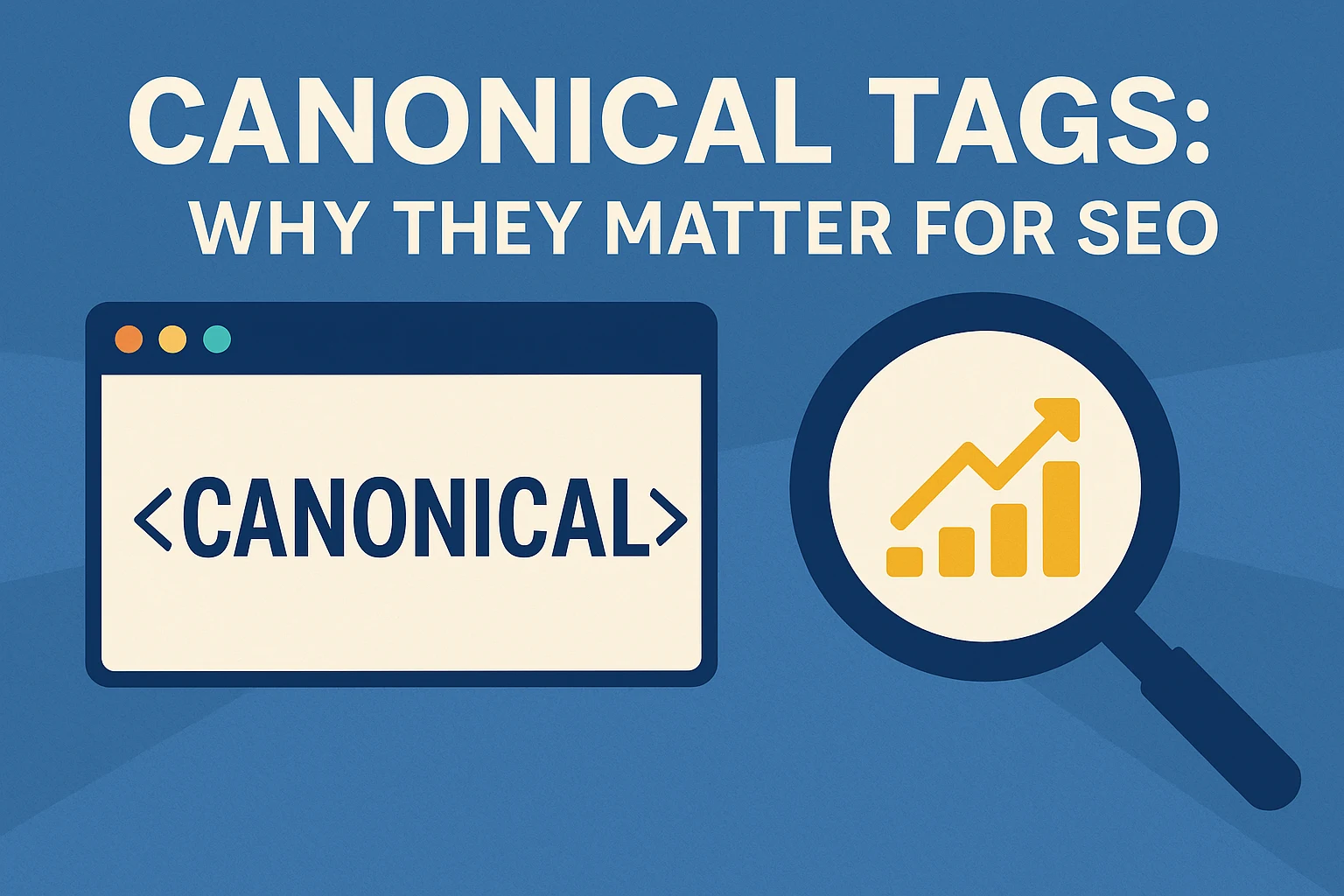
Canonical tags (also known as rel=”canonical” tags) serve a deceptively simple purpose: they designate the preferred version of a webpage when multiple URLs contain identical or substantially similar content. The canonical tag is a link element in the HTML head section that specifies which URL search engines should index and rank.
The technical implementation looks like this:
<link rel=”canonical” href=”https://www.example.com/preferred-page/” />
This single line of code communicates directly with search engine crawlers, providing explicit guidance about which version of your content deserves ranking authority. At Search Savvy, we emphasize that canonical tags work like diplomatic credentials-they don’t force search engines to comply, but they carry significant weight in decision-making processes.
Canonicalization functions similarly to a 301 redirect, consolidating ranking signals without actually redirecting users. This distinction matters immensely for user experience and site architecture.
Why Are Canonical Tags Important in 2025?
Canonical tags address one of the most persistent challenges in modern SEO: duplicate content. Search engines face resource constraints when crawling and indexing the web. When they encounter multiple versions of the same content, they must decide which version to display in search results-and this decision directly impacts your visibility.
The SEO Benefits That Matter
Canonical tags consolidate link equity (PageRank) from duplicate pages into one main canonical page. When various URLs accumulate backlinks from external sources-social media posts, forum discussions, or random websites-canonical tags ensure this valuable “link juice” flows to your preferred URL rather than being diluted across multiple versions.
According to Search Savvy’s analysis of client websites, proper canonical implementation typically results in:
- Improved crawl efficiency: Search engines have limited resources to crawl and index content, especially for large-scale sites. Canonical tags direct crawlers to main content versions, ensuring crawl budget is spent efficiently
- Consolidated ranking signals: Canonical tags consolidate ranking signals like backlinks to the preferred version, concentrating SEO efforts on a single URL and increasing its chances of ranking higher
- Prevention of keyword cannibalization: Multiple similar pages competing for the same keywords harm each other’s rankings
- Enhanced user experience: Search results display your intended page rather than random duplicates
How Does Duplicate Content Happen on Websites?
Canonical tags wouldn’t be necessary if websites naturally avoided duplicate content. Unfortunately, duplicate content emerges from numerous legitimate sources that most site owners don’t anticipate.
Common Duplicate Content Scenarios
URL Variations: Search engines may perceive URLs as duplicate content when they differ by HTTP vs. HTTPS, www vs. root domain, or have parameters applied for filtering and sorting. For example, these URLs might display identical content:
- https://example.com/product
- http://example.com/product
- https://www.example.com/product
- https://example.com/product/
E-commerce Product Variations: A single product available in multiple colors or sizes often generates separate URLs for each variant, all containing substantially similar descriptions and information.
Session IDs and Tracking Parameters: Marketing campaigns often create multiple URLs pointing to the same page using tracking parameters. URLs like example.com/page?utm_source=facebook&utm_campaign=summer and example.com/page?sessionid=12345 present duplicate content challenges.
Category and Tag Pages: Content management systems frequently generate multiple paths to the same content through category structures, tag archives, and filtered views.
Print and Mobile Versions: Separate URLs for printer-friendly pages or mobile-specific views create intentional duplicates that require canonical guidance.
What Is the Difference Between User-Declared and Google-Selected Canonicals?
Canonical tags involve a dialogue between website owners and search engines. Understanding this distinction prevents confusion when reviewing Google Search Console reports.
User-Declared Canonical: This is the canonical tag specified in a page’s HTML source code by the website owner or developer. When you implement a canonical tag, you’re declaring your preference to search engines.
Google-Selected Canonical: When no canonical is set and Google finds duplicate content, it chooses its own canonical URL. Google may also override user-declared canonicals when they conflict with other signals like internal linking patterns, sitemaps, or redirects.
The relationship between these two types reveals critical insights. According to Search Savvy audits, the most common scenario where Google ignores user-declared canonicals occurs when website signals contradict each other-for instance, when internal links point to non-canonical versions, or when XML sitemaps include both canonical and non-canonical URLs.
How Do You Implement Canonical Tags Correctly?
Canonical tags require precision. Small implementation errors can negate their benefits or create new problems. Let’s explore proper implementation across different scenarios.
Best Practices for Canonical Tag Implementation
Always Use Absolute URLs: Use the full, absolute URL rather than a relative URL in canonical tags. Instead of /products/widget, use https://www.example.com/products/widget.
Implement Self-Referencing Canonicals: Even if you have a single unique source of content, implementing self-referencing canonical tags is best practice. This provides clear signals to search engines about the preferred page version.
Use Only One Canonical Per Page: Using multiple canonical tags on a page confuses Google, and it won’t know which one to follow. Multiple canonicals typically result in search engines ignoring all of them.
Ensure Canonical URLs Are Indexable: The canonical link needs to be indexable. If blocked by robots.txt or returning non-200 status codes, Google can’t see the canonical and may ignore your declaration.
Match Protocol and Domain Preferences: Search engines may interpret variations like http:// vs https:// as duplicate content. Include the correct HTTP/HTTPS protocol in your canonical tags.
Platform-Specific Implementation
WordPress: Most modern SEO plugins like Yoast SEO or All In One SEO automatically add self-referencing canonical tags. AIOSEO allows you to set custom canonical URLs through the Advanced Settings section when needed.
Shopify: Shopify automatically creates self-referencing canonical URLs for blog posts and products. The platform handles most canonical scenarios automatically, though customization requires template file editing.
Custom CMS Platforms: If your CMS doesn’t have built-in canonical tag functionality, work with a developer to add the canonical tag to the head section of the HTML code.
How Can You Check If Your Canonical Tags Are Working?
Implementation without verification is incomplete. Search Savvy recommends multiple verification methods to ensure canonical tags function correctly.
Manual Verification Methods
View Page Source: The simplest method is viewing the page source and searching for ‘rel=”canonical”‘ in the head section. Right-click on any page, select “View Page Source,” and search for “canonical” to find the tag.
Browser Extensions: Tools like SEO Minion provide quick access to canonical information without manually searching through HTML.
Google Search Console Verification
You can verify canonical tags and how Google perceives them directly in Google Search Console using the URL Inspection tool. This tool reveals:
- Whether your page contains a canonical tag
- If Google recognizes the canonical version
- Whether Google selected a different canonical than you declared
Navigate to the Pages report under Indexing in Google Search Console, then check the “Why pages aren’t indexed” section for canonical-related statuses.
Understanding Google Search Console Reports
Several canonical-related messages appear in Search Console:
- Alternate Page with Proper Canonical Tag: This status means Google found duplicate content and successfully followed your canonical tags to index the correct version. Most cases don’t need fixing.
- Duplicate Without User-Selected Canonical: Indicates pages Google identified as duplicates that lack canonical tags.
- Google Chose Different Canonical Than User: Signals conflicting signals on your website that caused Google to override your preference.
What Are Common Canonical Tag Mistakes to Avoid?
Canonical tags offer immense power, but implementation mistakes can backfire spectacularly. At Search Savvy, we’ve diagnosed these recurring errors across hundreds of client audits.
Critical Mistakes That Harm SEO
Canonical Chains: Canonical link chains occur when a specified URL has a canonical tag to a different page, causing a chain of canonicals for search engines to follow. Always point directly to the final canonical URL.
Non-200 Status Code Canonicals: Using a non-200 status for a canonical link, such as a 404, prevents Google from seeing the canonical. Google may ignore the canonical and index a different page than desired.
Mixed Signals with Other Elements: When canonical tags conflict with redirects, internal links, sitemap entries, or hreflang tags, Google receives mixed signals. Internal links pointing to non-canonical versions or XML sitemaps including both versions create confusion.
JavaScript-Injected Canonicals: Avoid JavaScript-injected rel=”canonical” tags. If your tech stack requires them, ensure only one canonical is specified in the DOM and matches the page source.
Blocking Canonical URLs in Robots.txt: If a canonical link is blocked by robots.txt, it can’t be crawled, preventing Google from seeing the canonical. Google will ignore the user-declared canonical.
How Do Canonical Tags Relate to Cross-Domain Content?
Canonical tags extend beyond single-domain applications. Cross-domain canonicalization addresses content syndication and multi-domain strategies.
Cross-domain canonicalization involves using canonical tags to link content on one domain to its equivalent on another domain. Common use cases include:
Syndicated Content: When publishing content on external platforms or allowing republishing, canonical tags pointing back to your original article maintain authority and prevent duplicate content penalties.
Mirrored Content Across Domains: If you have mirrored content on multiple domains (such as a mobile-specific domain), canonical tags indicate the primary version and ensure search engines prioritize the correct content.
Multi-Regional Sites: International businesses operating separate domains for different countries use canonical tags when content overlaps between regional sites.
Real-World Impact: Canonical Tags Success Stories
Real-life case studies demonstrate canonical tags’ powerful SEO results. In one example, a real estate rental site struggled with poor branded and non-branded keyword rankings because every page had canonical tags pointing to an outdated domain that redirected elsewhere.
After correcting canonical tags to be self-referential instead of pointing to the outdated domain, the site experienced significant improvements in rankings and traffic.
These outcomes illustrate why canonical tag implementation deserves priority attention in any technical SEO audit.
Frequently Asked Questions About Canonical Tags
Q: Will Google always follow my canonical tag?
A: No. Canonical tags are treated as strong hints rather than directives. Google may ignore canonicals when they conflict with other site signals. However, properly implemented canonicals are usually respected.
Q: Should I use canonical tags or 301 redirects?
A: Redirects fundamentally change user experience, taking users from URL A to URL B. Canonicals keep both pages accessible to users while consolidating SEO value behind the scenes. Use redirects when you want to permanently eliminate access to duplicate URLs; use canonicals when both versions serve legitimate purposes.
Q: Do canonical tags prevent duplicate content penalties?
A: Canonical tags prevent duplicate content issues by directing search engines to the intended version you want to appear in search results. Google doesn’t technically penalize duplicate content but may filter out weaker versions, which canonical tags help prevent.
Q: Can I use canonical tags for very similar but not identical content?
A: Google can group together pages that are nearly identical, such as pages differing only by sorting or filtering, and choose one as canonical. Canonical tags work best for duplicate or substantially similar content; unique content deserves its own indexing opportunity.
Q: How long does it take for Google to recognize canonical tag changes?
A: Google can take a few hours, days, or in worst-case scenarios, a few weeks to index your URL and canonical changes. You can request indexing through Google Search Console’s URL Inspection tool to potentially accelerate the process.
Q: Should every page have a canonical tag?
A: It’s best practice to set a canonical for every page to avoid duplicate content in general, even using self-referencing canonicals for unique content. This eliminates ambiguity and provides clear signals to search engines.
Conclusion: Making Canonical Tags Work for Your SEO Strategy
Canonical tags represent one of those rare SEO elements that deliver disproportionate value relative to implementation complexity. A single line of code can consolidate link equity, prevent keyword cannibalization, improve crawl efficiency, and ensure your preferred content versions appear in search results.
At Search Savvy, we’ve observed that websites with properly implemented canonical strategies consistently outperform competitors with similar content quality but neglected canonicalization. The difference often manifests not as dramatic overnight changes, but as accumulated competitive advantages over time-better crawl efficiency, stronger page authority, and clearer search engine understanding of content hierarchy.
The canonical tag landscape continues evolving in 2025, with search engines becoming increasingly sophisticated at detecting conflicting signals and making autonomous decisions. This evolution makes proper implementation more critical than ever. Rather than relying on search engines to guess your intentions, canonical tags let you explicitly declare them.
Whether you’re launching a new website, auditing an existing one, or troubleshooting unexplained ranking losses, canonical tags deserve thorough examination. Review your implementation, verify recognition in Google Search Console, align canonical signals with other technical elements, and monitor performance over time.
For businesses serious about search visibility, canonical tag management isn’t a one-time task-it’s an ongoing strategic component of technical SEO excellence. The question isn’t whether to implement canonical tags, but how precisely and comprehensively you’ll deploy them across your web properties.
Search Savvy helps businesses maximize their search visibility through comprehensive technical SEO audits and implementation strategies. For more insights on optimizing your website for search engines, explore our other guides on technical SEO fundamentals.
Key Resources:
- Google Search Console – Essential for monitoring canonical tag implementation
- Google’s Canonicalization Documentation – Official guidance from Google
- Screaming Frog SEO Spider – Comprehensive crawling tool for canonical audits