
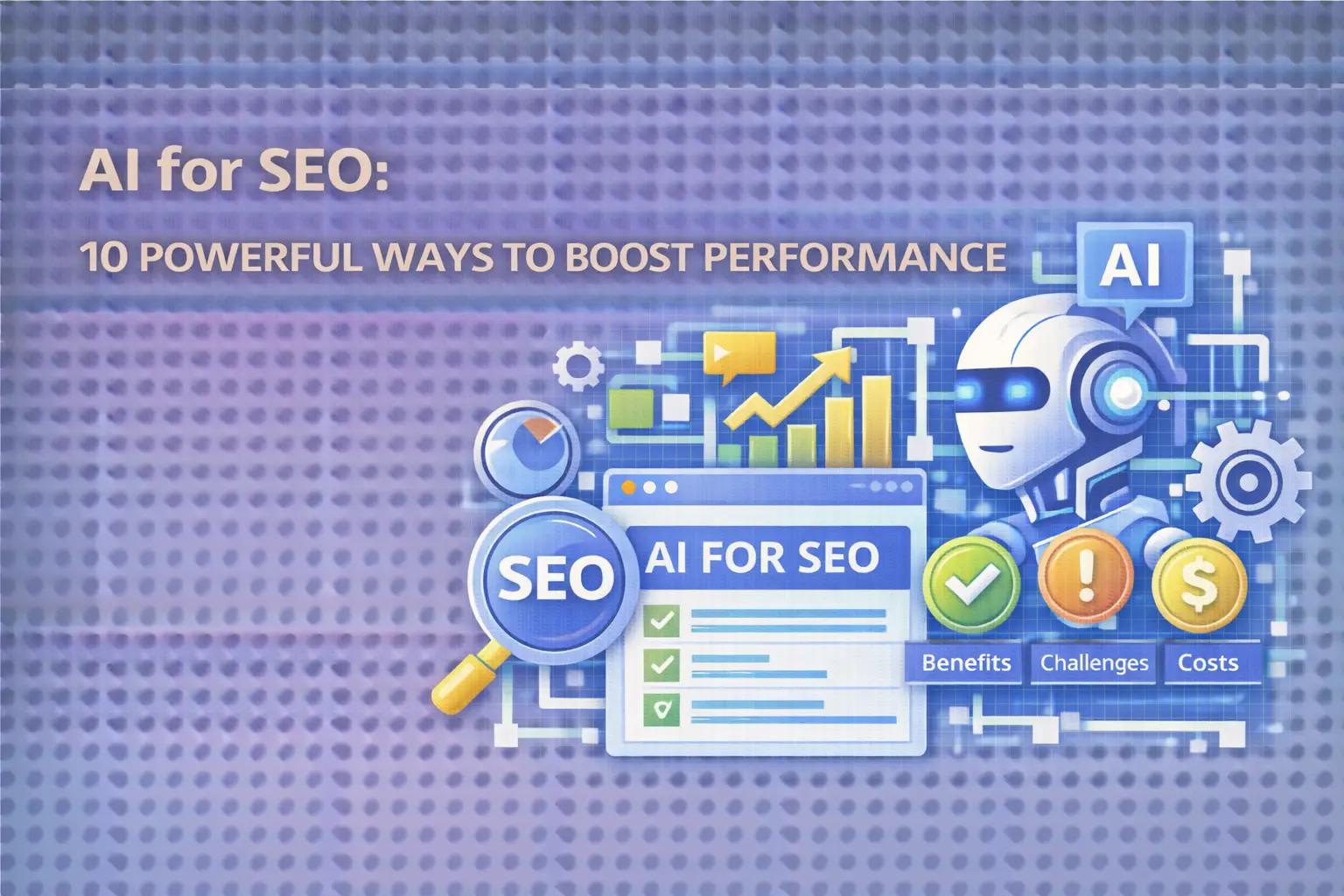

AI for SEO has evolved from experimental novelty to essential infrastructure in 2026. What once required teams of specialists now happens automatically through intelligent systems that analyze search patterns, generate optimized content, and predict ranking opportunities before your competitors even notice them.
At Search Savvy, we’ve witnessed this transformation firsthand. The SEO professionals we work with aren’t asking whether to adopt AI-they’re asking which AI tools deliver real results and how to implement them without sacrificing quality. According to Search Savvy’s insights, approximately 60% of marketers are now either piloting or scaling AI in their workflows, up 18% from just 2023. The question isn’t about adoption anymore-it’s about strategic implementation.
AI for SEO solves the fundamental challenge every marketer faces: how to create high-quality, optimized content at scale while maintaining the human expertise that search engines reward. Recent data shows that over 86% of SEO professionals have already integrated AI into their strategies. The competitive advantage has shifted from those who use AI to those who use it intelligently, combining automation with genuine expertise.
This guide breaks down exactly how to leverage AI for SEO in 2026-from keyword research automation to AI visibility tracking. You’ll discover proven strategies, realistic cost expectations, measurable benefits, and honest assessments of the challenges. Whether you’re managing a small business website or an enterprise SEO operation, these insights will help you implement AI effectively.
Why Is AI for SEO Important in 2026?
AI for SEO matters more in 2026 than ever before because the search landscape has fundamentally split into two parallel systems. Traditional Google rankings still drive traffic, but AI-powered search engines like ChatGPT, Perplexity, and Google’s AI Overviews now influence how millions discover information. Visibility requires optimization for both.
The shift is dramatic. Over 68% of Google searches now end without a click because AI-generated answers satisfy user intent directly on the search results page. This zero-click phenomenon doesn’t mean SEO is dead-it means SEO must evolve. Content must be structured so AI systems can understand, trust, and cite it as authoritative.
Search Savvy has tracked this evolution closely. Brands appearing in AI-generated answers gain massive competitive advantages even when direct clicks decrease. AI citations build brand awareness, establish thought leadership, and influence purchase decisions long before users visit websites. The brands winning in 2026 optimize simultaneously for human readers and AI interpreters.
Technology drives efficiency at unprecedented scale. What once required 20 hours of manual keyword research now takes minutes. Content that needed days to optimize can be refined in real-time. Technical audits that specialists charged thousands to perform now run automatically, identifying issues and suggesting fixes faster than humans can implement them.
How Does AI for SEO Work?
AI for SEO functions through machine learning algorithms that analyze massive datasets-millions of search results, user behavior patterns, ranking fluctuations, and content performance metrics. These systems identify correlations humans miss, predict future trends, and recommend optimizations based on what actually works, not outdated conventional wisdom.
Natural Language Processing (NLP) enables AI to understand content like search engines do. Rather than simple keyword matching, modern AI evaluates semantic meaning, topical authority, content structure, and user intent. Tools analyze top-ranking pages, identify common patterns, and guide content creation toward what algorithms reward.
Predictive analytics represent AI’s most powerful capability for SEO. By studying historical trends and live ranking data, machine learning software estimates how specific optimizations will impact performance. This transforms SEO from reactive guesswork to proactive strategy, enabling teams to prioritize high-impact changes over busy work.
The technology continuously learns and adapts. Unlike static tools that become obsolete with algorithm updates, AI systems retrain on new data, adjusting recommendations as search behaviors evolve. This adaptive intelligence explains why AI-powered platforms increasingly outperform traditional SEO software in accuracy and effectiveness.
1. Automated Keyword Research and Intent Analysis
AI for SEO revolutionizes keyword research by processing search data at scales impossible for manual analysis. Traditional keyword tools show search volume and competition; AI predicts which keywords will drive actual conversions based on semantic clustering, user intent patterns, and content gap analysis across competitors.
Modern AI keyword tools like Semrush’s Keyword Magic Tool and Rankability analyze millions of keyword variations, automatically grouping them by semantic meaning and user intent. Rather than targeting isolated keywords, AI identifies topic clusters-interconnected keyword groups that build topical authority when covered comprehensively.
Intent analysis has become incredibly sophisticated. AI systems distinguish between informational, navigational, transactional, and commercial investigation intent by studying SERP features, user engagement patterns, and content characteristics of top-ranking pages. This enables precise content matching-creating exactly what searchers want to find.
The competitive intelligence capabilities are game-changing. AI identifies keyword opportunities competitors overlook, including long-tail variations with low competition but high conversion potential. By analyzing competitor content gaps, AI surfaces strategic opportunities where modest effort yields disproportionate results.
Tools like Keywordly AI now offer specialized keyword research for platforms beyond Google-Reddit, Quora, Amazon, and YouTube-all within unified workflows. At Search Savvy, we recommend this multi-platform approach because discovery happens everywhere, not just traditional search engines. AI makes comprehensive keyword coverage achievable without exponentially increasing workload.
Implementation Tips
Start with broad seed keywords, then let AI expand into semantic variations. Review AI suggestions critically-algorithms excel at pattern recognition but lack business context. Combine AI-generated keyword lists with manual filtering based on your strategic priorities, ensuring keyword targeting aligns with actual business objectives and customer needs.
2. AI-Powered Content Creation and Optimization
AI for SEO enables content creation at scales previously impossible while maintaining optimization standards. Tools like Scalenut, Surfer SEO, and Frase analyze top-ranking content for target keywords, extracting patterns around structure, depth, readability, and topical coverage. They then guide writers toward content that meets search engine expectations.
The content optimization process combines human creativity with algorithmic precision. AI suggests optimal keyword density, related terms to include, heading structures, content length, and readability improvements-all based on what actually ranks. Writers maintain creative control while AI ensures technical optimization doesn’t get overlooked.
Real-time content scoring transforms the writing process. As you write, AI compares your content against top competitors, showing exactly where you’re strong and where gaps exist. This immediate feedback accelerates optimization, reducing revision cycles and helping content rank faster after publication.
However, quality remains paramount. Google’s guidelines explicitly warn against AI-generated content at scale that lacks genuine value. The winning approach in 2026 is human-driven creation with AI assistance-using technology for research and structure while humans provide expertise, original insights, and authentic voice.
AI content humanizers have emerged to address detection concerns, but the better strategy is creating genuinely valuable content from the start. Focus AI on enhancing human expertise, not replacing it. Original research, first-hand experience, and unique perspectives can’t be replicated by algorithms-these elements make content citation-worthy for AI systems.
Creating Content That Ranks in Both Search and AI Answers
AI for SEO in 2026 requires optimizing for dual visibility. Structure content with clear headings, concise definitions, and scannable sections that AI systems can easily extract and summarize. Answer questions directly and immediately-if someone asks “What are the best SEO tools?” list them before elaborating.
Use structured data markup to help AI understand your content context. Schema.org markup for FAQs, How-Tos, Products, and Reviews dramatically improves eligibility for featured snippets and AI Overview citations. Technical foundations like clean HTML, fast load times, and mobile optimization remain prerequisites for AI visibility.
3. Technical SEO Automation and Auditing
AI for SEO automates technical audits that once required specialist expertise. Tools like Alli AI, SE Ranking, and Semrush continuously monitor thousands of technical parameters-crawlability issues, broken links, duplicate content, page speed problems, mobile usability errors, and structured data validation-flagging issues automatically.
The automation extends to implementation. Some platforms can automatically optimize meta tags, generate schema markup, fix broken internal links, and even modify code-level elements without manual developer intervention. This democratizes technical SEO, making enterprise-level optimization accessible to businesses without dedicated technical teams.
Real-time monitoring catches problems before they impact rankings. Rather than quarterly audits that discover issues months after they began hurting performance, AI systems alert you immediately when crawl errors spike, page speed degrades, or Core Web Vitals fall below thresholds. Proactive problem-solving prevents traffic losses.
Predictive technical SEO represents the cutting edge. AI analyzes how technical factors correlate with ranking changes across millions of sites, predicting which technical improvements will yield the greatest SEO impact. This data-driven prioritization ensures limited technical resources focus on high-leverage optimizations.
Core Web Vitals Optimization
AI for SEO excels at optimizing Core Web Vitals-the user experience metrics Google uses as ranking signals. Tools automatically identify what’s slowing down your site (oversized images, render-blocking JavaScript, server response times) and prioritize fixes by potential impact on Largest Contentful Paint, Interaction to Next Paint, and Cumulative Layout Shift scores.
4. AI-Driven Backlink Analysis and Outreach
AI for SEO transforms link building from labor-intensive manual outreach to data-driven strategy. Platforms analyze your backlink profile and competitors’ profiles, identifying patterns in high-quality links, predicting which sites would provide the most valuable links, and even forecasting the ranking impact of specific link acquisitions.
Natural Language Processing enables personalized outreach at scale. AI tools like Postaga and Apify analyze potential link partner websites, extract relevant context, and generate customized outreach emails that reference specific content and explain genuine value propositions. Personalization dramatically improves response rates compared to template-based approaches.
Backlink opportunity identification happens continuously. AI monitors the web for unlinked brand mentions, tracks competitor backlink acquisition, identifies broken link opportunities, and surfaces relevant guest posting platforms-all automatically. This proactive approach catches opportunities competitors miss.
Quality assessment has become sophisticated. AI evaluates potential backlink sources across dozens of factors-domain authority, topical relevance, traffic quality, spam signals, and historical link value-providing risk scores that help avoid toxic links while prioritizing genuinely authoritative sources.
5. Content Performance Tracking and Predictive Analytics
AI for SEO enables predictive performance tracking that anticipates results before full implementation. By analyzing historical data patterns, machine learning models estimate how content changes, new publications, or optimization tweaks will affect rankings and traffic weeks or months in advance.
Real-time analytics dashboards powered by AI detect anomalies instantly-sudden ranking drops, traffic spikes, conversion rate changes-and automatically diagnose likely causes. This eliminates the manual investigation time between noticing problems and understanding their root causes.
Content decay detection identifies pages losing performance over time. AI tracks gradual ranking declines, pinpoints competitive displacement or content staleness as causes, and recommends refresh strategies. Proactive updates maintain authority rather than waiting for catastrophic traffic losses before acting.
Competitive monitoring operates automatically. AI tracks competitor content publication, backlink acquisition, and ranking movements, alerting you when competitors make strategic moves. This competitive intelligence enables reactive strategies-matching competitor improvements while identifying their weaknesses to exploit.
6. AI Visibility Tracking Across Search Platforms
AI for SEO in 2026 must monitor visibility beyond traditional Google rankings. Tools like AI Tracker, SEMrush’s AI Optimization (AIO), and Writesonic’s GEO Suite track your brand’s presence in ChatGPT answers, Perplexity results, Google AI Overviews, and Claude responses-measuring citation frequency, sentiment, and positioning.
These platforms reveal which prompts trigger citations of your content, which competitors dominate AI answer space, and which topics offer expansion opportunities. The data shows whether your AI visibility is growing, stagnant, or declining-essential metrics as AI-driven discovery channels mature.
Prompt-level analysis uncovers specific optimizations needed. Rather than generic “improve AI visibility” recommendations, these tools identify exactly which pages get cited, which content gaps prevent citations, and which competitors’ content AI systems prefer-actionable intelligence for strategic improvements.
Brand mention tracking extends beyond backlinks to include citations in AI-generated content, podcast mentions, social media discussions, and forum conversations. This holistic brand authority measurement reflects how AI systems actually evaluate trustworthiness-through multi-platform validation, not isolated signals.
7. Automated Internal Linking Optimization
AI for SEO streamlines internal linking strategy through intelligent automation. Tools like Linknavigator analyze your site structure, identify orphaned pages, suggest contextually relevant internal links, and even automatically implement optimal linking patterns-building topical authority through interconnected content clusters.
The technology understands semantic relationships between pages, linking related topics in ways that strengthen topical authority signals. Rather than random internal linking based on keyword matching, AI creates logical pathways that guide both users and search engine crawlers through your content ecosystem coherently.
Anchor text optimization happens automatically. AI suggests natural, varied anchor text that balances optimization with readability, avoiding over-optimization penalties while still signaling relevance. This nuanced approach maintains user experience while maximizing SEO value.
Link equity distribution becomes strategic. AI identifies high-authority pages and suggests linking patterns that channel authority toward important conversion-focused pages. This intentional link architecture ensures SEO equity flows strategically rather than distributing randomly across all pages.
8. Competitive Intelligence and Gap Analysis
AI for SEO provides competitive intelligence at scales previously exclusive to enterprise budgets. Tools automatically monitor competitor content strategies, keyword targeting, backlink acquisition, technical implementations, and ranking movements-synthesizing patterns that reveal strategic advantages to exploit.
Content gap analysis identifies topics competitors cover comprehensively while you don’t. AI compares your content inventory against competitors’, highlighting missed opportunities where modest investments could capture significant traffic. This strategic guidance prevents wasted effort on saturated topics while surfacing low-hanging fruit.
SERP feature tracking shows which competitors dominate featured snippets, People Also Ask boxes, knowledge panels, and other high-visibility positions. AI analyzes what makes their content snippet-worthy, providing actionable recommendations for capturing these valuable SERP real estate positions.
Reverse-engineering competitor success has become algorithmic. Input a competitor’s top-performing page, and AI tools like RivalFlow identify exactly what your content is missing-specific sections, data points, topics, or structures-giving you a clear roadmap for improvement.
9. Voice and Conversational Search Optimization
AI for SEO enables optimization for conversational search queries, which have exploded from 6-word average queries to 25+ word conversational questions as users adopt AI assistants. Traditional keyword targeting falls short; AI helps structure content for question-answer formats that conversational systems prefer.
Natural language understanding identifies the specific questions people ask about your topics. AI analyzes “People Also Ask” sections, voice search queries, and chatbot conversations, extracting common question patterns. Content structured around these authentic questions performs better in both voice search and AI-generated answers.
Featured snippet optimization becomes critical for voice results. Since voice assistants typically read featured snippet content as answers, AI tools identify snippet opportunities and structure content to maximize featured snippet capture-concise answers, clear formatting, and direct question-response patterns.
Local voice search requires specialized optimization. Queries like “best [service] near me” or “where can I [action] today” need different optimization approaches. AI helps identify local intent variations and optimize for conversational local queries that voice searchers use differently than traditional text searches.
10. Multi-Language and International SEO Automation
AI for SEO makes international expansion feasible without proportionally scaling teams. Advanced translation tools maintain SEO optimization across languages, identifying language-specific keyword opportunities, cultural nuances, and regional search behavior differences that generic translation misses.
Hreflang implementation and monitoring happens automatically. AI ensures proper language and regional targeting signals, preventing duplicate content issues while maximizing visibility in appropriate markets. Technical complexity that once required specialized knowledge becomes automated validation.
Regional content customization goes beyond translation. AI identifies which content types, structures, and topics resonate in different markets, recommending localized content strategies rather than simple translation. This cultural adaptation significantly improves international SEO performance.
Multi-market competitive analysis tracks different competitors in each region automatically. International SEO success requires understanding local market dynamics; AI monitors regional competitors, ranking factors, and user behaviors across markets simultaneously-insights impossible to gather manually at scale.
What Are the Benefits of Using AI for SEO?
AI for SEO delivers measurable benefits across efficiency, accuracy, and scale. Time savings top the list-tasks requiring 20 hours manually now complete in minutes. At Search Savvy, clients report 60-80% reductions in time spent on keyword research, content optimization, and technical audits after implementing AI tools.
Data-driven decision making replaces intuition-based strategies. AI analyzes millions of ranking signals, user behaviors, and competitive patterns, recommending optimizations based on statistical evidence rather than best guesses. This precision dramatically improves success rates for SEO initiatives.
Scalability transforms what’s possible. Small teams can manage hundreds of pages, track thousands of keywords, and monitor dozens of competitors-workloads that previously required large in-house teams or expensive agency contracts. Businesses report achieving 10× marketing performance at the cost of one specialist.
Competitive advantages compound over time. Early AI adopters gain momentum as algorithms learn their content patterns, audiences, and optimization preferences. This creates self-reinforcing cycles where better data leads to better decisions, which generate better results, which provide better data.
Cost efficiency is substantial. While AI tools require investment, they typically cost far less than equivalent human labor. A comprehensive AI SEO platform at $200-500 monthly replaces thousands in agency fees or full-time salaries while often delivering superior results through continuous optimization.
What Are the Challenges of AI for SEO?
AI for SEO presents legitimate challenges that require honest assessment. Quality control tops concerns-AI-generated content often lacks depth, originality, and human insight that makes content genuinely valuable. Google explicitly penalizes AI-generated content created solely for search manipulation without providing genuine value.
Limited contextual understanding means AI misses nuance. Algorithms don’t understand your business goals, brand voice, audience sophistication, or strategic priorities like humans do. AI might recommend technically optimal solutions that miss strategic objectives or suggest content that’s SEO-perfect but brand-inappropriate.
Algorithm dependency creates risks. When AI tools all use similar data sources and methodologies, they risk recommending homogeneous strategies that make your content indistinguishable from competitors’. Differentiation-what actually wins long-term-requires human creativity AI can’t replicate.
The pace of change itself becomes a challenge. New AI tools launch constantly, each promising revolutionary capabilities. Evaluating which tools deliver real value versus marketing hype demands ongoing research, testing, and strategic assessment-creating paradoxical situations where tools meant to save time require significant time to evaluate.
Training and adoption friction affects teams. AI tools work optimally when teams understand their capabilities and limitations. Organizations must invest in training, process development, and cultural change to realize AI’s potential benefits-investments some underestimate when calculating ROI.
Data privacy and security concerns arise with cloud-based AI tools that process sensitive business data. Ensuring proprietary information, customer data, and competitive intelligence remain secure requires vetting vendors carefully and understanding exactly how AI platforms handle your data.
How Much Does AI for SEO Cost in 2026?
AI for SEO costs vary dramatically based on scope and sophistication. Entry-level tools start at $49-99 monthly, offering basic keyword research, content optimization, or single-feature automation. These suit small businesses testing AI capabilities without major commitments.
Mid-tier platforms range $200-500 monthly, providing comprehensive feature sets-keyword research, content optimization, technical auditing, competitor analysis, and basic reporting. Tools like Semrush ($199/month), Surfer SEO ($89/month), and Scalenut ($49-193/month depending on volume) fall into this category, suitable for growing businesses and agencies.
Enterprise solutions cost $500-2,000+ monthly, delivering advanced capabilities including predictive analytics, AI visibility tracking across platforms, automated content workflows, white-label reporting, and dedicated support. These platforms handle multiple sites, team collaboration, and sophisticated integrations.
Fully managed AI SEO services represent a different model. Rather than software you operate, agencies provide complete SEO departments powered by AI agents plus human strategists. Costs range $2,000-8,000 monthly, replacing the $120,000-200,000 annual cost of building in-house teams while delivering enterprise-level capabilities.
Hidden costs include learning curves, integration time, and content refinement. Budget 20-40 hours initially for team training, workflow development, and process optimization. Ongoing quality control requires human oversight-plan on 5-10 hours weekly reviewing AI outputs and refining strategies.
ROI calculations should focus on outcomes, not just costs. A 40% traffic increase translating to 12 extra customers monthly at $2,000 lifetime value generates $288,000 annual value. Against a $48,000 investment (a comprehensive managed service), that’s 6× ROI-making the “expensive” option actually the smart investment.
Budget Recommendations by Business Size
Small businesses should budget $100-500 monthly for AI SEO tools, focusing on all-in-one platforms that combine multiple capabilities. Mid-sized companies benefit from $500-2,000 monthly investments in comprehensive platforms or managed services. Enterprises often invest $5,000-15,000+ monthly in sophisticated multi-tool stacks or fully managed AI SEO departments.
Frequently Asked Questions
Can AI completely replace human SEO specialists?
AI for SEO cannot completely replace human specialists in 2026, despite handling many technical tasks automatically. Humans provide strategic thinking, creative problem-solving, brand understanding, and contextual judgment that algorithms lack. The winning model combines AI automation for repetitive tasks with human expertise for strategy, quality control, and creative differentiation. Companies using this hybrid approach consistently outperform those relying solely on either AI or manual methods.
How do I choose the right AI SEO tools for my business?
Choosing AI for SEO tools requires evaluating your specific needs, budget, and technical capabilities. Start by identifying your biggest SEO bottlenecks-is it keyword research, content creation, technical audits, or link building? Select tools specializing in those areas first. Consider whether you need individual point solutions or all-in-one platforms. Most platforms offer free trials; test tools with your actual content before committing. Prioritize user interface simplicity if your team lacks technical expertise.
Will Google penalize websites using AI-generated content?
Google does not penalize AI-generated content automatically, but it does penalize low-quality content created solely for search manipulation regardless of how it’s produced. The key is providing genuine value. AI for SEO works best when used to enhance human expertise, not replace it. Content combining AI efficiency with human insight, original research, and authentic expertise performs well. Focus on E-E-A-T signals-demonstrating experience, expertise, authoritativeness, and trustworthiness-rather than worrying about detection algorithms.
How long does it take to see results from AI SEO tools?
Results from AI for SEO typically appear within 3-6 months for most businesses, though some improvements manifest faster. Quick wins include technical fixes that improve site speed or crawlability-these can boost rankings within weeks. Content optimization and new content publication require 8-12 weeks to gain traction. Competitive keyword rankings in difficult niches may take 6-12 months. The key is consistent application-AI tools compound effectiveness over time as they learn your patterns and accumulate optimization data.
What’s the difference between traditional SEO tools and AI-powered SEO tools?
Traditional SEO tools collect and display data for manual analysis-showing keyword volumes, backlinks, or ranking positions. AI for SEO tools analyze that data, identify patterns, predict outcomes, and recommend specific actions. Traditional tools require human interpretation; AI tools provide actionable intelligence. For example, traditional tools show 100 keyword opportunities; AI tools predict which 10 will drive actual conversions and explain why. The difference is analysis depth, predictive capability, and automation level.
Should small businesses invest in AI for SEO or hire an agency?
Small businesses benefit most from starting with affordable AI for SEO tools ($100-200/month) to handle basics, then considering agencies for strategic guidance. This hybrid approach costs less than full-service agencies while providing more control than pure DIY. However, businesses lacking time or expertise often find greater ROI with managed AI SEO services ($2,000-4,000/month) that deliver comprehensive results without the learning curve. Calculate your time’s value-if implementing tools yourself costs more in opportunity cost than hiring experts, outsourcing makes financial sense.
Ready to leverage AI for competitive SEO advantage? The tools, strategies, and insights outlined above work-but they require thoughtful implementation, not blind automation. At Search Savvy, we help businesses navigate the AI SEO landscape strategically, identifying which tools deliver genuine value for specific situations and implementing them effectively.
The future of SEO isn’t purely human or purely AI-it’s intelligently hybrid. Companies that master this balance, using AI to amplify human expertise rather than replace it, will dominate search visibility across both traditional rankings and emerging AI-powered discovery channels. The competitive window is narrow; early adopters gain compounding advantages as their AI systems learn and optimize faster than competitors just beginning their journeys.
Start with one area-keyword research, content optimization, or technical auditing-and implement AI tools systematically. Measure results rigorously, refine approaches based on data, and expand gradually as you build proficiency. AI for SEO delivers transformative results when implemented strategically, not recklessly.