
The digital landscape is experiencing a seismic shift. Generative Engine Optimization (GEO) has emerged as the critical evolution of traditional search engine optimization, fundamentally changing how brands connect with their audiences in 2025. As AI-powered platforms like ChatGPT, Perplexity, Gemini, and Claude reshape information discovery, understanding and implementing GEO strategies is no longer optional—it’s essential for survival.
At Search Savvy, we’ve witnessed firsthand how businesses that embrace Generative Engine Optimization are capturing unprecedented visibility in AI-generated responses, while those clinging exclusively to traditional SEO tactics risk becoming invisible to a rapidly growing segment of searchers. The data tells a compelling story: AI-referred sessions surged by 527% between January and May 2025, jumping from 17,076 to 107,100 across tracked properties. This isn’t a future trend—it’s happening right now in your analytics dashboard.
Generative Engine Optimization represents more than a tactical adjustment; it’s a fundamental reimagining of how content must be structured, distributed, and optimized for AI systems that synthesize answers rather than simply listing links. Search Savvy has been at the forefront of this transformation, helping clients navigate the complex intersection of traditional search visibility and AI-powered discovery. In this comprehensive guide, we’ll explore what GEO means for your business, why it matters in 2025, and how to implement proven strategies that drive real results.
What Is Generative Engine Optimization?
Generative Engine Optimization is the practice of structuring and enhancing digital content to maximize its likelihood of being cited, referenced, or mentioned when AI platforms generate responses to user queries. Unlike traditional SEO, which focuses on ranking webpages in search engine results pages (SERPs), GEO ensures your brand becomes the authoritative source that AI systems trust and cite when answering questions.
When someone asks ChatGPT “What are the best marketing automation tools?” or queries Perplexity about “How to improve conversion rates,” these platforms don’t just provide links—they synthesize comprehensive answers from multiple sources and cite the most relevant, trustworthy content. Generative Engine Optimization ensures your content is among those trusted sources, positioning your brand as an authority in AI-generated conversations.
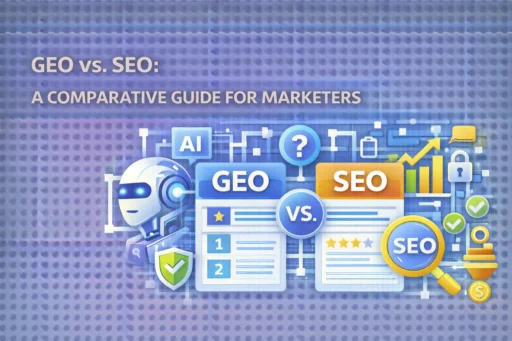
The distinction between SEO and GEO lies in their fundamental objectives. SEO aims to secure top positions in blue-link results, driving click-throughs to your website. GEO focuses on earning citations within AI-generated answers, building brand authority and visibility even when users never leave the AI platform. According to Search Savvy’s research, approximately 60% of searches now result in zero clicks as AI-generated answers satisfy user needs directly within the results page.
Generative Engine Optimization encompasses several key components: optimizing content structure for AI parsing, building external authority signals that AI systems recognize, implementing schema markup that helps AI understand your content’s context, and maintaining technical excellence that ensures AI crawlers can access and index your information. At Search Savvy, we’ve identified that successful GEO strategies require a holistic approach that combines traditional SEO fundamentals with AI-specific optimization techniques.
How Does Generative Engine Optimization Work?
Generative Engine Optimization operates on principles that differ significantly from traditional search algorithms. AI platforms like ChatGPT, Gemini, and Perplexity utilize large language models (LLMs) that analyze vast datasets to generate contextually relevant responses. Understanding how these systems work is crucial for effective optimization.
AI engines prioritize several key factors when selecting sources to cite. First, they value comprehensive, well-structured information that directly answers user queries. Research from Princeton University shows that content with clear headings, bulleted lists, and concise paragraphs performs significantly better in AI citations than dense, unstructured text. Second, AI systems heavily weight external authority signals—citations from high-authority domains like Wikipedia, which accounts for 47.9% of ChatGPT’s top citations, carry enormous influence.
Generative Engine Optimization requires content that demonstrates expertise, experience, authority, and trustworthiness (E-E-A-T). AI platforms analyze not just your website content, but the broader ecosystem of mentions, reviews, forum discussions, and third-party citations about your brand. According to research from Search Savvy’s optimization team, 89% of AI citations come from diverse domains, meaning your off-site presence matters as much as your owned content.
Freshness plays a critical role in AI visibility. Analysis from seoClarity reveals that 85% of AI Overview citations were published within the last two years, with 44% from 2025 alone. Perplexity shows even stronger recency bias, with 50% of citations from 2025 content. This means Generative Engine Optimization demands ongoing content creation and updates, not just optimization of existing material.
Technical factors also influence AI visibility. Page load speed, mobile optimization, structured data markup, and crawl accessibility all impact whether AI systems can effectively parse and utilize your content. At Search Savvy, we’ve observed that response time correlates strongly with citation likelihood—faster-loading content receives preferential treatment in AI-generated answers.
Why Is Generative Engine Optimization Important in 2025?
Generative Engine Optimization has transitioned from experimental tactic to business imperative in 2025, driven by explosive growth in AI search adoption and fundamental shifts in user behavior. The statistics paint a clear picture: AI platforms now account for 6.5% of organic traffic and are projected to reach 14.5% within the next year, establishing generative engines among the top traffic drivers alongside traditional search engines.
User demographics reveal why this shift matters for long-term business success. Younger users—Millennials and Gen Z—increasingly bypass traditional search engines entirely, heading directly to AI platforms for information discovery. While these demographics may not represent your current ideal customer profile, they certainly will within the next few years. Companies that establish authority in AI-generated answers now are building sustainable competitive advantages.
Generative Engine Optimization delivers tangible business outcomes that justify immediate investment. Search Savvy’s client data shows that AI search traffic converts at 14.2% compared to Google’s 2.8%—a 5x improvement in conversion rates. This dramatic difference reflects the nature of AI-driven discovery: users who find your brand through AI citations arrive with higher intent and greater trust, having received a personalized recommendation from an AI assistant they already rely on.
The competitive landscape is shifting rapidly. Currently, only 25.7% of marketers have developed content specifically for AI citations, and 38% of business decision-makers have allocated budgets to AI search optimization. This represents a massive opportunity for early movers. Industries like legal (0.86% of total sessions from AI), finance, healthcare, and SaaS are already seeing significant AI traffic, with some sites exceeding 1% of total sessions from LLMs alone.
Generative Engine Optimization matters because visibility patterns are fundamentally changing. Traditional metrics like click-through rates are becoming less relevant as “the great decoupling” occurs—impressions rise while clicks fall. Your content can now build substantial brand awareness and authority without driving proportional website traffic. At Search Savvy, we help clients understand that AI citations function like premium brand advertising: building awareness and trust that influences purchasing decisions across multiple touchpoints.
The risk of ignoring GEO is substantial. As AI Overviews expand (appearing in 18% of all Google searches as of March 2025), organic click-through rates drop from 15% to 8% when an AI Overview is present. Blue-link results are pushed down an average of 1,500 pixels on the page. Businesses that fail to optimize for AI visibility are surrendering market share to competitors who understand the new rules of digital discovery.
How Can Generative Engine Optimization Improve Your Brand Visibility?
Generative Engine Optimization transforms brand visibility by positioning your company as the authoritative answer to questions your target audience is asking AI platforms. This represents a fundamental shift from hoping users discover you among search results to becoming the recommended solution that AI systems actively promote.
Brand mentions in AI-generated responses function as powerful endorsements. When ChatGPT cites your company while answering “What are the best cybersecurity solutions for healthcare?” or Perplexity references your content when discussing “How to implement marketing automation,” you’re receiving a contextual recommendation to users who are actively seeking solutions. At Search Savvy, we’ve observed that these AI citations generate awareness equivalent to third-party media coverage, building trust through perceived editorial validation.
Generative Engine Optimization expands your visibility across the entire customer journey. Traditional SEO primarily captures bottom-funnel searches with clear transactional intent. GEO excels at informational queries (which represent 36.4% of Google searches and 52.2% of ChatGPT queries), positioning your brand as an educational resource early in the buyer’s journey. This top-funnel visibility builds brand recall that influences later purchase decisions, even when users don’t immediately click through to your website.
The multi-platform nature of AI search amplifies visibility potential. With ChatGPT serving 500 million weekly users, Perplexity attracting 22 million monthly users, Gemini reaching 400 million users, and Claude gaining 18.9 million monthly users, successful Generative Engine Optimization places your brand in front of massive, engaged audiences across diverse platforms. Search Savvy strategies focus on platform-specific optimization, recognizing that ChatGPT, Perplexity, and Gemini each have distinct citation preferences.
Generative Engine Optimization also improves traditional search visibility through a halo effect. The same practices that earn AI citations—comprehensive content, strong E-E-A-T signals, structured data markup, and external authority building—simultaneously strengthen traditional SEO performance. Research shows that 76.1% of URLs cited in AI Overviews also rank in Google’s top 10 organic results, demonstrating the complementary nature of SEO and GEO.
Competitive positioning improves dramatically through strategic GEO implementation. When your brand consistently appears in AI citations while competitors remain invisible, you establish market leadership perception. At Search Savvy, we track “share of voice” in AI responses as a critical competitive intelligence metric, helping clients understand their position relative to competitors in AI-driven conversations.
What Are the Key Strategies for Implementing Generative Engine Optimization?
Generative Engine Optimization requires a strategic, multi-faceted approach that extends beyond traditional on-page SEO tactics. At Search Savvy, we’ve identified several proven strategies that consistently improve AI visibility and citation rates.
Master Traditional SEO Fundamentals First
Generative Engine Optimization cannot succeed without a strong SEO foundation. AI platforms utilize web search tools to gather current information, meaning sites invisible in traditional search will remain invisible to AI systems. Focus on building domain authority through quality backlink acquisition, publishing comprehensive blog content, creating free tools and resources, and implementing programmatic SEO strategies that establish topical authority.
Optimize Content Structure for AI Parsing
Generative Engine Optimization demands content formatted for easy AI extraction. Use clear, question-based H2 and H3 subheadings that mirror natural language queries (e.g., “How does marketing automation improve ROI?” rather than generic headers). Structure content with short paragraphs (2-3 sentences maximum), bulleted lists for key points, and scannable sections that allow AI systems to quickly identify relevant information.
Research from Princeton University shows that adding citations, statistics, and quotations significantly boosts visibility for informational queries. Include concrete data points, cite reputable sources, and provide evidence-based answers rather than promotional language. At Search Savvy, we recommend a question-and-answer format that directly addresses user intent, as this structure aligns perfectly with how AI systems generate responses.
Build External Authority Signals
Generative Engine Optimization extends far beyond your owned properties. Secure placements in highly-ranked list articles (like “best marketing tools” or “top CRM platforms”), as AI systems frequently reference these authoritative roundups. Earn mentions on high-authority domains through guest contributions, expert commentary in industry publications, and strategic public relations.
Platform-specific authority building matters enormously. Wikipedia dominates ChatGPT citations, Reddit drives Perplexity mentions, and G2 leads software review citations across multiple AI platforms. Search Savvy develops multi-channel content strategies that include Wikipedia page creation or enhancement (where appropriate), active participation in relevant Reddit communities, soliciting reviews on platforms like G2 and TrustPilot, and engaging in Quora discussions where your expertise adds value.
Implement Comprehensive Schema Markup
Generative Engine Optimization benefits significantly from structured data that helps AI systems understand your content’s context and relationships. Implement Organization schema, Article schema, Product schema, FAQ schema, HowTo schema, and Review schema using Google’s Structured Data Helper. Validate implementation with Google’s Rich Results Test to ensure AI crawlers can properly parse your markup.
Prioritize Content Freshness
Generative Engine Optimization favors recently published or updated content. Establish a regular content refresh schedule that updates statistics, adds new insights, and signals ongoing relevance. Use the lastmod tag in your sitemap to accurately reflect when pages were last modified, as AI systems use this signal to prioritize current information. Search Savvy recommends quarterly content audits to identify high-performing pages that deserve updates.
Optimize for Multiple AI Platforms
Different AI engines have distinct citation preferences. ChatGPT prioritizes E-E-A-T signals, structured summaries, and schema-enhanced data. Perplexity favors transparent citations, original statistics, and structured comparisons with clean URL slugs. Gemini responds well to multi-intent queries and community-sourced content like Reddit discussions. At Search Savvy, we develop platform-specific optimization strategies that maximize visibility across the AI ecosystem.
Monitor and Measure GEO Performance
Generative Engine Optimization requires new metrics beyond traditional SEO KPIs. Track AI visibility (frequency of brand mentions across AI platforms), citation quality (context and prominence of mentions), share of voice (your brand’s citation frequency relative to competitors), and AI referral traffic (sessions originating from AI platforms). Tools like Evertune, GPTrends, and Writesonic provide GEO-specific tracking capabilities that complement traditional analytics.
What Role Does Content Quality Play in Generative Engine Optimization Success?
Generative Engine Optimization elevates content quality from important to absolutely critical. AI platforms are fundamentally designed to identify and cite the most authoritative, comprehensive, and trustworthy sources available—making superficial or promotional content virtually invisible in AI-generated responses.
Comprehensive depth separates content that earns citations from content that gets ignored. Research indicates that content depth (measured by sentence and word counts) and readability are among the strongest factors influencing AI mentions, while traditional SEO metrics like backlink counts show weaker correlations. This doesn’t mean longer is always better—it means thorough, well-structured coverage of topics matters more than keyword density or link schemes.
Generative Engine Optimization requires authentic expertise and original insights. AI systems can detect and deprioritize content that merely aggregates existing information without adding value. At Search Savvy, we emphasize the importance of unique research, proprietary data, case studies, and expert analysis that provides information unavailable elsewhere. Primary sources consistently outperform secondary aggregators in AI citations.
Readability optimization serves dual purposes in GEO strategies. Content structured for human comprehension—short sentences, logical flow, clear transitions, appropriate vocabulary—also processes more effectively through AI language models. Avoid jargon overload, explain technical concepts clearly, and use analogies or examples that make complex topics accessible. The goal is conversational clarity, not academic formality.
Generative Engine Optimization punishes AI-generated content that lacks human expertise and editorial oversight. Ironically, relying too heavily on AI to create GEO-optimized content backfires, as AI platforms can identify and deprioritize synthetic content lacking authentic human insight. Search Savvy consistently advises clients to maintain “human in the loop” content creation processes that leverage AI tools for efficiency while ensuring human expertise drives final outputs.
Question-and-answer formatting performs exceptionally well in GEO contexts. Content structured around common user questions with direct, concise answers aligns perfectly with how AI systems generate responses. The best-performing formats include Q&A pages (25% citation rate), followed by listicles, while dense paragraphs perform worst. At Search Savvy, we recommend identifying the top 10-20 questions your target audience asks AI platforms and creating comprehensive answer pages for each.
How Is Generative Engine Optimization Different from Traditional SEO?
While Generative Engine Optimization shares foundational principles with traditional SEO, the two disciplines differ in fundamental ways that require distinct strategies and metrics. Understanding these differences helps businesses allocate resources appropriately and set realistic expectations.
The primary difference lies in output goals. Traditional SEO aims to secure high rankings in search engine results pages, driving click-throughs to your website where conversions occur. GEO focuses on earning citations within AI-generated answers, building brand authority and awareness even when users never visit your site. This shift from “traffic destination” to “trusted source” fundamentally changes how we measure success.
Generative Engine Optimization operates in a zero-click environment where AI platforms provide complete answers within their interfaces. While this reduces direct website traffic, it dramatically increases brand exposure and trust. At Search Savvy, we help clients understand that AI citations function similarly to media mentions—building awareness and authority that influences behavior across multiple touchpoints, not just driving immediate clicks.
Source selection criteria differ between traditional search and AI platforms. Google’s algorithms heavily weight domain authority, backlink profiles, and historical ranking signals. AI systems place stronger emphasis on content freshness (AI citations are 25.7% fresher than traditional organic results), comprehensive coverage, structured data, and external mentions. Notably, 80% of sources cited by AI search platforms don’t appear in Google’s traditional results, and only 12% of URLs cited by ChatGPT, Perplexity, and Copilot rank in Google’s top 10.
Generative Engine Optimization requires broader content distribution strategies. Your owned website alone rarely wins AI citations. Success demands strategic presence across third-party platforms—industry forums, review sites, professional communities, knowledge bases, and social platforms. While traditional SEO can succeed through on-site optimization and link building, GEO necessitates building a holistic digital footprint that AI systems recognize as authoritative.
Measurement frameworks differ substantially. Traditional SEO tracks rankings, organic traffic, click-through rates, and conversions directly attributable to search. GEO metrics include AI visibility scores, citation frequency, share of voice in AI responses, and brand mention quality. At Search Savvy, we’ve developed attribution models that connect AI exposure to downstream conversions, recognizing that AI citations influence purchasing decisions even when they don’t generate immediate clicks.
Generative Engine Optimization also demands different content optimization approaches. Traditional SEO often focuses on targeting specific keywords with calculated density and placement. GEO emphasizes semantic relevance, natural language patterns, question-answer formatting, and contextual authority. The writing style shifts from “keyword-focused” to “answer-focused,” prioritizing directness and clarity over keyword repetition.
What Are Common Mistakes to Avoid in Generative Engine Optimization?
Generative Engine Optimization is an evolving discipline where well-intentioned efforts can backfire without proper understanding. At Search Savvy, we’ve identified several critical mistakes that undermine GEO effectiveness and waste resources.
Neglecting traditional SEO fundamentals represents the most damaging GEO mistake. Many businesses rush to optimize for AI platforms while ignoring basic SEO hygiene—weak backlink profiles, poor site speed, inadequate content depth, or technical errors. Since AI platforms utilize web search tools to gather information, sites invisible in traditional search remain invisible to AI systems. Search Savvy consistently emphasizes that strong SEO forms the essential foundation upon which GEO strategies must build.
Generative Engine Optimization fails when content prioritizes promotional language over informational value. AI platforms are specifically designed to filter out overtly promotional content, favoring neutral, comprehensive information that serves user needs. Businesses accustomed to traditional marketing content must adapt to a more educational, journalistic tone that establishes authority through expertise rather than sales pitches.
Over-relying on AI-generated content creates a destructive feedback loop. While AI writing tools offer efficiency, content created entirely by AI often lacks the unique insights, proprietary data, and authentic expertise that AI platforms prioritize when selecting citation sources. Ironically, using AI to create content optimized for AI discovery typically produces generic output that AI systems ignore. At Search Savvy, we advocate for AI-assisted (not AI-generated) content that leverages tools for efficiency while ensuring human expertise drives final quality.
Generative Engine Optimization suffers when businesses focus exclusively on owned properties. Your website alone rarely generates sufficient authority signals for consistent AI citations. Successful GEO requires strategic third-party presence—earning mentions in industry publications, securing reviews on relevant platforms, contributing to knowledge bases like Wikipedia (where appropriate), and participating authentically in professional communities. Businesses that ignore off-site optimization miss the majority of citation opportunities.
Ignoring platform-specific differences undermines GEO effectiveness. ChatGPT, Perplexity, Gemini, and Claude each have distinct citation preferences and source selection criteria. A one-size-fits-all approach produces suboptimal results across all platforms. Search Savvy develops differentiated strategies that acknowledge these variations, optimizing content differently depending on which AI platforms matter most for specific business objectives.
Generative Engine Optimization fails without proper measurement frameworks. Many businesses implement GEO tactics without establishing baselines, tracking visibility changes, or connecting AI exposure to business outcomes. This makes it impossible to assess effectiveness, optimize strategies, or justify continued investment. At Search Savvy, we establish comprehensive tracking systems before launching GEO initiatives, ensuring every effort generates measurable insights.
Expecting immediate results creates unrealistic expectations. Unlike paid advertising where visibility activates instantly, GEO requires time for content to be crawled, indexed, evaluated, and incorporated into AI model responses. Building external authority signals through third-party mentions, reviews, and citations develops gradually. Search Savvy helps clients understand that GEO is a medium to long-term strategy, with meaningful results typically emerging over 3-6 months rather than weeks.
Frequently Asked Questions About Generative Engine Optimization
What is the difference between SEO and GEO?
Generative Engine Optimization (GEO) focuses on earning citations within AI-generated answers on platforms like ChatGPT, Perplexity, and Gemini, while traditional SEO aims to rank in search engine results pages. GEO emphasizes being cited as an authoritative source, whereas SEO drives click-throughs to your website. Both disciplines complement each other—strong SEO provides the foundation that enables GEO success.
How long does it take to see results from GEO efforts?
Generative Engine Optimization typically requires 3-6 months to produce measurable results, as AI systems need time to crawl updated content, evaluate authority signals, and incorporate your brand into their response patterns. Unlike paid advertising with immediate visibility, GEO represents a medium-term investment. Early indicators like improved structured data implementation or increased external mentions appear within weeks, while consistent citation visibility develops over months.
Do I need to abandon SEO to focus on GEO?
No. Generative Engine Optimization does not replace traditional SEO but extends and complements it. Search Savvy recommends maintaining strong SEO fundamentals while adding GEO-specific tactics. Many GEO best practices—clear content structure, authoritative sourcing, schema markup—simultaneously improve traditional search performance. The most effective digital visibility strategies in 2025 integrate both SEO and GEO into a unified approach.
Which industries benefit most from Generative Engine Optimization?
Generative Engine Optimization delivers the strongest results for industries where users seek complex, consultative information—legal services (0.86% of traffic from AI), finance, healthcare, B2B SaaS, insurance, and professional services. However, all industries benefit from GEO as AI search adoption continues expanding. Early movers in any vertical gain disproportionate advantages by establishing authority before competitors recognize the opportunity.
Can small businesses compete with large enterprises in GEO?
Yes. Generative Engine Optimization often favors specialized expertise over brand size. AI platforms prioritize comprehensive, authoritative content regardless of company scale. Small businesses with deep subject matter expertise, active community engagement, and strategic content creation can earn citations alongside or instead of larger competitors. At Search Savvy, we’ve seen boutique firms outperform enterprise competitors in AI citations by focusing on niche authority and authentic expertise.
What tools are essential for effective GEO implementation?
Generative Engine Optimization requires specialized tools beyond traditional SEO platforms. Essential capabilities include AI visibility tracking (Promptmonitor, Superlines, Writesonic), content optimization for AI parsing (Frase, Surfer), schema markup implementation (Google’s Structured Data Helper), and brand mention monitoring across AI platforms. Search Savvy utilizes comprehensive tool stacks that provide visibility into how AI platforms perceive and cite our clients’ content, enabling data-driven optimization decisions.
Conclusion: Embracing the Future with Search Savvy
Generative Engine Optimization represents the most significant evolution in digital marketing since Google transformed information discovery decades ago. The shift from traditional search to AI-powered answer engines isn’t coming—it’s here, reshaping how audiences discover brands and make purchasing decisions.
The businesses that thrive in 2025 and beyond will be those that recognize GEO not as a replacement for SEO, but as its essential evolution. At Search Savvy, we help clients navigate this transformation with strategies grounded in data, proven through results, and adapted continuously as AI platforms evolve. The question isn’t whether to invest in Generative Engine Optimization, but how quickly you can implement these strategies before competitors establish insurmountable advantages.
The opportunity window remains wide but is closing rapidly. Current adoption rates mean early movers capture disproportionate visibility and authority, building citation momentum that becomes increasingly difficult for late entrants to overcome. Contact Search Savvy today to assess your current AI visibility, identify optimization opportunities, and develop a comprehensive GEO strategy that positions your brand as the authoritative answer to the questions your customers are asking.